Wednesday, July 3, 2024

Machine learning with echo improves heart tumor diagnosis


Machine learning can help improve echocardiography interpretation of heart tumors, according to research published on July 1 in Informatics in Medicine Unlocked.

A team led by Seyed-Ali Sadegh-Zadeh, PhD, from Staffordshire University in England found that its machine-learning model achieved high performance in diagnosing heart tumors, including a near-perfect area under the curve (AUC) score.

"These findings advocate for the potential of machine learning in revolutionizing cardiac tumor diagnostics, offering pathways to more accurate, noninvasive, and patient-centric diagnostic processes," the Sadegh-Zadeh team wrote.

While rare, cardiac tumors present unique challenges for clinicians due to symptoms mimicking other conditions. Localization and characterization of these tumors require advanced imaging.

Echocardiography is the primary imaging modality for this area, but its ability to differentiate between tumor types and determine malignancy is limited. The researchers highlighted that machine learning techniques could lead to improved diagnostic performance.

Sadegh-Zadeh and colleagues integrated data from echocardiography images and pathology with advanced machine-learning techniques to improve the diagnostic accuracy of cardiac tumors. They used support vector machines, random forest, and gradient boosting machines that were optimized for limited datasets in specialized medical fields.

The study included clinical data from 399 patients and evaluated the performance of the models against traditional diagnostic metrics. The researchers reported that the random forest model was superior to the other models in accurate diagnosis.
Performance of machine-learning models in diagnosing heart tumorsMeasure Support vector machines Gradient boosting machines Random forest
Accuracy 71.25% 96.25% 96.25%
Precision (benign tumors) 78% 99% 99%
Precision (malignant tumors) 50% 88% 88%
Recall (benign) 43% 95% 95%
Recall (malignant) 43% 99% 99%
F1 score (benign) 80.34 97.3% 97.3%
F1 score (malignant) 46.51 93.88% 93.88%
AUC 0.72 0.98 0.99
The team also identified the following key clinical predictors: age, echo malignancy, and echo position. This underscores the value of integrating diverse data types, they noted.

The random forest model was included in clinical validation and achieved a diagnostic accuracy of 94% in a real-world setting.

The study authors highlighted that the results show machine learning's capabilities in improving diagnostic precision in assessing heart tumors. They added that the study "also sets a foundation for future explorations" into broader applications for the technology across various domains of medical diagnostics. It emphasizes the need for expanded datasets and external validation, the authors noted.


Visit Our Website: computer-vision-conferences.scifat.com


Twitter: twitter.com/Shulagna_sarkar


Pinterest: in.pinterest.com/computerconference22


Instagram: www.instagram.com/saisha.leo


Tumbler: www.tumblr.com/blog/shulagnasarkar22


YouTube: https://www.youtube.com/channel/UCUytaCzHX00QdGbrFvHv8zA


Tuesday, July 2, 2024

Small Business Hosting Services Market 2024 Segment Analysis | Liquid Web, GreenGeeks, DigitalOcean


Venturing into the intricate realm of market trends, the Small Business Hosting Services Market Insights research study navigates through marketing networks, industry dynamics, and current as well as anticipated demand scenarios. Providing a panoramic view, the global analysis of Small Business Hosting Services Market Insights not only scrutinizes present industry landscapes but also forecasts future trajectories while outlining innovative strategies for industry growth. Within the purview of Small Business Hosting Services Market Insights, critical elements such as production volumes, major players, growth rates, and pivotal geographic regions receive meticulous examination.


Furthermore, the investigation into Small Business Hosting Services Market Insights delves into the market’s value chain structure by encompassing classifications, definitions, and implementation strategies. It elaborates on various planning methodologies and approaches crucial for market stakeholders. Additionally, comprehensive statistics on sales, expenditures, import-export dynamics, profit margins, and demand-supply estimations are furnished in the report. Technological dynamics and key growth strategies are meticulously scrutinized both regionally and globally to underpin a holistic industry analysis.

In alignment with this comprehensive approach, the essay on Small Business Hosting Services Market Insights meticulously analyzes pricing strategies and manufacturing techniques while offering insightful evaluations of raw material procurement alongside downstream and upstream demand dynamics.


Small Business Hosting Services market Segmentation by Application:

Startup Enterprises
E-business Enterprises
Professional Service Provider
Others


Moreover, this research rigorously explores major trends by conducting SWOT analyses and financial assessments of key global competitors within the focal subject of Small Business Hosting Services Market Insights. By providing a comprehensive panorama of the market landscape to refine sales strategies for organizations through a deep understanding of competitor expansion tactics amid competitive environments.

Segmenting markets into significant zones allows projections supported by PESTEL analyses alongside overarching market trends forecasted over the study period. Serving as an indispensable resource furnishing reliable data on crucial industry trends empowers market players in formulating distinctive sales strategies.

Further scrutiny into the landscape of Small Business Hosting Services Market Insights identifies trends influencing customer growth while addressing key market dynamics investment prospects along with challenges encountered by leading vendors. Emerging growth patterns coupled with developmental trends shed light on implications for current and future industry trajectories.


Visit Our Website: computer-vision-conferences.scifat.com


Twitter: twitter.com/Shulagna_sarkar


Pinterest: in.pinterest.com/computerconference22


Instagram: www.instagram.com/saisha.leo


Tumbler: www.tumblr.com/blog/shulagnasarkar22


YouTube: https://www.youtube.com/channel/UCUytaCzHX00QdGbrFvHv8zA

Monday, July 1, 2024

An Analog Network of Resistors Promises "Machine Learning Without a Processor," Researchers Say


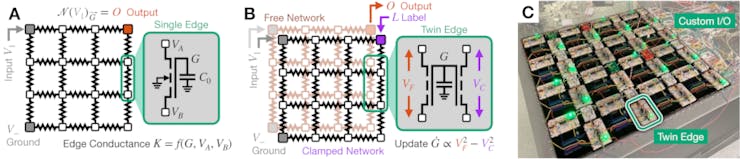
Researchers from the University of Pennsylvania have come up with an interesting approach to machine learning that could help to address the field's ever-growing power demands: taking the processor out of the picture and working directly on an analog network of resistors.

"Standard deep learning algorithms require differentiating large non-linear networks, a process that is slow and power-hungry," the researchers explain. "Electronic learning metamaterials offer potentially fast, efficient, and fault-tolerant hardware for analog machine learning, but existing implementations are linear, severely limiting their capabilities. These systems differ significantly from artificial neural networks as well as the brain, so the feasibility and utility of incorporating non-linear elements have not been explored."

A network of resistors, with no traditional processor in sight, has shown potential for non-linear machine learning tasks. (📷: Dillavou et al)


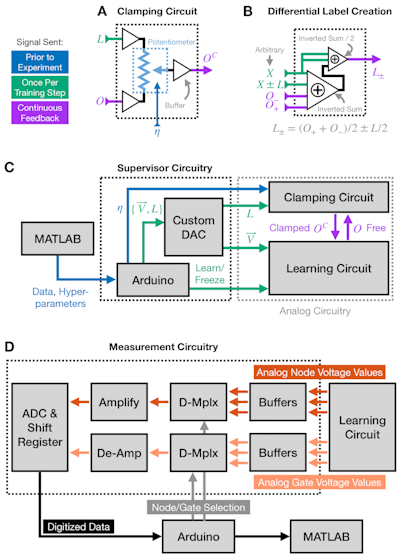
Until now, that is. In the team's research, a non-linear learning metamaterial is introduced — an analog electronic network of resistive elements based on transistors. It's not a traditional digital processor, and can't do the tasks a traditional processor can do — but it is tailored specifically to machine learning workloads, and proved able to perform computations that can't be handled in a linear system without the involvement of a processor beyond an Arduino Due to make measurements and connect to MATLAB.

"Each resistor is simple and kind of meaningless on its own," physicist Sam Dillavou, first author on the work, explains in an interview with MIT Technology Review. "But when you put them in a network, you can train them to do a variety of things."

The team has already demonstrated the same core technology being used in an image classification network. and in its latest work extends the concept to non-linear regression and exclusive OR (XOR) operations. Better still, it shows the potential to outperform the traditional approach of throwing the problems at digital processors: "We find our non-linear learning metamaterial reduces modes of training error in order (mean, slope, curvature)," the team claims, "similar to spectral bias in artificial neural networks."

The network itself has no external memory or traditional processor, but is supervised and measured by an Arduino Due. (📷: Dillavou et al)


"The circuitry is robust to damage," the researchers continue, "retrainable in seconds, and performs learned tasks in microseconds while dissipating only picojoules of energy across each transistor. This suggests enormous potential for fast, low-power computing in edge systems like sensors, robotic controllers, and medical devices, as well as manufacturability at scale for performing and studying emergent learning."


Visit Our Website: computer-vision-conferences.scifat.com


Twitter: twitter.com/Shulagna_sarkar


Pinterest: in.pinterest.com/computerconference22


Instagram: www.instagram.com/saisha.leo


Tumbler: www.tumblr.com/blog/shulagnasarkar22


YouTube: https://www.youtube.com/channel/UCUytaCzHX00QdGbrFvHv8zA

Friday, June 28, 2024

New Computer Vision Method Helps Speed Up Screening of Electronic Materials


Boosting the performance of solar cells, transistors, LEDs, and batteries will require better electronic materials, made from novel compositions that have yet to be discovered.


To speed up the search for advanced functional materials, scientists are using AI tools to identify promising materials from hundreds of millions of chemical formulations. In tandem, engineers are building machines that can print hundreds of material samples at a time based on chemical compositions tagged by AI search algorithms.


But to date, there’s been no similarly speedy way to confirm that these printed materials actually perform as expected. This last step of material characterization has been a major bottleneck in the pipeline of advanced materials screening.


Now, a new computer vision technique developed by MIT engineers significantly speeds up the characterization of newly synthesized electronic materials. The technique automatically analyzes images of printed semiconducting samples and quickly estimates two key electronic properties for each sample: band gap (a measure of electron activation energy) and stability (a measure of longevity).


The new technique accurately characterizes electronic materials 85 times faster compared to the standard benchmark approach.


Visit Our Website: computer-vision-conferences.scifat.com


Twitter: twitter.com/Shulagna_sarkar


Pinterest: in.pinterest.com/computerconference22


Instagram: www.instagram.com/saisha.leo


Tumbler: www.tumblr.com/blog/shulagnasarkar22


YouTube: https://www.youtube.com/channel/UCUytaCzHX00QdGbrFvHv8zA

#computervision #deeplearning #machinelearning #artificialintelligence #neuralnetworks,  #imageprocessing #objectdetection #imagerecognition #faceRecognition #augmentedreality #robotics #techtrends #3Dvision #professor #doctor #institute #sciencefather #researchawards #machinevision #visiontechnology #smartvision #patternrecognition #imageanalysis #semanticsegmentation #visualcomputing #datascience #techinnovation #university

Thursday, June 27, 2024

Neural Concept integrates Siemens Simcenter Star-CCM+ within its 3D deep learning platform


Software company Neural Concept has announced a collaboration with Siemens Digital Industries Software to integrate its Simcenter Star-CCM+ and NX software into Neural Concept’s 3D deep learning platform. This integration aims to accelerate decision-making processes for OEMs by providing rapid results prediction.


Simona Ottaiano, senior product manager of AI/ML, simulation and test solutions, at Siemens Digital Industries Software, said, “Siemens Digital Industries Software is excited to be collaborating to enhance the end-user experience, and we are looking forward to work with Neural Concept to provide solutions that can help to improve and accelerate the productivity of our mutual customers.”


Simcenter Star-CCM+ is a multiphysics computational fluid dynamics (CFD) simulation software that enables engineers to better model complex scenarios and explore solution possibilities under real-world conditions.


Neural Concept says its customers can now perform CFD simulations on a large scale using high-performance computing (HPC) resources in the cloud. This is designed to enhance machine learning-enhanced pipelines, enabling faster processing, generative and predictive ML tasks.

The 3D deep learning platform is designed to accelerate AI adoption in engineering design. Integrating Siemens’s Simcenter Star-CCM+ and NX software is intended to enhance the user experience by providing an optimized and scalable compute environment.


Pierre Baqué, CEO of Neural Concept, said, “OEMs today are under pressure to deliver innovative and sustainable products at unprecedented speed. To meet these challenges, engineers need a streamlined and efficient process for their design workflows, and the ability to model highly complex multiphysics real-world conditions using computational fluid dynamics.


“We are delighted to collaborate with Siemens Digital Industries Software and interface their industry leading CFD software Simcenter Star-CCM+ and NX into Neural Concept, empowering engineering teams to create impact through engineering data-science – for end-to-end engineering intelligence application development, fully connected to the internal simulation and design ecosystem, and deployable at scale.”


Visit Our Website: computer-vision-conferences.scifat.com


Twitter: twitter.com/Shulagna_sarkar


Pinterest: in.pinterest.com/computerconference22


Instagram: www.instagram.com/saisha.leo


Tumbler: www.tumblr.com/blog/shulagnasarkar22


YouTube: https://www.youtube.com/channel/UCUytaCzHX00QdGbrFvHv8zA

#computervision #deeplearning #machinelearning #artificialintelligence #neuralnetworks,  #imageprocessing #objectdetection #imagerecognition #faceRecognition #augmentedreality #robotics #techtrends #3Dvision #professor #doctor #institute #sciencefather #researchawards #machinevision #visiontechnology #smartvision #patternrecognition #imageanalysis #semanticsegmentation #visualcomputing #datascience #techinnovation #university


6G Wireless Evolution: Leveraging Sensing and Computer Vision for Superior Performance


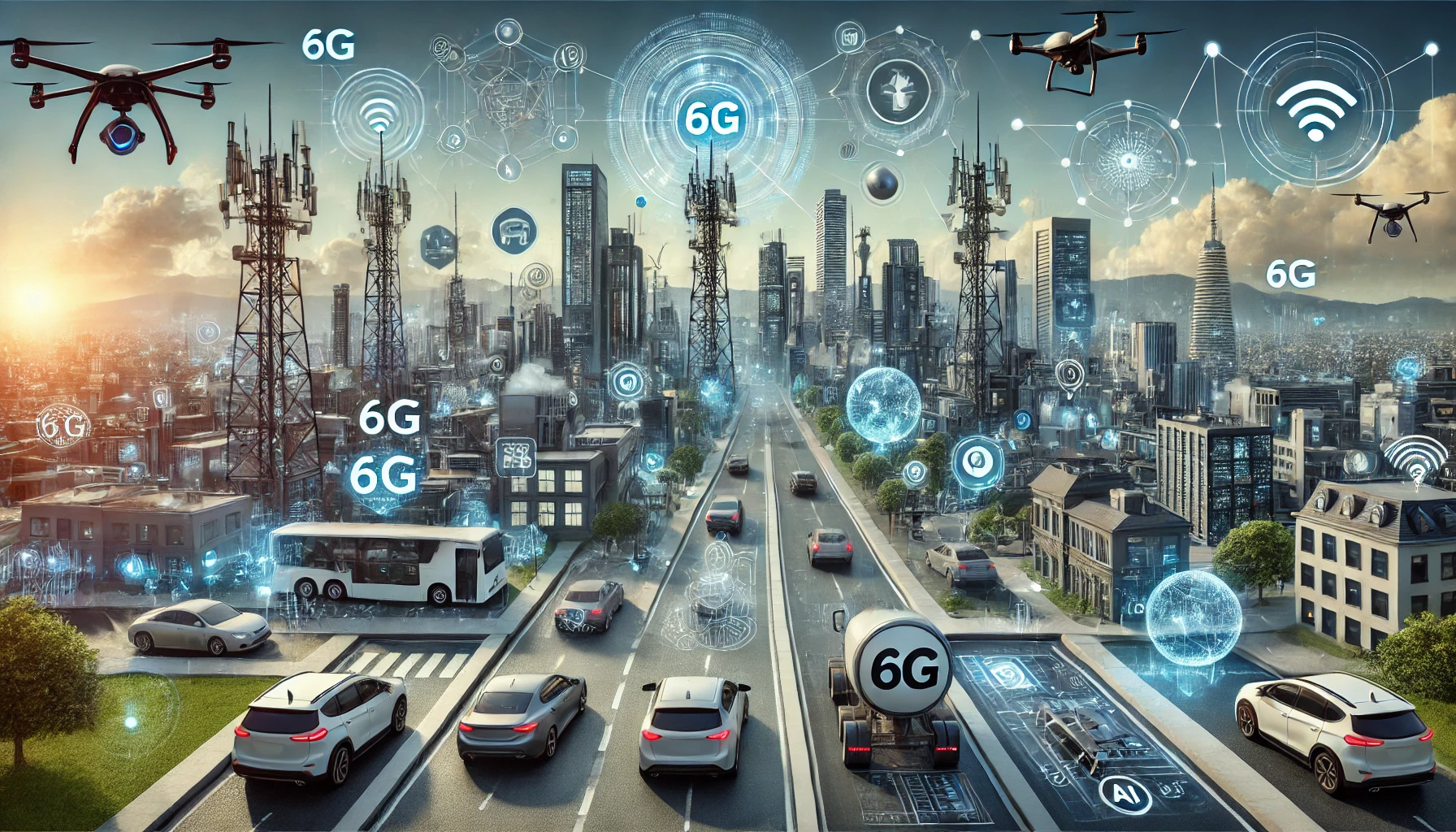
Astudy by several researchers from Seoul National University (SNU) and the Massachusetts Institute of Technology (MIT), discusses how integrating sensing technologies with computer vision (CV) can revolutionize 6G wireless communication systems. This combination, known as sensing and CV-aided wireless communications (SVWC), promises to offer substantial performance improvements over existing 5G technologies, addressing the increasing demand for high data rates driven by services like digital twins and the metaverse. These immersive mobile services require data rates far beyond what is currently available, necessitating the exploration of ultra-high frequency spectra, including millimeter-wave (mmWave) and terahertz (THz) bands. However, higher frequencies pose challenges such as reduced communication distances due to severe path loss and strong directivity.
Unleashing the Power of Sensing and Computer Vision

Sensing technology plays a crucial role in detecting and capturing visual, auditory, and tactile information about the physical world. Computer vision techniques then analyze this information to understand and interpret the environment. The CV process involves three main steps: vision acquisition, vision processing, and decision-making. Vision acquisition captures two-dimensional and three-dimensional sensing information using devices like RGB cameras, LiDAR, and infrared cameras. Vision processing extracts features from the sensing data using advanced deep learning (DL) models, such as convolutional neural networks (CNN) and Transformers, which identify patterns and objects in the data. Decision-making uses these extracted features to perform tasks like image classification, object detection, and semantic segmentation.
Transforming Wireless Communication with SVWC

SVWC leverages these capabilities to enhance wireless communication by providing fast and accurate identification of wireless environments and objects, as well as contextual understanding of their interactions. This integration can significantly improve various aspects of wireless communication. For instance, in beam management, which is essential for compensating path loss in mmWave and THz communications, SVWC enhances accuracy and reduces latency by directly detecting the position of mobile devices and generating directional beams toward them. This approach eliminates the need for time-consuming two-step beam management processes used in 5G.
Proactive Solutions for Seamless Connectivity

In cell association, SVWC predicts the line-of-sight (LoS) and non-line-of-sight (NLoS) status between base stations and mobile devices, enabling proactive management of cell association. This ensures seamless connectivity and improved link quality, preventing sudden link deterioration that can occur with conventional reactive methods. SVWC also aids in environment-aware channel estimation by using CV techniques like neural radiance fields (NeRF) to construct three-dimensional representations of wireless environments. This approach reduces the pilot overhead in channel estimation by extracting geometric channel parameters from visual sensing data.


Pioneering Future Wireless Technologies

Furthermore, SVWC enhances semantic signal compression by employing techniques such as image captioning to convert images into semantically dense feature vectors. This method significantly reduces transmission overhead by focusing on essential information, which is particularly useful for human-centric services like wireless brain-computer interfaces and intelligent humanoid robots. In the context of random access, SVWC utilizes crowd estimation to allocate a larger number of preambles to dense areas, thereby reducing collisions and access latency. This proactive approach ensures that the random access process remains efficient even in highly congested environments.
Simulation Results Showcase Efficacy

Simulation results presented in the paper demonstrate the effectiveness of SVWC in various scenarios. In beam management, SVWC achieves over a 91% reduction in positioning error and significant improvements in array gain compared to conventional 5G systems. For random access, SVWC reduces access latency by up to 29% in dense mobile environments. The data rate performance of SVWC also shows marked improvement, with an 84% increase over 5G NR cell association schemes, particularly in environments with high obstacle density.

Looking ahead, the paper identifies several future research directions for SVWC. One key challenge is ensuring seamless coverage even in demanding scenarios with obstacles, blind spots, or low-light conditions. Multi-modal sensing, which uses multiple sensing modalities simultaneously, can address this issue by enhancing detection accuracy. Another challenge is training SVWC models to be compatible with various wireless environments, which can be achieved using transfer learning to adapt pre-trained models with minimal data from specific environments. Privacy preservation is also crucial, as SVWC relies on visual sensing information. Approaches such as low-resolution sensing and privacy-preserving object detection can help mitigate privacy concerns. Finally, reducing the energy consumption and processing latency of SVWC is essential. Advances in AI processors and streamlined DL models like real-time DETR are expected to lower power consumption and latency, making SVWC more efficient.

The integration of sensing and computer vision in 6G wireless communications holds immense potential to enhance performance, reliability, and efficiency. As these technologies continue to evolve, SVWC is poised to become a cornerstone of future wireless communication systems, enabling faster, more accurate, and context-aware wireless services.


Visit Our Website: computer-vision-conferences.scifat.com


Twitter: twitter.com/Shulagna_sarkar


Pinterest: in.pinterest.com/computerconference22


Instagram: www.instagram.com/saisha.leo


Tumbler: www.tumblr.com/blog/shulagnasarkar22


YouTube: https://www.youtube.com/channel/UCUytaCzHX00QdGbrFvHv8zA


#computervision #deeplearning #machinelearning #artificialintelligence #neuralnetworks,  #imageprocessing #objectdetection #imagerecognition #faceRecognition #augmentedreality #robotics #techtrends #3Dvision #professor #doctor #institute #sciencefather #researchawards #machinevision #visiontechnology #smartvision #patternrecognition #imageanalysis #semanticsegmentation #visualcomputing #datascience #techinnovation #university


Wednesday, June 26, 2024

An artificial intelligence primer – from machine learning to computer vision


Artificial intelligence has the potential to impact almost every area of life. In this first of a two-part series explaining the technology behind the headlines, this article looks at the different branches of AI technology, and what they can do


When we think of artificial intelligence (AI), most of us teeter between excitement and concern about its rise. And with AI, just like anything, the unknowns fuel our concerns.

AI and generative AI are unleashing amazing opportunities that will enable governments to be much more productive and effective – getting more done – better, faster, and easier. These technologies will enable us to run virtual simulations before taking real actions, prevent adverse events, prepare for changing conditions, detect areas of concern sooner and with greater accuracy, engage in more meaningful ways, and manage our resources better.
So, what is AI?

Artificial intelligence is the science of designing systems to support and accelerate human decisions and actions. These systems perform tasks that have historically required human intelligence But, it’s called artificial intelligence for a reason: the simulation of human intelligence is performed by machines that have been programmed to learn and think. AI does not replace humans; it augments and accelerates what we do and how we do it, increasing overall efficiency and productivity.


When we talk about the different types of AI, we sometimes refer to them as “branches of AI.” Each branch performs different types of tasks. Three of the traditional branches of AI used by governments are machine learning, computer vision, and natural language processing. These three branches of AI are interconnected and often overlap, with advancements in one area often influencing progress in others.

And, generative AI – or GenAI – is a subset of deep learning, which in turn is a subset of Machine Learning. Three technologies within GenAI are large language models (referred to as LLMs), Synthetic Data, and Digital Twins.

For those of you who have been hearing a lot about or using ChatGPT or Copilot, these are built on an LLM.

Before we talk about generative AI, let’s discuss traditional AI technologies and how they work.
Machine learning

Machine learning systems learn from data, identify patterns, and make decisions with minimal human intervention.

You may have taken a computer class at some point in which you wrote conditional, or If-Then, statements.

For example, an estate agent might say that “if the property is adjacent to a lake, increase its value by 10%.”

But machine learning does not require you to write “if then” statements. Machine learning models learn from the data that is fed into it. – and the more data you feed the model, the more accurate the model becomes.

The machine is able to ingest massive amounts of data, extract key features, determine a method of analysis, write the code to execute that analysis, and produce an intelligent output – all through an automated process.

For example, imagine a computer assessing the value of properties. The computer considers thousands of properties. It compares properties next to water features against those that are not. From the data that it reads, the computer determines that properties adjacent to lakes are 11% more valuable than those that are not. The rule does not become a fixed rule. In fact, any change to the data fed into the system will change the rules and the output. Typically, the more data that a system processes, the more refined the answers become.
Deep Learning

Deep learning is a subset of machine learning that teaches computers to process data in a way that is inspired by the human brain. In the same manner that the neurons in the brain send information between brain cells, layers of nodes in deep learning work together to process data and solve problems. Deep Learning can be compared to the process of teaching a child to recognize animals through layers of learning, constant testing and correction, and enough diverse examples to ensure he can generalize to new situations. Deep Learning, like the child, improves with practice, refining its understanding with each new example. Deep learning is used for Natural Language Processing, Computer Vision, and Generative AI.
Natural language processing

Natural language processing enables understanding, interaction and communication between humans and machines.

NLP makes it possible for computers to read text, hear speech, interpret it, measure sentiment, and determine which parts are important. The overarching goal is to take raw language input and use linguistics and algorithms to transform or enrich the text in such a way that it delivers greater value.

Natural language processing goes hand in hand with text analytics, a machine learning technique that counts, groups, and categorizes words to extract structure and meaning from large volumes of content.

All these branches of AI contribute to one another. The computer can augment human efforts to analyse unstructured text with AI using a combination of natural language processing, machine learning, and linguistic rules. NLP and text analytics are used together for many applications, including investigative discovery, subject-matter expertise, and social media analytics.

For example, crime investigations typically involve a massive amount of intelligence reports. Not only are these reports extremely time consuming to read, the process of extracting key people, addresses, phone numbers, and relationships that are pertinent evidence to a case can be cumbersome. New information learned from a crime report demands scouring previously-read reports, making the process repetitive and lengthy.

Using ML, the people, places, events, objects, phone numbers, and email addresses can be extracted out of long-form text like crime reports and put into tables. This expedites the discovery of information.

Applying linguistics and analytics, an NLP system can extrapolate nuances such as sentiment from sentences within a report. This is accomplished by discerning the syntax – structure, arrangement, and order of words and phrases , semantics –the meaning of words, phrases, and sentences, and the “discourse” – the analysis of language that focuses on how language is used in context to convey meaning.
Computer vision

Computer vision is a field of AI that trains computers to interpret and understand the visual world. Computer vision enables systems to see, identify, and process images or videos in the same way that human vision does.

Machines can use deep learning algorithms to accurately identify and classify objects in images and videos — and then react to what they “see.”

Applications of computer vision include facial recognition and surveillance image analysis.

This graphic illustrates how computer vision works.

On the left, you see a portrait of a famous American. The image is pixelized and then a number is assigned to each pixel shade. On the right, you see how the computer defines the image.

Many different techniques of computer vision can be used to analyze images or video. A few of these are:Image segmentation which partitions an image into multiple regions or pieces to be examined separately.
Object detection which identifies a specific object in an image or advanced object detection which recognizes many objects in a single image: a playing field, an offensive player, a defensive player, a ball and so on. These models use an X,Y coordinate to create a bounding box and identify everything inside the box.
Pattern detection is a process of recognizing repeated shapes, colors, and other visual indicators in images.
Edge detection is a technique used to identify the outside edge of an object or landscape to better identify what is in the image.
Image classification which groups images into different categories.
Feature matching which is a type of pattern detection that matches similarities in images to help classify them.

This is the first of a two part series looking at how AI and Generative AI work, to help public servants become familiar with the characteristics and functions of different AI technologies and to understand the types of AI needed to address different tasks. Keep an eye out for the next article on generative AI.

Visit Our Website: computer-vision-conferences.scifat.com


Twitter: twitter.com/Shulagna_sarkar


Pinterest: in.pinterest.com/computerconference22


Instagram: www.instagram.com/saisha.leo


Tumbler: www.tumblr.com/blog/shulagnasarkar22


YouTube: https://www.youtube.com/channel/UCUytaCzHX00QdGbrFvHv8zA


#computervision #deeplearning #machinelearning #artificialintelligence #neuralnetworks,  #imageprocessing #objectdetection #imagerecognition #faceRecognition #augmentedreality #robotics #techtrends #3Dvision #professor #doctor #institute #sciencefather #researchawards #machinevision #visiontechnology #smartvision #patternrecognition #imageanalysis #semanticsegmentation #visualcomputing #datascience #techinnovation #university


Tuesday, June 25, 2024

Engineering the future: How computer and communication experts drive India’s tech growth


India, with its significant investments in digital infrastructure and services is rapidly transitioning to a digital economy. Its continuing emergence as a global hub for Software development and IT services, has cemented the role of Computer and Communication Engineering in equipping newer generations of engineers ready to scale up this significant growth.


Computer and Communication Engineering focuses on designing, developing, and maintaining both the computing systems and communication networks which in turn enables efficient and secure processing, transmission, and storage of data. The ubiquity of high-speed internet allows the ability to produce, process and transmit rich content in multimedia. The various career opportunities in this field of Computer and Communication engineering are as follows:

Data centre architects/Engineers

The hardware required for large data centers needs to be planned meticulously, ensuring scalability, reliability, and optimal performance to support the ever-growing demands of modern computing and communication technologies. Data storage must be robust, secure, and equipped with contingency plans for recovery in case of catastrophic events. The design and performance of such data centers are handled by architects and engineers, whose expertise ensures seamless functionality within this critical infrastructure.

Telematics/Infotainment Engineers

Telematics/Connectivity Engineers play a crucial role in the automotive industry, as they design and implement the systems that enable modern vehicles to connect with infrastructure and various wireless technologies. With many new automobiles equipped with onboard computers, sensors, and wireless radios, these engineers facilitate vehicle-to-infrastructure connectivity, enabling seamless software updates and remote diagnostics.

Their expertise extends to integrating wireless technologies such as Bluetooth and ZigBee, allowing for the seamless connection of mobile phones and stereo systems with the vehicle’s infotainment system. Additionally, they are responsible for incorporating Near Field Communication (NFC) and Radio Frequency Identification (RFID) technologies, which facilitate convenient and secure payments at toll plazas and parking lots, enhancing the overall driving experience.

Cybersecurity engineers

Cybersecurity Engineers are specialized professionals dedicated to protecting an organisation’s digital assets and infrastructure from various cyber threats. Their primary goal is to ensure the integrity, confidentiality, and availability of data across the internet and within private networks. To achieve this, they employ a range of advanced security measures and technologies. They implement encryption, authentication, and intrusion detection mechanisms to protect against cyber threats and unauthorized access to servers and data.

Telemedicine/Telehealth systems engineers

Engineers design and develop telehealth platforms that facilitate remote consultations, diagnostics, and treatment, enabling patients to access healthcare services from their homes. These engineers ensure that patients can access healthcare services from the comfort of their homes while maintaining the integrity and security of medical data. They design robust telehealth platforms that support a range of functionalities such as integrating the medical devices with the telehealth platform and sharing the data from electronic health records to authenticated persons using secure communication.

Signals engineers

Signals engineers play a vital role in ensuring effective communication and coordination for defense mobile units, particularly in dynamic and challenging environments. Their expertise lies in designing and maintaining ad-hoc networks, which are self-configuring and decentralized wireless networks that can adapt to rapidly changing conditions. These engineers are responsible for developing robust routing protocols, and ensuring efficient data transmission.

As evident in the paragraphs above, there is a growing demand for computer and communication engineers in various sectors, driven by the need for advanced communication systems, secure data transmission, and innovative technological solutions. Their expertise is crucial for India’s continued digital transformation, economic growth, and enhancement of quality of life.


Visit Our Website: computer-vision-conferences.scifat.com


Twitter: twitter.com/Shulagna_sarkar


Pinterest: in.pinterest.com/computerconference22


Instagram: www.instagram.com/saisha.leo


Tumbler: www.tumblr.com/blog/shulagnasarkar22


YouTube: https://www.youtube.com/channel/UCUytaCzHX00QdGbrFvHv8zA

#computervision #deeplearning #machinelearning #artificialintelligence #neuralnetworks,  #imageprocessing #objectdetection #imagerecognition #faceRecognition #augmentedreality #robotics #techtrends #3Dvision #professor #doctor #institute #sciencefather #researchawards #machinevision #visiontechnology #smartvision #patternrecognition #imageanalysis #semanticsegmentation #visualcomputing #datascience #techinnovation #university


Monday, June 24, 2024

Apple and Meta Reportedly Pursuing AI Collaboration


Apple has reportedly held discussions with Meta about partnering on artificial intelligence (AI).


The iPhone maker and the social media giant have discussed integrating Meta’s AI model into Apple’s recently announced Apple Intelligence, The Wall Street Journal (WSJ) reported Sunday (June 23), citing sources familiar with the matter.

The report noted that Meta and other companies working on generative AI products are hoping to take advantage of Apple’s massive distribution. For its part, Apple has said it plans to work with partners such as OpenAI for more complex AI tasks.

“We wanted to start with the best,” said Apple software leader Craig Federighi, adding that ChatGPT “represents the best choice for our users today.” He also said the company also wanted to integrate Google’s AI model Gemini.

Sources told WSJ that Apple has also held talks with AI startups Anthropic and Perplexity about bringing their generative AI to Apple Intelligence. PYMNTS has contacted both companies for comment but has not yet gotten a reply.

The report also looked at the mechanics of AI partnerships, in a conversation with Gene Munster, an Apple analyst and managing partner at Deepwater Asset Management.

He said that while ChatGPT usage is projected to double with the Apple partnership, OpenAI’s infrastructure costs could increase by 30% to 40%.

Munster told WSJ 10% to 20% of Apple users will choose to pay for a premium AI subscription to a product like ChatGPT, something that could mean billions of dollars for AI firms that integrate with Apple Intelligence.

“Distribution is hard to get,” Munster said. “The beauty of what Apple has built is that you’ve got this engaged distribution at scale.”

Apple’s partnership with OpenAI is designed to give Apple’s digital assistant Siri and its writing tools new heft thanks to advanced artificial intelligence capabilities.

While Apple could have used its own AI tech, the company concluded that its customers may want to use other AI solutions, like those that Apple itself sees as industry-leading, like OpenAI’s, PYMNTS wrote earlier this month.

As that report said, the joint effort is reminiscent of the types of partnerships that are “increasingly top of mind” for players in the bank, FinTech and B2B sectors.

“The classic dilemma of whether to build an in-house solution, buy a ready-made product or form a partnership to integrate new technologies has been a cornerstone of business development for decades, but the importance of partnering with third-party vendors has increasingly come to the forefront,” that report said. “The fast-paced evolution of technology and the rising complexity of consumer expectations adds layers of intricacy to this decision.”

Friday, June 21, 2024

New computer vision method helps speed up screening of electronic materials


Boosting the performance of solar cells, transistors, LEDs, and batteries will require better electronic materials, made from novel compositions that have yet to be discovered.


To speed up the search for advanced functional materials, scientists are using AI tools to identify promising materials from hundreds of millions of chemical formulations. In tandem, engineers are building machines that can print hundreds of material samples at a time based on chemical compositions tagged by AI search algorithms.

But to date, there’s been no similarly speedy way to confirm that these printed materials actually perform as expected. This last step of material characterization has been a major bottleneck in the pipeline of advanced materials screening.

Now, a new computer vision technique developed by MIT engineers significantly speeds up the characterization of newly synthesized electronic materials. The technique automatically analyzes images of printed semiconducting samples and quickly estimates two key electronic properties for each sample: band gap (a measure of electron activation energy) and stability (a measure of longevity).

The new technique accurately characterizes electronic materials 85 times faster compared to the standard benchmark approach.

The researchers intend to use the technique to speed up the search for promising solar cell materials. They also plan to incorporate the technique into a fully automated materials screening system.

“Ultimately, we envision fitting this technique into an autonomous lab of the future,” says MIT graduate student Eunice Aissi. “The whole system would allow us to give a computer a materials problem, have it predict potential compounds, and then run 24-7 making and characterizing those predicted materials until it arrives at the desired solution.”

“The application space for these techniques ranges from improving solar energy to transparent electronics and transistors,” adds MIT graduate student Alexander (Aleks) Siemenn. “It really spans the full gamut of where semiconductor materials can benefit society.”

Aissi and Siemenn detail the new technique in a study appearing today in Nature Communications. Their MIT co-authors include graduate student Fang Sheng, postdoc Basita Das, and professor of mechanical engineering Tonio Buonassisi, along with former visiting professor Hamide Kavak of Cukurova University and visiting postdoc Armi Tiihonen of Aalto University.

Power in optics

Once a new electronic material is synthesized, the characterization of its properties is typically handled by a “domain expert” who examines one sample at a time using a benchtop tool called a UV-Vis, which scans through different colors of light to determine where the semiconductor begins to absorb more strongly. This manual process is precise but also time-consuming: A domain expert typically characterizes about 20 material samples per hour — a snail’s pace compared to some printing tools that can lay down 10,000 different material combinations per hour.

“The manual characterization process is very slow,” Buonassisi says. “They give you a high amount of confidence in the measurement, but they’re not matched to the speed at which you can put matter down on a substrate nowadays.”

To speed up the characterization process and clear one of the largest bottlenecks in materials screening, Buonassisi and his colleagues looked to computer vision — a field that applies computer algorithms to quickly and automatically analyze optical features in an image.

“There’s power in optical characterization methods,” Buonassisi notes. “You can obtain information very quickly. There is richness in images, over many pixels and wavelengths, that a human just can’t process but a computer machine-learning program can.”

The team realized that certain electronic properties — namely, band gap and stability — could be estimated based on visual information alone, if that information were captured with enough detail and interpreted correctly.

With that goal in mind, the researchers developed two new computer vision algorithms to automatically interpret images of electronic materials: one to estimate band gap and the other to determine stability.

The first algorithm is designed to process visual data from highly detailed, hyperspectral images.

“Instead of a standard camera image with three channels — red, green, and blue (RBG) — the hyperspectral image has 300 channels,” Siemenn explains. “The algorithm takes that data, transforms it, and computes a band gap. We run that process extremely fast.”

The second algorithm analyzes standard RGB images and assesses a material’s stability based on visual changes in the material’s color over time.

“We found that color change can be a good proxy for degradation rate in the material system we are studying,” Aissi says.

Material compositions

The team applied the two new algorithms to characterize the band gap and stability for about 70 printed semiconducting samples. They used a robotic printer to deposit samples on a single slide, like cookies on a baking sheet. Each deposit was made with a slightly different combination of semiconducting materials. In this case, the team printed different ratios of perovskites — a type of material that is expected to be a promising solar cell candidate though is also known to quickly degrade.

“People are trying to change the composition — add a little bit of this, a little bit of that — to try to make [perovskites] more stable and high-performance,” Buonassisi says.

Once they printed 70 different compositions of perovskite samples on a single slide, the team scanned the slide with a hyperspectral camera. Then they applied an algorithm that visually “segments” the image, automatically isolating the samples from the background. They ran the new band gap algorithm on the isolated samples and automatically computed the band gap for every sample. The entire band gap extraction process process took about six minutes.

“It would normally take a domain expert several days to manually characterize the same number of samples,” Siemenn says.

To test for stability, the team placed the same slide in a chamber in which they varied the environmental conditions, such as humidity, temperature, and light exposure. They used a standard RGB camera to take an image of the samples every 30 seconds over two hours. They then applied the second algorithm to the images of each sample over time to estimate the degree to which each droplet changed color, or degraded under various environmental conditions. In the end, the algorithm produced a “stability index,” or a measure of each sample’s durability.

As a check, the team compared their results with manual measurements of the same droplets, taken by a domain expert. Compared to the expert’s benchmark estimates, the team’s band gap and stability results were 98.5 percent and 96.9 percent as accurate, respectively, and 85 times faster.

“We were constantly shocked by how these algorithms were able to not just increase the speed of characterization, but also to get accurate results,” Siemenn says. “We do envision this slotting into the current automated materials pipeline we’re developing in the lab, so we can run it in a fully automated fashion, using machine learning to guide where we want to discover these new materials, printing them, and then actually characterizing them, all with very fast processing.”

Wednesday, June 19, 2024

Harnessing Machine Learning for Advanced Bioprocess Development: From Data-Driven Optimization to Real-Time Monitoring


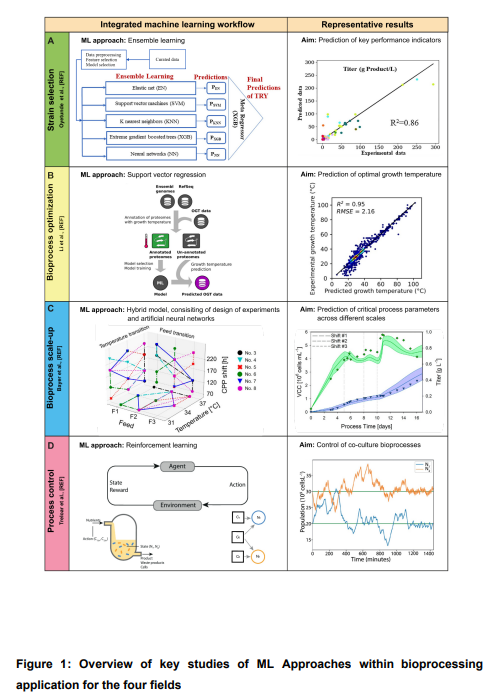
Modern bioprocess development, driven by advanced analytical techniques, digitalization, and automation, generates extensive experimental data valuable for process optimization—ML methods to analyze these large datasets, enabling efficient exploration of design spaces in bioprocessing. Specifically, ML techniques have been applied in strain engineering, bioprocess optimization, scale-up, and real-time monitoring and control. Conventional sensors in chemical and bioprocessing measure basic variables like pressure, temperature, and pH. However, measuring the concentration of other chemical species typically requires slower, invasive at-line or off-line methods. By leveraging the interaction of monochromatic light with molecules, Raman spectroscopy allows for real-time sensing and differentiation of chemical species through their unique spectral profiles.

Applying ML and DL methods to process Raman spectral data holds great potential for enhancing the prediction accuracy and robustness of analyte concentrations in complex mixtures. Preprocessing Raman spectra and employing advanced regression models have outperformed traditional methods, particularly in managing high-dimensional data with overlapping spectral contributions. Challenges such as the curse of dimensionality and limited training data are addressed through methods like synthetic data augmentation and feature importance analysis. Additionally, integrating predictions from multiple models and using low-dimensional representations through techniques like Variational Autoencoders can further improve the robustness and accuracy of regression models. This approach, tested across diverse datasets and target variables, demonstrates significant advancements in the monitoring and controlling bioprocesses.


Application of Machine Learning in Bioprocess Development:

ML has profoundly impacted bioprocess development, particularly in strain selection and engineering stages. ML leverages large, complex datasets to optimize biocatalyst design and metabolic pathway predictions, enhancing productivity and efficiency. Ensemble learning and neural networks integrate genomic data with bioprocess parameters, enabling predictive modeling and strain improvement. Challenges include extrapolation limitations and the need for diverse datasets for non-model organisms. ML tools such as the Automated Recommendation Tool for Synthetic Biology aid in iterative design cycles, advancing synthetic biology applications. Overall, ML offers versatile tools crucial for accelerating bioprocess development and innovation.

Bioprocess Optimization Using Machine Learning:

ML is pivotal in optimizing bioprocesses, focusing on enhancing titers, rates, and yields (TRY) through precise control of physicochemical parameters. ML techniques like support vector machine (SVM) regression and Gaussian process (GP) regression predict optimal conditions for enzymatic activities and media composition. Applications span from optimizing fermentation parameters for various products to predicting light distribution in algae cultivation. ML models, including artificial neural networks (ANNs), are employed for complex data analysis from microscopy images, aiding in microfluidic-based high-throughput bioprocess development. Challenges include scaling ML models from lab to industrial production and addressing variability and complexity inherent on larger scales.

ML in Process Analytical Technology (PAT) for Bioprocess Monitoring and Control:

In bioprocess development for commercial production, Process Analytical Technology (PAT) ensures compliance with regulatory standards like those set by the FDA and EMA. ML techniques are pivotal in PAT for monitoring critical process parameters (CPPs) and maintaining biopharmaceutical products’ critical quality attributes (CQAs). Using ML models such as ANNs and support vector machines (SVMs), soft sensors enable real-time prediction of process variables where direct measurement is challenging. These models, integrated into digital twins, facilitate predictive process behavior analysis and optimization. Challenges include data transferability and adaptation to new plant conditions, driving research towards enhanced transfer learning techniques in bioprocessing applications.
Image source

Enhancing Raman Spectroscopy in Bioprocessing through Machine Learning:

Traditional online sensors are limited to basic variables like pressure, temperature, and pH in bioprocessing and chemical processing while measuring other chemical species often requires slower, invasive methods. Raman spectroscopy offers real-time sensing capabilities using monochromatic light to distinguish molecules based on their unique spectral profiles. ML and DL methods enhance Raman spectroscopy by modeling relationships between spectral profiles and analyte concentrations. Techniques include preprocessing of spectra, feature selection, and augmentation of training data to improve prediction accuracy and robustness for monitoring multiple variables crucial in bioprocess control. Successful applications include predicting concentrations of biomolecules like glucose, lactate, and product titers in real time.