Friday, August 23, 2024

Photonic chip integrates sensing and computing for ultrafast machine vision


Researchers have demonstrated a new intelligent photonic sensing-computing chip that can process, transmit and reconstruct images of a scene within nanoseconds. This advance opens the door to extremely high-speed image processing that could benefit edge intelligence for machine vision applications such as autonomous driving, industrial inspection and robotic vision.

Edge computing, which performs intensive computing tasks like image processing and analysis on local devices, is evolving into edge intelligence by adding artificial intelligence (AI) driven analysis and decision-making.

"Capturing, processing and analyzing images for edge-based tasks such as autonomous driving is currently limited to millisecond-level speeds due to the necessity of optical-to-electronic conversions," said research team leader Lu Fang from Tsinghua University in China.

"Our new chip can perform all these processes in just nanoseconds by keeping them all in the optical domain. This could be used to significantly enhance, or even replace, the traditional architecture of sensor acquisition followed by AI post-processing."

In Optica the researchers describe the new chip, which they call an optical parallel computational array (OPCA) chip. They show that the OPCA has a processing bandwidth of up to one hundred billion pixels and a response time of just 6 nanoseconds, which is about six orders of magnitude faster than current methods. They also used the chip to create an optical neural network that integrates image perception, computation and reconstruction.

"The chip and optical neural network could boost the efficiency of processing complex scenes in industrial inspection and help advance intelligent robot technology to a higher level of cognitive intelligence," said Wei Wu, co-first author of the paper. "We think it could also revolutionize edge intelligence."


The new intelligent optical computational array (OPCA) chip performs end-to-end image processing, transmission and reconstruction by integrating sensing and computing on one chip. Credit: Wei Wu, Tsinghua University

Eliminating optical to electrical conversions

Machine vision—which uses cameras, image sensors, lighting and computer algorithms to capture, process and analyze images for specific tasks—traditionally involves converting optical information into digital electrical signals using sensors. These signals are then transmitted over optical fibers for long-distance data transmission and downstream tasks.

However, the frequent conversion between optical and electrical signals along with limited advancements in electronic processors has become a major restriction on improving the speed and processing capacity of machine vision.

"The world is entering an AI era, but AI is very time- and energy-exhaustive," said Fang. "Meanwhile, the growth of edge devices, such as smartphones, intelligent cars and laptops has resulted in explosive growth of image data to be processed, transmitted and displayed. We are working to advance machine vision by integrating sensing and computing in the optical domain, which is particularly important for edge computing and for enabling more sustainable AI applications."

The challenge in performing both image acquisition and analysis on the same chip in the optical domain is finding a way to convert the free-space spatial light used for imaging into an on-chip guided light wave.

The researchers achieved this by designing a chip that consists of a sensing-computing array of dedicated designed ring resonators that convert a free-space optical intensity image—a 2D representation of a scene's light intensity—into a coherent light signal that can then be guided on the chip. A micro-lens array enhances the process by focusing the scene onto the OPCA chip.



The photo shows light being focused through the microlens array onto the micro-ring in the OPCA chip test system. Credit: Wei Wu, Tsinghua University

Creating an all-optical input-output connection

The chip's architecture allowed the researchers to create an end-to-end multi-wavelength optical neural network to couple the on-chip modulated light into a large-bandwidth optical waveguide, where the modulated light is added together spectrally. The multispectral optical outputs can then be used for classification tasks or to create an all-optical reconstruction of the image.

"Because each sensing-computing element of this chip is reconfigurable, they can each operate as a programmable neuron that generates light modulation output based on the input and weight," said Fang.

"The neural network connects all the sensing-computing neurons with a single waveguide, facilitating an all-optical full connection between the input information and the output."

To demonstrate the capabilities of the OPCA chip, the researchers showed that it could be used to classify a handwritten image and to perform image convolution, a process that applies a filter to an image to extract features. The findings showed that the chip architecture can effectively complete information compression and scene reconstruction, indicating its potential for widespread applications.
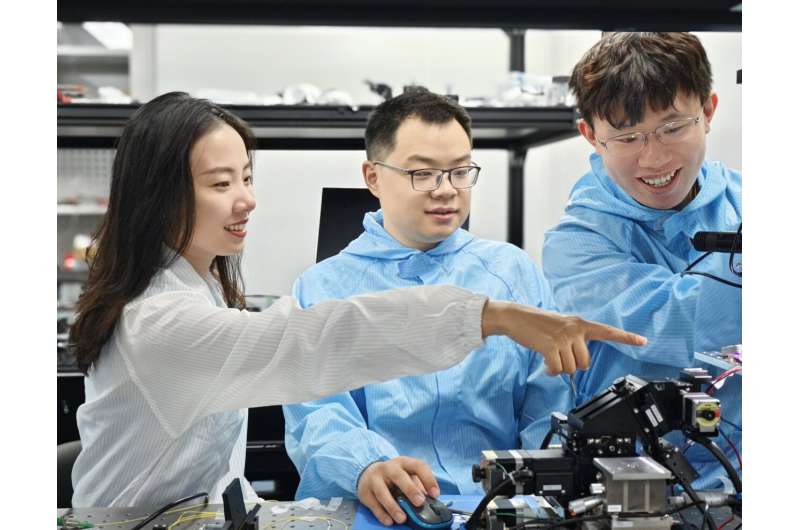


Research team leader Lu Fang, team members Tian Kuang Zhou and Wei Wu are pictured with the chip test system. Credit: Wei Wu, Tsinghua University

The researchers are now working to improve the sensing-computing OPCA chip to further enhance computational performance while also being aligned more closely with real-world scenarios and optimized for edge computing applications.

The researchers say that for practical use, the optical neural network's processing capacity would need to be increased to effectively handle increasingly complex and realistic intelligent tasks. The form factor of the OPCA chip and overall form factor also need to be minimized.

"We hope that machine vision will be gradually improved to be faster and more energy-efficient by using light to perform both sensing and computing," said Fang.

"Even though today's approach will not likely be completely replaced, we expect the sensing-computing method to find its niche in edge computing where it can drive a wide range of promising applications."


Website: International Research Awards on Computer Vision #computervision #deeplearning #machinelearning #artificialintelligence #neuralnetworks,  #imageprocessing #objectdetection #imagerecognition #faceRecognition #augmentedreality #robotics #techtrends #3Dvision #professor #doctor #institute #sciencefather #researchawards #machinevision #visiontechnology #smartvision #patternrecognition #imageanalysis #semanticsegmentation #visualcomputing #datascience #techinnovation #university #lecture #biomedical

Visit Our Website : computer.scifat.com Nomination Link : computer-vision-conferences.scifat.com/award-nomination Registration Link : computer-vision-conferences.scifat.com/award-registration Member Link : computer-vision-conferences.scifat.com/conference-abstract-submission Awards-Winners : computer-vision-conferences.scifat.com/awards-winners Contact us : computer@scifat.com

Get Connected Here:
==================
Social Media Link

Wednesday, August 21, 2024

Overcoming AI Misconceptions: The Role of Governance in Healthcare


Imagine a crisp Monday morning outside a bustling city hospital. The sun is shining, and the weather is beautiful. As you walk in to see your doctor, you witness a protest. Nurses have gathered, their voices echoing with determination and concern as they chant, “Care Beyond Code” and “Patients Need Heart, Not Algorithms.” Their worries are clear: they fear a future where decisions about patient care are dictated not by compassion and experience but by algorithms focused on optimizing efficiency and reducing costs.


These kinds of protests highlight broader fears and serve as a reminder of the misconceptions and ethical and safety concerns surrounding the rapid advancement of technology in medicine, particularly regarding artificial intelligence.1, 2, 3 What is needed is sound AI governance that includes policies and procedures to address and dispel concerns, along with a structure and strategy to continuously understand and adapt to changing risks and concerns as AI becomes more mainstream in the healthcare industry. In this article, we will explore three common misconceptions about AI in healthcare that spark heightened concern and discuss how establishing an effective AI governance framework is foundational to addressing these misconceptions:

Common misconception 1: AI will replace nursing and ancillary healthcare jobs.
Common misconception 2: AI will make diagnosis and treatment decisions, instead of providers.
Common misconception 3: AI in healthcare does not prioritize patient safety.
Establishing AI Governance

The integration of AI in healthcare is fraught with very real challenges that necessitate a robust AI governance framework, which includes a Steering Committee to provide executive oversight, high-level direction and alignment on what AI is and isn’t throughout the organization, and an Internal Review Committee to provide ongoing tactical and operational support to AI efforts. While the exact AI governance structure depends upon a number of factors (risk appetite, organization size, culture, etc.), two elements are paramount:4

Executive oversight by a high-level board/Steering CommitteePurpose: Provide direction, mandates, and resourcing to responsible AI efforts in a timely manner
Composition: Leaders ensure that the Central AI Board/Steering Committee includes C-suite executives, senior legal and compliance officers, and technology leaders. Some leaders also incorporate or frequently consult external advisors or experts to offer independent insights on complex AI issues.

Internal review by an operational committeePurpose: Conduct arm’s-length internal reviews of AI systems at various stages, including feasibility and resource allocation, technical scope, and Responsible AI considerations
Composition: Leaders ensure that Internal Review Committees (“IRCs”) are cross-functional (involving multiple departments) with representation from business lines, technology, and compliance. These committees are tasked with practical implantation and coordination of all Responsible AI efforts and workstreams.

Sound AI governance, with active participation from leaders across the organization, is essential to oversee the development, deployment and monitoring of AI technologies, as well as manage its impacts on the organization and culture. AI governance should be comprised of a diverse group of stakeholders, including clinicians, data scientists, ethicists, legal, compliance, risk, marketing/public relations and patient representatives.5

The goal in assembling this comprehensive group of leaders is to ensure a holistic approach. The Internal Review Committee focuses on addressing the crucial technical and perceived considerations, including utilizing AI data effectively, ensuring its quality, prioritizing consents, promoting sustainable data practices, rigorously reviewing data procedures, managing cultural impacts and equity of data and applying an ethical framework that aligns with the data life cycle.6 While the Steering Committee has oversight of these technical elements, it is also tasked with addressing the human-centric considerations of accountability and transparency as well as understanding and addressing workforce and public concerns. Workforce and patient representatives should be responsible not only for communicating concerns from their communities to the committee, but also for dispelling misconceptions both internal to the organization and externally.

Assembling these committees with the right stakeholders first requires buy-in from the CEO. You will need to define how the need for AI governance (and presumably the expansion of AI capabilities) aligns with your organization’s goals or strategic initiatives. Then identify a comprehensive list of key subject matter experts that draws from all aspects of the organization; it should include AI evangelists as well as skeptics to make clear how AI can be delivered successfully and transparently into the organization’s DNA. Articulate the importance of the governance committee from their perspective, whether it be risk, ethics, safety, medical advancement and research or patient experience, and underscore the importance of being on the forefront of the industry’s transformation. Leverage opportunities to seek workforce representatives through “town hall” forums and patient representatives through patient advocacy groups and providers, and create clearly defined roles, responsibilities and objectives. Opinions and perceptions are important to hear, as that will facilitate opportunities for greater adoption. The overall cadence of meetings, voting structure, escalation processes, feedback loops and individual assignment of roles should be customized to each organization.

Culture, leadership, and acceptance will play an important role in establishing a sound AI governance process focused on transparency and acceptance of AI in the various departments within your organization. While misconceptions, media influence and outside industry experiences will inundate your organization, having the right AI governance structure and processes in place will be essential to dispelling the following common AI misconceptions.


Common misconception 1: “AI will replace nursing and ancillary healthcare jobs.”
AI governance corrective: Establish transparency and accountability

Transparency in AI decision-making processes is a crucial component of sound AI governance. When providers, patients, and sometimes the general public are not well-informed about the usage and reliability of AI platforms, confusion and fear can easily take over. In our initial nursing protest example, nurses were concerned that using AI could compromise quality, patient safety and nursing care. Imagine if the decision-making processes behind deploying AI tools were not transparent to the nurses and direct care teams: to them, these AI tools might seem untested or poorly tested. They were never involved in piloting the tools with patients or providing feedback. They didn't have representatives to voice their concerns or relay information back to nursing forums. They feared that the tools were being deployed as substitutes for nurses rather than as tools to enhance their work. Instead, AI should be viewed as a supplemental and directional tool that extends the expertise of healthcare professionals, enabling them to make better-informed decisions rather than replacing their critical judgment. When applied properly, AI offers the opportunity to enhance workforce capabilities by handling repetitive or monotonous tasks, allowing healthcare professionals to work to the top of their license on more complex cases.

Effective AI governance must ensure transparency that reaches not only clinical teams but also patients and caregivers. Healthcare providers and patients need to understand both the intended purpose of AI tools and how these AI systems arrive at their recommendations. This transparency builds trust and alleviates fear, and it ensures accountability, particularly if AI decisions lead to adverse outcomes. To foster an environment of openness and trust, sound AI governance should establish clear and transparent policies, procedures and guidelines for documenting and disclosing AI decision-making processes. The ideal state is a culture in which concerns can be addressed early, and often collaboratively, before they develop into heightened fears.


Common misconception 2: “AI will make diagnosis and treatment decisions instead of physicians.”
AI governance corrective: Address and account for ethical dilemmas

Another critical role of sound AI governance is addressing ethical concerns, particularly the risk of replacing human judgment with AI, which can lead to potential machine errors and algorithmic biases in diagnosis and treatment decisions. AI systems are only as reliable as the data they are trained on, which typically comes from sources such as enterprise data warehouses (“EDWs”), electronic medical records (“EMRs”) and other repositories of patient information. If this data is unclean, inaccurate, or skewed due to the population being treated, or if the data used to train the models is inherently biased towards a specific organization, the AI's recommendations will also be biased. This bias can potentially lead to disparities in both diagnosis and care.7

Let’s look at a medical imaging example: If a radiology department wants to deploy an AI tool, they must engage the governance committee to (1) assess whether the AI tool meets their specific clinical needs, (2) evaluate the potential AI tool using case data from their own practice or hospital system and compare to standard-of-care performance metrics, and (3) ensure that all parties remain aware of the risks of excessive reliance on technology while maintaining their clinical expertise.8 Sound AI governance must implement rigorous testing protocols to identify and mitigate biases, ensuring that AI systems provide fair and equitable care to all patients. However, there is wide agreement across the industry that even after actively taking these steps to prevent bias and maintain safety and equity while using AI in medicine, ultimately the onus of equitable patient care must remain on physicians and not on technology, no matter how sophisticated.9 In the case of medical imaging, for example, AI can act as a “second pair of eyes,” much like a clinician asking a colleague for a second opinion.10


Common misconception 3: “AI in healthcare does not prioritize patient safety.”
AI governance corrective: Remain current with regulatory compliance and standards

Healthcare AI must comply with regulatory standards to ensure safety and efficacy. Sound AI governance should prioritize staying aware of evolving regulations and ensuring that AI systems meet or exceed these standards. In fact, in October 2023, The World Health Organization published a document defining critical regulatory factors concerning artificial intelligence in healthcare. Among these factors are the pertinent and challenging privacy and data protection regulations outlined in Europe's General Data Protection Regulation (“GDPR”) and the United States' Health Insurance Portability and Accountability Act (“HIPAA”).11, 12 Healthcare organizations have a responsibility to ensure compliance standards are met. By ensuring compliance, the Steering Committee defends patient rights and maintains the integrity of the healthcare system.

Sound AI governance will draw on and collaborate with compliance and risk leaders as well as others who actively monitor regulatory changes. Some organizations outside of healthcare have leaned into AI to help them track the ever-changing regulatory landscape they face. In the future, AI could be used similarly in healthcare, and it could even be leveraged to manage contracts and contract changes for coding or procurement purposes.


Conclusion

Integrating AI into healthcare is a process filled with incredible opportunities and significant challenges. While AI offers immense potential benefits, realizing these benefits requires a balanced and disciplined approach that acknowledges current limitations, addresses ethical concerns and fosters the organization's innovative spirit.

AI in healthcare should be regarded as a powerful tool that complements the expertise of healthcare professionals and improves patient care. However, its deployment must be guided by ethical principles, transparency and rigorous oversight. Sound AI governance plays a crucial role in this process, ensuring that AI technologies are developed and used responsibly, ultimately leading to better health outcomes for all. A recent survey conducted by the Center for Connected Medicine indicates that only 16% of health systems currently have a systemwide governance policy specifically intended to address AI usage and data access, and most are in the very early stages of evaluating and implementing potential AI capabilities — emphasizing that the healthcare industry is only just beginning to uncover both the compelling possibilities and the complicated risks of AI applications in healthcare.13

As healthcare leaders and innovators continue to integrate AI into healthcare, the industry must stay vigilant, ethical and patient-centered to ensure that the AI revolution benefits everyone, both now and in the future. With AI's transformative power, the future of healthcare looks brighter than ever, promising enhanced patient care and groundbreaking advancements that will revolutionize the way we approach health and wellness.


Website: International Research Awards on Computer Vision #computervision #deeplearning #machinelearning #artificialintelligence #neuralnetworks,  #imageprocessing #objectdetection #imagerecognition #faceRecognition #augmentedreality #robotics #techtrends #3Dvision #professor #doctor #institute #sciencefather #researchawards #machinevision #visiontechnology #smartvision #patternrecognition #imageanalysis #semanticsegmentation #visualcomputing #datascience #techinnovation #university #lecture #biomedical

Visit Our Website : computer.scifat.com Nomination Link : computer-vision-conferences.scifat.com/award-nomination Registration Link : computer-vision-conferences.scifat.com/award-registration Member Link : computer-vision-conferences.scifat.com/conference-abstract-submission Awards-Winners : computer-vision-conferences.scifat.com/awards-winners Contact us : computer@scifat.com

Get Connected Here:
==================
Social Media Link

Tuesday, August 20, 2024

Artificial Intelligence and Machine Learning in Fintech: Transforming the Financial Landscape


Artificial Intelligence (AI) and Machine Learning (ML) have emerged as powerful tools in the fintech industry, reshaping how financial services are delivered and consumed. By leveraging vast amounts of data and sophisticated algorithms, AI and ML are enabling fintech companies to offer more personalized, efficient, and secure services. From automating processes and improving customer experiences to enhancing risk management and fraud detection, these technologies are driving innovation across the financial sector.


What are Artificial Intelligence and Machine Learning?

Artificial Intelligence (AI) refers to the development of computer systems that can perform tasks typically requiring human intelligence, such as visual perception, speech recognition, decision-making, and language translation. AI encompasses a broad range of technologies, including natural language processing (NLP), computer vision, robotics, and more.

Machine Learning (ML) is a subset of AI that involves the creation of algorithms that enable computers to learn from and make decisions based on data. Unlike traditional programming, where rules are explicitly defined by programmers, ML algorithms are trained on data to identify patterns and make predictions or decisions without being explicitly programmed to perform specific tasks.

In the fintech industry, AI and ML are applied to various domains, including customer service, credit scoring, fraud detection, trading, and investment management. These technologies are helping fintech companies to automate processes, reduce costs, and offer more tailored services to their customers.

By adopting digital transformation and transitioning to an AI-driven core banking system, fintech companies can deliver personalized services more efficiently, introduce new products to generate additional revenue streams, and improve customer experiences while simultaneously reducing costs.
How AI and ML Work in Fintech

AI and ML
operate by processing large datasets and identifying patterns that can be used to make predictions or decisions. In fintech, this typically involves the following steps:Data Collection and Processing: Fintech companies collect vast amounts of data from various sources, including customer transactions, social media activity, market data, and more. This data is then cleaned, processed, and organized to be used by AI and ML algorithms.

Training Models: ML models are trained on historical data to recognize patterns and relationships. For example, a credit scoring model might be trained on past loan applications and repayment histories to predict the likelihood of a new applicant defaulting on a loan.

Making Predictions: Once trained, the ML model can make predictions or decisions based on new data. For example, it can assess the creditworthiness of a loan applicant, detect fraudulent transactions, or recommend investment strategies.

Continuous Learning: ML models are continuously updated and refined as new data becomes available. This allows them to improve over time and adapt to changing market conditions or customer behavior.
Applications of AI and ML in Fintech

AI and ML are being applied across various areas in fintech, driving innovation and improving the efficiency of financial services. Some of the key applications include:

Fraud Detection and PreventionReal-Time Monitoring: AI and ML are used to monitor transactions in real-time, identifying unusual patterns or behaviors that may indicate fraud. By analyzing historical transaction data, these systems can flag potentially fraudulent activities with greater accuracy than traditional rule-based systems.

Adaptive Systems: Unlike static rule-based systems, AI and ML models can adapt to new types of fraud as they emerge, making them more effective in detecting and preventing evolving threats.
Credit Scoring and Risk Management:Alternative Data Sources: Traditional credit scoring models rely heavily on credit history, which can be limiting for individuals with little or no credit history. AI and ML can analyze alternative data sources, such as social media activity, payment history, and even smartphone usage patterns, to assess creditworthiness more accurately.

Predictive Analytics: ML models can predict the likelihood of default or delinquency by analyzing a wide range of factors. This allows lenders to make more informed decisions and manage risk more effectively.

Personalized Financial ServicesRobo-Advisors: AI-powered robo-advisors like Betterment and Wealthfront provide personalized investment advice and portfolio management based on an individual’s financial goals, risk tolerance, and market conditions. These services are typically more affordable and accessible than traditional human advisors.

Customized Products: AI and ML can analyze customer data to create personalized financial products, such as tailored insurance policies or loan terms that match an individual’s specific needs and circumstances. With help of AI-driven digital banking software, fintech companies can create
Customer Service and SupportChatbots and Virtual Assistants: AI-driven chatbots and virtual assistants are increasingly being used to handle customer inquiries, process transactions, and provide financial advice. These systems can handle large volumes of queries, providing instant responses and freeing up human agents for more complex tasks.

Natural Language Processing (NLP): NLP allows AI systems to understand and respond to customer inquiries in natural language, making interactions more intuitive and user-friendly.
Algorithmic Trading and Investment ManagementHigh-Frequency Trading (HFT): AI and ML algorithms are used to execute trades at high speeds and with minimal human intervention. These systems can analyze market data in real-time and execute trades based on predefined criteria, often capitalizing on minute price discrepancies.

Sentiment Analysis: AI-powered sentiment analysis tools can analyze news articles, social media posts, and other unstructured data sources to gauge market sentiment. This information can be used to inform trading strategies and investment decisions.

Regulatory Compliance and ReportingRegTech: Regulatory technology, or RegTech, uses AI and ML to help financial institutions comply with complex regulations. These systems can automate the process of monitoring transactions, generating reports, and ensuring compliance with anti-money laundering (AML) and know-your-customer (KYC) regulations.

Automated Reporting: AI-driven systems can automatically generate compliance reports, reducing the burden on compliance teams and minimizing the risk of errors.


Benefits of AI and ML in Fintech

The integration of AI and ML into fintech offers numerous benefits for both financial institutions and their customers:

1. Enhanced EfficiencyAI and ML can automate repetitive tasks, such as data entry, transaction processing, and customer support, significantly reducing operational costs and freeing up resources for more value-added activities.

2. Improved AccuracyMachine learning models can analyze large volumes of data with a high degree of accuracy, reducing the risk of human error in processes like fraud detection, credit scoring, and risk management.

3. PersonalizationBy analyzing customer data, AI and ML can deliver personalized financial services that are tailored to individual needs and preferences, improving customer satisfaction and loyalty.

4. Better Risk ManagementAI and ML enable more accurate risk assessment and management, helping financial institutions to make better lending decisions, detect fraud more effectively, and comply with regulatory requirements.

5. ScalabilityAI-driven systems can scale easily to handle large volumes of transactions and customer interactions, making them ideal for growing fintech companies.

6. Faster Decision-MakingAI and ML can process data in real-time, enabling financial institutions to make faster and more informed decisions. This is particularly valuable in areas like trading, where speed is critical.


Challenges and Considerations

Despite the numerous benefits, there are also challenges associated with the adoption of AI and ML in fintech:

1. Data Privacy and SecurityThe use of AI and ML requires access to large amounts of personal and financial data. Ensuring the privacy and security of this data is paramount, and fintech companies must comply with stringent data protection regulations.

2. Bias and FairnessMachine learning models can inadvertently perpetuate biases present in the data they are trained on. This can lead to unfair outcomes, such as biased credit scoring or discriminatory lending practices. Ensuring fairness and transparency in AI systems is a critical concern.

3. Regulatory ComplianceAs AI and ML technologies evolve, regulators may struggle to keep pace with the changes. Fintech companies must navigate a complex and evolving regulatory landscape to ensure their AI-driven systems are compliant with all relevant laws and regulations.

4. Ethical ConsiderationsThe increasing use of AI in financial decision-making raises ethical questions, such as the potential for job displacement or the responsibility of AI systems in making critical financial decisions. Companies must consider the ethical implications of their AI and ML deployments.


The Future of AI and ML in Fintech

The future of AI and ML in fintech is promising, with several trends likely to shape the industry in the coming years:

1. Expansion of AI-Driven PersonalizationAs AI and ML technologies become more sophisticated, the level of personalization in financial services will continue to increase. Customers can expect highly tailored products and services that adapt to their evolving needs in real-time.

2. AI-Powered Financial InclusionAI and ML have the potential to expand financial inclusion by offering more accessible and affordable financial services to underserved populations. For example, AI-driven microloans and mobile banking services could provide financial access to individuals in remote or underserved areas.

3. Advancements in Explainable AI (XAI)Explainable AI aims to make AI systems more transparent and understandable to humans. In fintech, this could lead to greater trust in AI-driven decisions, as customers and regulators gain a clearer understanding of how these systems work.

4. Integration with Blockchain and CryptocurrenciesThe integration of AI and ML with blockchain technology and cryptocurrencies could unlock new opportunities in areas like decentralized finance (DeFi), where AI-driven systems could manage decentralized lending, trading, and investment platforms.

5. Increased Collaboration Between Fintech and Traditional Financial InstitutionsTraditional banks and financial institutions are increasingly partnering with fintech companies to leverage AI and ML technologies. This collaboration is likely to deepen, leading to more innovative and customer-centric financial services.


Conclusion

AI and Machine Learning are transforming the fintech industry, bringing forth innovative solutions that boost efficiency, precision, and customer experience. These technologies are revolutionizing all facets of financial services, from fraud detection and risk management to personalized financial products and algorithmic trading. As AI and ML continue to advance, they will become even more integral in shaping the future of fintech, fostering greater financial inclusion, driving innovation, and promoting sustainability within the financial sector.


Website: International Research Awards on Computer Vision #computervision #deeplearning #machinelearning #artificialintelligence #neuralnetworks,  #imageprocessing #objectdetection #imagerecognition #faceRecognition #augmentedreality #robotics #techtrends #3Dvision #professor #doctor #institute #sciencefather #researchawards #machinevision #visiontechnology #smartvision #patternrecognition #imageanalysis #semanticsegmentation #visualcomputing #datascience #techinnovation #university #lecture #biomedical

Visit Our Website : computer.scifat.com Nomination Link : computer-vision-conferences.scifat.com/award-nomination Registration Link : computer-vision-conferences.scifat.com/award-registration Member Link : computer-vision-conferences.scifat.com/conference-abstract-submission Awards-Winners : computer-vision-conferences.scifat.com/awards-winners Contact us : computer@scifat.com

Get Connected Here:
==================
Social Media Link

AI and IVF: Deep Learning in Embryo Selection


A study tested an AI deep learning system for embryo selection in IVF, comparing its choices with human experts. The AI matched the experts 65.8% of the time, achieving nearly the same pregnancy success rate. Despite its efficiency, proving the system's 'non-inferiority' requires larger trials.


An advanced AI deep learning system has been tested in the intricate procedure of embryo selection during in vitro fertilisation (IVF). Researchers aimed to compare the AI's performance with that of human embryologists. Published in Nature Medicine, the study presents compelling insights.

The system's efficacy was evaluated in a randomized trial involving 1,066 IVF patients across 14 clinics in Australia and Europe. Both human experts and the AI selected embryos for implantation, followed by a randomized choice on which selection to use. The outcome showed a clinical pregnancy rate of 46.5% for AI-selected embryos and 48.2% for human-selected embryos, indicating minimal difference between the two.


While the AI demonstrated comparable accuracy, its embryo selection process was ten times quicker. However, proving 'non-inferiority' statistically would require a larger sample size. Notably, ethical concerns like the potential alteration of the sex ratio were addressed, showing no significant differences. This study suggests AI could enhance efficiency in embryology labs.


Website: International Research Awards on Computer Vision #computervision #deeplearning #machinelearning #artificialintelligence #neuralnetworks,  #imageprocessing #objectdetection #imagerecognition #faceRecognition #augmentedreality #robotics #techtrends #3Dvision #professor #doctor #institute #sciencefather #researchawards #machinevision #visiontechnology #smartvision #patternrecognition #imageanalysis #semanticsegmentation #visualcomputing #datascience #techinnovation #university #lecture #biomedical

Visit Our Website : computer.scifat.com Nomination Link : computer-vision-conferences.scifat.com/award-nomination Registration Link : computer-vision-conferences.scifat.com/award-registration Member Link : computer-vision-conferences.scifat.com/conference-abstract-submission Awards-Winners : computer-vision-conferences.scifat.com/awards-winners Contact us : computer@scifat.com

Get Connected Here:
==================
Social Media Link

Sunday, August 18, 2024

Computer vision to rapidly sort and analyse cells


Antibodies are improving the lives of people with previously unmet medical needs and generating blockbuster sales. Yet, the progress of breakthrough antibodies is being held up by lowthroughput cell identification and sorting methods. Recognizing the bottleneck, Bioelectronica is using computer vision single-cell sorting (CVSCS) to achieve 20-fold time savings.


Today, researchers use microwell plates or fluorescence-activated cell sorting (FACS) to screen for cells that secrete antibodies. However, FACS has two significant limitations, namely, that it has limited throughput and that it detects cell surface markers, not secreted proteins. Similarly, incubating cells in microliter volumes requires significant time to accumulate sufficient antibody concentration to detect the titer. These limitations force companies to search for a needle in a haystack using a tool ill-suited to working at such scales.

Bioelectronica is freeing drug developers from those constraints. Roger Chen, who founded DNA sequencing company Genia Technologies and helped lead it to a takeover by Roche, and Jonathan Hull cofounded Bioelectronica to apply scalable engineering principles to biochemical research. The result is Hypercell, a high-throughput digital biochemistry platform that is being applied to single-cell analysis and sorting.

How Hypercell works

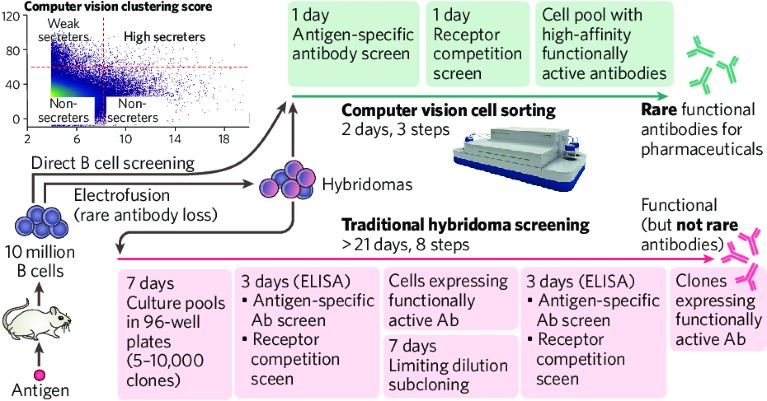
Hypercell is the first example of CVSCS. In tasking a computer with tracking cells moving through a channel, Bioelectronica has created a lensless imaging technology capable of monitoring many millions of cells. The system uses patented ‘electrofluidics’ technology to sort cells and isolate those the computer vision determines to be a ‘hit’. In this way, Hypercell is an integrated single-cell identification and sorting system with superior throughput (Fig. 1).


A computer technology vision system that rapidly sorts cells to accelerate the discovery of antibodies.

Bioelectronica has paired the vision capabilities to enough computing power to quickly analyze vast numbers of cells, helping Hypercell to detect and isolate high-secreting cells in a few hours, instead of the days it takes when working with microwell plates.

The final enabling technology is a unique approach to small-volume manipulation and measurement. Using electrodes, Hypercell steers cells as they move through the system, equipping Bioelectronica to separate off the most promising prospects for recovery, gene sequence analysis, cloning and the next stages of drug discovery.

Bioelectronica’s technology is scalable by design because the electrofluidic chips are printed using roll-to-roll manufacturing techniques, facilitating a massively parallel approach to sorting. Working with hundreds of parallel channels enables Bioelectronica to raise throughput without subjecting cells to flow rates high enough to cause shear damage.

Hypercell is being used with hybridomas, primary B, CHO and HEK 293 cells, and Bioelectronica has a development roadmap featuring assays for T cells, cell therapy and other applications. Across that wide range of uses, the power of the technology is perhaps best illustrated by its application to direct B cell screening.

Direct B cell screening is a particularly popular application because Hypercell’s throughput and speed overcome traditional limitations in working with these cells. The instability of B cells has traditionally forced researchers to fuse them with other cells to form hybridomas. That gets around the stability issue, but causes the loss of 70–90% of available B cells. It can take researchers 3 weeks to generate functional leads using the hybridoma approach.

Direct B cell screening with Hypercell eliminates the wasteful and time-consuming steps of the hybridoma process. As Hypercell works at a throughput and speed far beyond those of conventional approaches, it is possible to directly screen B cells. Direct screening shortens the time to leads from 3 weeks to 1–2 days and avoids the loss of B cells inherent in the hybridoma approach.

Accessing the technology

New applications of Hypercell, such as direct B cell screening, have attracted the attention of Big Pharma companies, while contract research organizations (CROs), contract development and manufacturing organizations (CDMOs) and smaller companies appreciate the price point and partnership opportunities that do not require large upfront cost commitments. Bioelectronica is selling Hypercell to select partners for use in their own laboratories. Because of demand, the company has also begun a contract service offering.

To support its competitively priced service offering, Bioelectronica has established wet labs capable of handling work such as applications development, sorting and cell culture. Drug developers can outsource antibody discovery and other activities to Bioelectronica, empowering them to advance programs virtually and access extra capacity to take on new projects. The contract antibody discovery service is running during the COVID-19 pandemic.

Bioelectronica is scaling up its operation but, having attracted interest from Big Pharma, it has limited spare supply for 2020. Companies interested in joining the early access program or outsourcing work to Bioelectronica should move quickly.

Drug developers that avail themselves of the services offered by Bioelectronica stand to reap major benefits. In working with a partner that radically improves cell screening, biopharma companies can build more robust pipelines, perform more thorough analysis and expand their intellectual property, all while spending less and moving more quickly than is possible using older technologies.


Website: International Research Awards on Computer Vision #computervision #deeplearning #machinelearning #artificialintelligence #neuralnetworks,  #imageprocessing #objectdetection #imagerecognition #faceRecognition #augmentedreality #robotics #techtrends #3Dvision #professor #doctor #institute #sciencefather #researchawards #machinevision #visiontechnology #smartvision #patternrecognition #imageanalysis #semanticsegmentation #visualcomputing #datascience #techinnovation #university #lecture #biomedical

Visit Our Website : computer.scifat.com Nomination Link : computer-vision-conferences.scifat.com/award-nomination Registration Link : computer-vision-conferences.scifat.com/award-registration Member Link : computer-vision-conferences.scifat.com/conference-abstract-submission Awards-Winners : computer-vision-conferences.scifat.com/awards-winners Contact us : computer@scifat.com

Get Connected Here:
==================
Social Media Link

Saturday, August 17, 2024

Weighing mice via computer vision improves pre-clinical trials


A computer vision-based method is being used to continuously measure mouse body mass non-intrusively, offering a new resource for researchers that promises to enhance the quality of a wide range of pre-clinical studies.


The approach aims to reduce the stress associated with traditional weighing techniques, improving the quality and reproducibility of biomedical research involving mice.
Stressful procedure that can impact clinical results

In both human health and biomedical research, body mass is a critical metric, often serving as an indicator of overall health and a predictor of potential health issues. For researchers working with mice – the most common subjects in preclinical studies – measuring body mass has traditionally involved removing the animals from their cages and placing them on a scale. This process can be stressful for the mice, introducing variables that can affect the outcome of experiments. Moreover, these measurements are typically taken only once every few days, further complicating the accuracy and reproducibility of data.


“We recognised the need for a better method to accurately and noninvasively measure animal mass over time,” said Associate Professor Dr Vivek Kumar, who led the study at The Jackson Laboratory For Genomic Medicine in the US. “The traditional approach not only stresses the mice but also limits the frequency and reliability of measurements, which can weaken the validity of experimental results.”
Computer vision can calculate body mass with <5% error

To address this challenge, Kumar and his team of computational scientists and software engineers, turned to computer vision technology. By analysing one of the largest mouse video datasets used by Kumar previously to also assess grooming behaviour and gait posture, they developed a method to calculate body mass with less than 5% error.

The findings, recently published in Patterns, offer a new resource for researchers that promises to enhance the quality of a wide range of preclinical studies.


Machine vision tools help improve accuracy

The research team faced several challenges in developing this method. Unlike the relatively static subjects used in industrial farming for body mass measurement, mice are highly active and flexible, frequently changing posture and shape, much like a deformable object.

Additionally, the team worked with 62 different mouse strains, ranging in mass from 13 grams to 45 grams, each with unique sizes, behaviours, and coat colours, necessitating the use of multiple visual metrics, machine learning tools, and statistical modelling to achieve the desired level of accuracy.

“In the video data, only 0.6% of the pixels belonged to each mouse, but we were able to apply computer vision methods to predict the body mass of individual mice,” explained first author Malachy Guzman. “By training our models with genetically diverse mouse strains, we ensured that they could handle the variable visual and size distributions commonly seen in laboratory settings. Ultimately our statistical models to predict mass can be used to carry out genetic and pharmacological experiments.”

This new method offers several key advantages for researchers. It enables the detection of small but significant changes in body mass over multiple days, which could be crucial for studies involving drug or genetic manipulations. Additionally, the method has the potential to serve as a diagnostic tool for general health monitoring and can be adapted to different experimental environments and other organisms in the future.


Website: International Research Awards on Computer Vision #computervision #deeplearning #machinelearning #artificialintelligence #neuralnetworks,  #imageprocessing #objectdetection #imagerecognition #faceRecognition #augmentedreality #robotics #techtrends #3Dvision #professor #doctor #institute #sciencefather #researchawards #machinevision #visiontechnology #smartvision #patternrecognition #imageanalysis #semanticsegmentation #visualcomputing #datascience #techinnovation #university #lecture #biomedical

Visit Our Website : computer.scifat.com Nomination Link : computer-vision-conferences.scifat.com/award-nomination Registration Link : computer-vision-conferences.scifat.com/award-registration Member Link : computer-vision-conferences.scifat.com/conference-abstract-submission Awards-Winners : computer-vision-conferences.scifat.com/awards-winners Contact us : computer@scifat.com

Get Connected Here:
==================
Social Media Link