
EPFL (École Polytechnique Fédérale de Lausanne) researchers have used a genetic learning algorithm to identify optimal pitch profiles for the blades of vertical-axis wind turbines. Vertical-axis wind turbines with their high energy potential, have until now been vulnerable to strong gusts of wind.The explanatory open access paper has been published Nature Communications.When you consider today’s industrial wind turbine, you likely picture the windmill design, technically known as a horizontal-axis wind turbine (HAWT). But the very first wind turbines, which were developed in the Middle East around the 8th century for grinding grain, were vertical-axis wind turbines (VAWT), meaning they spun perpendicular to the wind, rather than parallel.Due to their slower rotation speed, VAWTs are less noisy than HAWTs and achieve greater wind energy density, meaning they need less space for the same output both on- and off-shore. The blades are also more wildlife-friendly: because they rotate laterally, rather than slicing down from above, they are easier for birds to avoid.Russia Is Ready to Alter OPEC+ Production if NecessaryWith these advantages, why are VAWTs largely absent from today’s wind energy market? As Sébastien Le Fouest, a researcher in the School of Engineering Unsteady Flow Diagnostics Lab (UNFOLD) explains, it comes down to an engineering problem – air flow control – that he believes can be solved with a combination of sensor technology and machine learning. In the paper recently published in Nature Communications, Le Fouest and UNFOLD head Karen Mulleners describe two optimal pitch profiles for VAWT blades, which achieve a 200% increase in turbine efficiency and a 77% reduction in structure-threatening vibrations.EPFL’s experimental VAWT blade Image Credit: © UNFOLD EPFL CC BY SA. Click the press release link for more and larger images. Le Fouest noted, “Our study represents, to the best of our knowledge, the first experimental application of a genetic learning algorithm to determine the best pitch for a VAWT blade.”Turning an Achilles’ heel into an advantage Le Fouest explained that while Europe’s installed wind energy capacity is growing by 19 gigawatts per year, this figure needs to be closer to 30 GW to meet the UN’s 2050 objectives for carbon emissions.“The barriers to achieving this are not financial, but social and legislative – there is very low public acceptance of wind turbines because of their size and noisiness,” he said.Despite their advantages in this regard, VAWTs suffer from a serious drawback: they only function well with moderate, continuous air flow. The vertical axis of rotation means that the blades are constantly changing orientation with respect to the wind. A strong gust increases the angle between air flow and blade, forming a vortex in a phenomenon called dynamic stall. These vortices create transient structural loads that the blades cannot withstand.To tackle this lack of resistance to gusts, the researchers mounted sensors onto an actuating blade shaft to measure the air forces acting on it. By pitching the blade back and forth at different angles, speeds, and amplitudes, they generated series of ‘pitch profiles’. Then, they used a computer to run a genetic algorithm, which performed over 3500 experimental iterations. Like an evolutionary process, the algorithm selected for the most efficient and robust pitch profiles, and recombined their traits to generate new and improved ‘offspring’.This approach allowed the researchers not only to identify two pitch profile series that contribute to significantly enhanced turbine efficiency and robustness, but also to turn the biggest weakness of VAWTs into a strength.“Dynamic stall – the same phenomenon that destroys wind turbines – at a smaller scale can actually propel the blade forward. Here, we really use dynamic stall to our advantage by redirecting the blade pitch forward to produce power,” Le Fouest explained. “Most wind turbines angle the force generated by the blades upwards, which does not help the rotation. Changing that angle not only forms a smaller vortex – it simultaneously pushes it away at precisely the right time, which results in a second region of power production downwind.”The Nature Communications paper represents Le Fouest’s PhD work in the UNFOLD lab. Now, he has received a BRIDGE grant from the Swiss National Science Foundation (SNSF) and Innosuisse to build a proof-of-concept VAWT. The goal is to install it outdoors, so that it can be tested as it responds in real time to real-world conditions.“We hope this air flow control method can bring efficient and reliable VAWT technology to maturity so that it can finally be made commercially available,” Le Fouest said.One does certainly hope this development has the wherewithal to replace a lot of those dangerous ugly and noisy HAWTs. While wind is a notorious intermittent power source the industry has a lot of momentum that sucks up immense amounts of ratepayer and taxpayer money. Stamping out rent seeking plans like wind turbines could serve as an example of how terribly an economy and its citizens are damaged by political enforced rent making schemes.It would be great of the developers could say the technology can stand economically on its own. But the press release makes no such comments. The reality is these can only supplement a bit when the winds blows.

Artificial intelligence built on mountains of potentially biased information has created a real risk of automating discrimination, but is there any way to re-educate the machines?The question for some is extremely urgent. In this ChatGPT era, AI will generate more and more decisions for health care providers, bank lenders or lawyers, using whatever was scoured from the internet as source material.AI's underlying intelligence, therefore, is only as good as the world it came from, as likely to be filled with wit, wisdom, and usefulness, as well as hatred, prejudice and rants."It's dangerous because people are embracing and adopting AI software and really depending on it," said Joshua Weaver, Director of Texas Opportunity & Justice Incubator, a legal consultancy."We can get into this feedback loop where the bias in our own selves and culture informs bias in the AI and becomes a sort of reinforcing loop," he said.Making sure technology more accurately reflects human diversity is not just a political choice.Other uses of AI, like facial recognition, have seen companies thrown into hot water with authorities for discrimination.This was the case against Rite-Aid, a US pharmacy chain, where in-store cameras falsely tagged consumers, particularly women and people of color, as shoplifters, according to the Federal Trade Commission.'Got it wrong'ChatGPT-style generative AI, which can create a semblance of human-level reasoning in just seconds, opens up new opportunities to get things wrong, experts worry.The AI giants are well aware of the problem, afraid that their models can descend into bad behavior, or overly reflect a western society when their user base is global."We have people asking queries from Indonesia or the US," said Google CEO Sundar Pichai, explaining why requests for images of doctors or lawyers will strive to reflect racial diversity.But these considerations can reach absurd levels and lead to angry accusations of excessive political correctness.This is what happened when Google's Gemini image generator spat out an image of German soldiers from World War Two that absurdly included a black man and Asian woman."Obviously, the mistake was that we over-applied... where it should have never applied. That was a bug and we got it wrong," Pichai said.But Sasha Luccioni, a research scientist at Hugging Face, a leading platform for AI models cautioned that "thinking that there's a technological solution to bias is kind of already going down the wrong path."Generative AI is essentially about whether the output "corresponds to what the user expects it to" and that is largely subjective, she said.The huge models on which ChatGPT is built "can't reason about what is biased or what isn't so they can't do anything about it," cautioned Jayden Ziegler, head of product at Alembic Technologies.For now at least, it is up to humans to ensure that the AI generates whatever is appropriate or meets their expectations.'Baked in' biasBut given the frenzy around AI, that is no easy task.Hugging Face has about 600,000 AI or machine learning models available on its platform."Every couple of weeks a new model comes out and we're kind of scrambling in order to try to just evaluate and document biases or undesirable behaviors," said Luccioni.One method under development is something called algorithmic disgorgement that would allow engineers to excise content, without ruining the whole model.But there are serious doubts this can actually work.Another method would "encourage" a model to go in the right direction, "fine tune" it, "rewarding for right and wrong," said Ram Sriharsha, chief technology officer at Pinecone.Pinecone is a specialist of retrieval augmented generation (or RAG), a technique where the model fetches information from a fixed trusted source.For Weaver of the Texas Opportunity & Justice Incubator, these "noble" attempts to fix bias are "projections of our hopes and dreams for what a better version of the future can look like."But bias "is also inherent into what it means to be human and because of that, it's also baked into the AI as well," he said.

In a field as multidisciplinary as AI, collaboration is often necessary for the best results. For example, 3D vision relies on the culmination of expertise in AI hardware, vision sensing, software architecture, and model development and training. For this reason, companies tend to work together to develop AI solutions, with Nvidia being the industry’s leader in AI hardware.Recently, Orbbec announced the release of the Persee N1: a new camera-computer kit designed for 3D vision applications. The new product leverages Nvidia's Jetson platform as its computational backbone. Front view of the Persee N1. Image used courtesy of Orbbec The Persee N1The Persee N1 is an all-in-one camera-computer kit designed for 3D vision applications. The module consists of two major components: a computing platform and a depth camera.The core of the Persee N1 is the Nvidia Jetson Nano platform. This platform consists of a Quad-Core Arm A57 processor, clocked at 1.43 GHz, along with a 128-core Nvidia Maxwell architecture GPU. Together, these resources yield an AI performance of 472 GFLOPS.The camera component of the Persee N1 is Orbbec’s Gemini 2 camera, based on active stereo IR technology. This technology, combined with Orbbec’s custom ASIC, ensures high-quality depth processing. The depth camera offers a wide field of view (H91 degrees x V66 degrees) and a depth range of 0.15–10 meters. It can also deliver a depth resolution of up to 30 frames per second at 1280 x 800 and an RGB resolution of 1920 x 1080.Furthermore, the device supports multi-camera synchronization and includes an inertial measurement unit (IMU), enhancing its capabilities for complex applications. The Persee N1 operates effectively in indoor and semi-outdoor environments, with an operational temperature range of 0°C to 40°C.Orbbec developed the Persee N1 system for medtech, dimensioning, interactive gaming, and robotics applications. Plugging In the AI Computing Power of Nvidia JetsonNvidia designed its Jetson platform to accelerate AI performance for edge computing devices in a power-efficient and compact form factor. Using Nvidia's CUDA-X software, the platform supports cloud-native technologies like containerization and orchestration, enabling the development and deployment of AI applications at the edge.  Nvidia Jetson modules. Image used courtesy of Nvidia The family includes several options, each catering to a range of performance levels and form factors in edge computing. Some key products in the Jetson family include the Jetson AGX Orin Series, the Jetson Orin Nano Series, the Jetson Orin NX Series, the Jetson Orin Nano Series, the Jetson Xavier NX Series, and the Jetson Nano. Orbbec claims that the combination of the Nvidia Jetson platform with the company's Gemini 2 RGB-D camera opens doors for more advanced edge AI and robotics while also "enabling large-scale cloud-based commercial deployments.” A Collaboration in AI DevelopmentNvidia wasn't the only external party to support Orbbec's new camera-computer kit. Open Computer Vision (OpenCV), run by the non-profit Open Source Vision Foundation, also pledged support for the Persee N1 with integration to its popular OpenCV library. This library of programming functions for real-time computer vision is used in approximately 89% of all embedded vision projects, according to the company.By leveraging Nvidia's Jetson platform and the OpenCV library, Orbbec integrated specialized AI hardware and software into its 3D vision solution and made a more comprehensive vision solution available to the end user.

Researchers at the University of Basel have developed a new method for calculating phase diagrams of physical systems that works similarly to ChatGPT. This artificial intelligence could even automate scientific experiments in the future.A year and a half ago, ChatGPT was released, and ever since, there has been hardly anything that cannot be created with this new form of artificial intelligence: texts, images, videos, and even music. ChatGPT is based on so-called generative models, which, using a complex algorithm, can create something entirely new from known information.A research team led by Professor Christoph Bruder at the University of Basel, together with colleagues at the Massachusetts Institute of Technology (MIT) in Boston, have now used a similar method to calculate phase diagrams of physical systems. They recently published their results in the scientific journal Physical Review Letters.Phase diagrams are difficult to calculatePhase diagrams are fundamental in physics. They describe the states in which a material can exist—water, for instance, can be found as ice, liquid, or vapor. Between these phases, phase transitions occur depending on specific quantities such as temperature or pressure. These transitions come in different kinds—for instance, they occur between a regular electric conductor and a superconductor or from a non-magnetic to a ferromagnetic state.“However, calculating phase diagrams is difficult and requires a lot of prior knowledge and intuition on the part of the researchers,” says Julian Arnold, a PhD student in Bruder’s group. The problem is that a solid or a liquid consists of very many particles – atoms or molecules. These particles interact, meaning that they attract or repel each other; they form what is known as a many-body system. There are many possibilities for what the overall state of the material – characterized by the positions of the particles, but also additional properties, such as the orientation of the spins, which indicate the direction of magnetization – can look like.“In the past, phase diagrams were often calculated by classifying these states with the help of neural networks,” Bruder explains. This works roughly like image recognition, where an algorithm tries to distinguish between images of cats and dogs. In this case, the algorithm calculates the likelihood that a particular image shows a cat or a dog and decides accordingly.Faster thanks to generative modelsAs an alternative to this discriminative approach, the researchers in Basel and Boston have now developed a generative method. The difference is that in the generative method, which is similar to ChatGPT, the computer creates a large number of possible states of the system (in the above example, lots of cats and dogs) and decides which phase a particular state belongs to.“We have shown that the generative method can calculate a phase diagram autonomously and in a much shorter time than the discriminative method”, says Arnold. Currently, he is testing the method on a model for black holes in the universe to detect their phase transitions. In the future, the new technique might even automatize physics laboratories: the algorithm would automatically set the control parameters of an experimental apparatus and immediately calculate a phase diagram from measured data.Interestingly, the method for calculating phase diagrams inspired by ChatGPT can also be applied to models like ChatGPT itself. “ChatGPT also has something like a temperature,” Arnold explains. If this temperature is very low, the algorithm is not very creative and only produces expected results. If, on the other hand, it is too high, then the generated text becomes arbitrary and chaotic. Using the technique of the Basel researchers, one can determine the transition between these two phases and, based on that information, optimally tune language models.

A robotics company likely most famous for a demo of its dexterous robot hand at Amazon re:MARS with Jeff Bezos has now unveiled a new robust model designed for machine learning research, which was developed in collaboration with Google's DeepMind.London-based Shadow Robot has more than 20 years of robot design form behind it, and has had high-profile research and industry clients like NASA, ESA, OpenAI, Google, MIT and a number of universities on its books over the years.MORE STORIES TECHNOLOGYA pillar of the internet shifts, as Google starts doing the Googling for you
 TECHNOLOGYNext-gen spatial displays make for headset-free working in 3 dimensionsWhere previous iterations of "the world's most dexterous humanoid robot hand" have looked quite familiar from a human perspective, the new Shadow Hand – which the company says was developed with research and insights from the Google DeepMind robotics team – sports three fingers only, in gripper-like formation."A key challenge in AI and robotics is to develop hardware that is dexterous enough for complex tasks, but also robust enough for robot learning," said the company in a press statement. "Robots learn through trial and error which requires them to safely test things in the real world, sometimes executing motions at the limit of their abilities. This can cause damage to the hardware, and the resulting repairs can be costly and slow down experiments."So as well as being designed with speed, flexibility and precision in mind, the new robot hand is also built to endure "a significant amount of misuse, including aggressive force demands, abrasion and impacts."SRC New Hand May 2024 Demo 3It measures 350 mm in length, and is 165 mm wide and 160 mm high (13.78 x 6.5 x 6.3 in). A single finger weighs in at 1.2 kg (2.6 lb), while the whole hand tips the scales at 4.1 kg (9 lb). And it requires a 48-V/200-W power supply.The robot hand is reported to benefit from precise torque control, with each of the fingers able to muster up to 10 N of fingertip pinch force. The four joints of each finger are driven by motors housed in the base and connected via "tendons" and the fingers are capable of going from fully open to closed in 500 milliseconds.Each finger is a self-contained unit, and incorporates a number of 3-DOF tactile sensors at the proximal and middle segments, along with a stereo camera setup that's pointed at the inside surface of silicone skin covering the fingertip to provide high-resolution, wide-dynamic-range tactile feedback in real time – which all combine to help the robot get to grips with the world around it "through the sense of touch."SRC New Hand May 2024 Demo 2If one of the finger modules suffers fatal damage during limit-pushing AI experiments, it can be removed from the base module (which connects to a robot arm) and replaced with a fresh one for minimum downtime. The tactile sensors can also be removed/replaced if needed, with the communication network within the finger able to register the presence or absence of a sensor and feed relevant information to a host computer automatically.We don't have pricing for the Shadow Hand, but the company will demonstrate it to the public for the first time at ICRA 2024, which is due to open its doors next week in Yokohama, Japan.

Ensemble deep learning EDL combines the outputs of several machine learning (ML) models to enhance their generalization performance. The traditional approach to building an ensemble uses deep neural networks (DNNs) in a classical ensemble learning framework.EDL can overcome challenges related to unequal class distributions, small sample sizes, noisy data, etc.EDL methods are more robust than individual deep learning (DL) models and measure uncertainty directly by highlighting the disagreement between base models.They also improve generalization performance, reduce class bias, and can detect non-linear relationships in data. Furthermore, EDL methods are dynamic and can be updated easily with additional information.Application of EDL methods in case of ADThe categorization of and insights into AD-based EDL methods is based on each model's data-accessing approach. In other words, this is slice-based or voxel-based. Slice-based approaches concern models with a two-dimensional (2D) input data approach instead of an entire 3D MRI scan.On the other hand, in Voxel-based approaches, the entire 3D neuroimage is adopted directly or from 3D scans. For AD detection via a slice-based approach, a homogeneous EDL approach, a heterogeneous EDL approach, or a stacking EDL approach can be used. For voxel-based methods, either a homogeneous EDL approach or a stacking EDL approach is used.Furthermore, for each of the approaches, single- and multi-modal methodologies have been considered. When modeling neuroimaging data, the complexity could increase. In these situations, slice-based approaches are preferred to voxel-based approaches, as they can handle 2D neuroscans.SLAS EU - Highlights from 2022 eBook Compilation of the top interviews, articles, and news in the last year.Download the latest editionIntegrating VGG-16-based models in a heterogeneous framework could lead to efficient AD detection. The emphasis on learning could mitigate computational constraints while maintaining performance metrics.Researchers have also trained convolutional neural network (CNN) algorithms over different 2D MRI slices, which created optimal and robust classifier ensembles.Enhanced classification accuracy has been achieved using varied data sources, such as MRI and PET scans and genetic markers. The prediction of genome biomarkers was conducted by combining genetic insights and neuroimaging data.To ensure convergence of classification error a homogeneous ensemble makes use of many classifiers. Due to this reason, classifiers require a large amount of memory, and inference consumes substantial computing power for every test case.Heterogeneous ensembles extract the upsides of varied base models to uncover distinctive properties of the training data. This offers more generalization performance than homogeneous ensembles.However, while developing heterogeneous ensembles, the selection of complementary and diverse base models, the identification and selection of an optimal subset of classifiers, and the determination of an optimal set of weights should be carefully performed.Overall, this review suggests having an efficient multimodal longitudinal method as the final goal for an AD prediction system depending on EDL.EDL is capable of dealing with common issues concerning the scarcity of data, the potential of data being siloed, or the presence of class imbalance. Scope for further development of EDLThe current research focuses on integrating medical knowledge-based features and behavioral variables to detect AD. More accurate detection frameworks could be developed to detect clinically homogeneous individuals or groups with AD.The use of ML to bring together different biomarkers, medical knowledge-based features, neuropsychological tests, and brain imaging could significantly enhance AD research and diagnosis.The application of computationally expensive complex EDL models may not be feasible to diagnose AD because the amount of computing required to train an ensemble of independent models is costly.This is especially true if the datasets involved are large or if individual models are large, deep architectures. Therefore, designing appropriate EDL-based architectures to overcome the problems with AD detection is a fruitful area for future research.Another potential area for further development could be better incorporating new data modalities into AD characterization via EDL.Beyond neuroimaging and traditional clinical assessments, it is becoming increasingly important to integrate diverse data types, such as omics data and neuroimaging biomarkers.These offer key insights into the underlying mechanisms and disease progression. However, potential challenges around computational costs, availability of robust analytical frameworks, and data quality remain. ConclusionsIn sum, a computer-based diagnosis approach and clinical expertise could be used effectively to identify AD.Ensemble DL techniques have gained immense popularity owing to their ability to incorporate diverse data modalities. Their superior generalization capabilities also represent a marked improvement over previous methods of diagnosing AD.

In the quest for groundbreaking materials crucial to nanoelectronics, energy storage, and healthcare, a critical challenge looms: predicting a material’s properties before it is even created. This is no small feat, with any combination of 118 elements in the periodic table, and the range of temperatures and pressures under which materials are synthesized and operated. These factors drastically affect atomic interactions within materials, making accurate property prediction and behavior simulation exceedingly demanding.Here at Microsoft Research, we developed MatterSim, a deep-learning model for accurate and efficient materials simulation and property prediction over a broad range of elements, temperatures, and pressures to enable the in silico materials design. MatterSim employs deep learning to understand atomic interactions from the very fundamental principles of quantum mechanics, across a comprehensive spectrum of elements and conditions—from 0 to 5,000 Kelvin (K), and from standard atmospheric pressure to 10,000,000 atmospheres. In our experiment, MatterSim efficiently handles simulations for a variety of materials, including metals, oxides, sulfides, halides, and their various states such as crystals, amorphous solids, and liquids. Additionally, it offers customization options for intricate prediction tasks by incorporating user-provided data. Figure 1. MatterSim can model materials properties and behaviors under realistic temperature and pressure conditions for wide ranges of applications.Simulating materials under realistic conditions across the periodic tableMatterSim’s learning foundation is built on large-scale synthetic data, generated through a blend of active learning, generative models, and molecular dynamics simulations. This data generation strategy ensures extensive coverage of material space, enabling the model to predict energies, atomic forces, and stresses. It serves as a machine-learning force field with a level of accuracy compatible with first-principles predictions. Notably, MatterSim achieves a10-fold increase in accuracy for material property predictions at finite temperatures and pressures when compared to previous state-of-the-art models. Our research demonstrates its proficiency in simulating a vast array of material properties, including thermal, mechanical, and transport properties, and can even predict phase diagrams.
 Figure 2. MatterSim achieves high accuracy in predicting mechanical properties, vibrational properties, and phases diagrams of material comparable to quantum mechanics and experimental measurements. The figure shows the comparison between the predicted properties and the experimental measured results. Adapting to complex design tasksWhile trained on broad synthetic datasets, MatterSim is also adaptable for specific design requirements by incorporating additional data. The model utilizes active learning and fine-tuning to customize predictions with high data efficiency. For example, simulating water properties — a task seemingly straightforward but computationally intensive — is significantly optimized with MatterSim’s adaptive capability. The model requires only 3% of the data compared to traditional methods, to match experimental accuracy that would otherwise require 30 times more resources for a specialized model and exponentially more for first-principles methods.
 Figure 3. MatterSim achieves high data efficiency with 90%-97% data save for complex simulation tasks.MICROSOFT RESEARCH PODCAST
 Collaborators: Renewable energy storage with Bichlien Nguyen and David KwabiDr. Bichlien Nguyen and Dr. David Kwabi explore their work in flow batteries and how machine learning can help more effectively search the vast organic chemistry space to identify compounds with properties just right for storing waterpower and other renewables.Listen nowOpens in a new tabBridging the gap between atomistic models and real-world measurementsTranslating material properties from atomic structures is a complex task, often too intricate for current methods based on statistics, such as molecular dynamics. MatterSim addresses this by mapping these relationships directly through machine learning. It incorporates custom adaptor modules that refine the model to predict material properties from structural data, eliminating the need for intricate simulations. Benchmarking against MatBench(opens in new tab), a renowned material property prediction benchmark set, MatterSim demonstrates significant accuracy improvement and outperforms all specialized property-specific models, showcasing its robust capability in direct material property prediction from domain-specific data.Looking ahead As MatterSim research advances, the emphasis is on experimental validation to reinforce its potential role in pivotal sectors, including the design of catalysts for sustainability, energy storage breakthroughs, and nanotechnology advancements. The planned integration of MatterSim with generative AI models and reinforcement learning heralds a new era in the systematic pursuit of novel materials. This synergy is expected to revolutionize the field, streamlining guided creation of materials tailored for diverse applications ranging from semiconductor technologies to biomedical engineering. Such progress promises to expedite material development and bolster sustainable industrial practices, thereby fostering technological advancements that will benefit society.

OpenAI introduced ChatGPT to the world on Nov. 30, 2022. You know what happened next: hype around the AI chatbot’s capabilities, other tech companies scrambling to unveil their own AI solutions, fears of an AI-driven apocalypse and so on.Not even 18 months have passed since ChatGPT’s unveiling, and the future of AI—especially in how businesses use the technology to gain an edge with their customers—remains bright but uncertain. Some organizations have benefited from machine learning, some are on the fence and some have discovered that AI might not be all it’s cracked up to be.
PROMOTED
Search and SEO have already been impacted by AI and machine learning. Where will the impact head next? That’s difficult to predict, but we’re already seeing some trends that any business that relies on SEO must pay attention to.The Emergence Of Search Generative ExperienceGoogle and its competitors have presented search results in mostly the same way for a couple of decades now: a results page with a bunch of blue links that users can click on to find the information they need. As search has evolved with continually updated algorithms, paid ads, sponsored results and featured snippets, it’s essentially a listing of websites that match your search query.MORE FOR YOUNew FBI Warning As Hackers Strike Email Senders Must Do This 1 ThingBaby Reindeer Real Martha Reveals Identity In Photo With Piers MorganA Ukrainian M 2 Fighting Vehicle Sneaked Up On A Russian T 80 Tank at Night And Hit It With A Missile From A Mile AwayAI is starting to change that familiar formula. For example, you might type a question into Google as simple as “How old is Taylor Swift?” and, at the top of the page, get the answer without any link to a website. Underneath, you’ll see website results, and along the side, you might get more info about Taylor Swift, with a squint-and-you’ll-miss-it link to a Wikipedia page.If you think that sounds like something you might engage an AI chatbot to get an answer from, you’re not mistaken. Search generative experience, or SGE, combines generative AI with traditional search results to deliver simple answers along with actual search results. Although this approach was happening before ChatGPT, the AI wave has given it a new urgency. Why visit a search engine when a chatbot can give you the answer to your question without all the blue links?To some, SGE might seem like a compromise by Google and other search engines, and it does come with some risk. Google relies on paid ads for nearly 80% of its revenue—it can’t suddenly not have clickable links on a results page. Businesses will wonder if a paid strategy and SEO efforts will be worth it if users are diverted from their websites.The conundrum won’t be solved overnight. For the next 12-18 months, expect Google to continue to refine SGE but not to do anything drastic to embrace AI. What we may see more of in the future is an approach similar to what Perplexity.ai is using: an AI chatbot interface, but results that also include links from which the query results were drawn.We may also eventually see search engines use AI to remember your search needs and suggest further links that might interest you, even after they answer your question. For example, Google may tell you how old Taylor Swift is and then link you to a ticket site so you can see her in concert (good luck!) or get info about her upcoming album.Cutting Through The AI StaticFor businesses that rely on SEO best practices to drive organic traffic, the future might feel confusing. They need search engines to bring leads to their websites, but as search engines continue trying to figure out how AI fits in, tried-and-true strategies might become less effective. And with AI-generated content potentially flooding the internet, organizations may understandably feel that whatever they do won’t make a difference.Most likely, Google will continue to refine its search algorithms so that substandard AI-generated content will be devalued or even ignored. That means high-quality content will likely stand out above the AI static—and needs to be even more high-quality to fit in with whatever SGE-based result is returned to a user’s query.Given this likelihood, savvy businesses should emphasize going the extra mile to produce content that resonates with their audiences more than an AI-generated article ever could. Talk to your customers about what’s important. Think about topics that haven’t been covered. Focus on a personal approach that ChatGPT just can’t capture.Eventually, companies might begin to figure out what kind of content can catch the eye of SGE results—both in the immediate answers being given and the links most likely to accompany the SGE. Until then, sounding distinct from AI will probably be the best way to thrive in an AI search world.An AI Boost To SEODespite the uncertainty about how search engines adjust to the new AI world, machine learning is revolutionizing—for the better—the way businesses approach SEO. AI has made mass data analysis a much faster process, helping organizations generate reports in a fraction of the time of manual audits.For example, Google Analytics can be uploaded into a machine learning tool to reveal which keywords rank with which audience at what time, thus strengthening SEO strategy and creating efficiency. The data can inform everything from the campaigns you build to the paid search options you consider.AI can also help businesses, particularly smaller businesses with fewer resources, be savvier with their websites. Whether it’s helping with coding, design, copy, keyword usage or UX, AI can optimize a company’s web presence, potentially without hiring outside assistance.And yes, AI can help with content. It may not be able to create dynamic copy that inspires readers and increases organic traffic, but it can provide a draft that a human writer can run with en route to something unique, both to readers and search engines. Google and friends will eventually discover what the new organic traffic AI reality is: Companies should stay on the SEO path and be ready when that day comes.

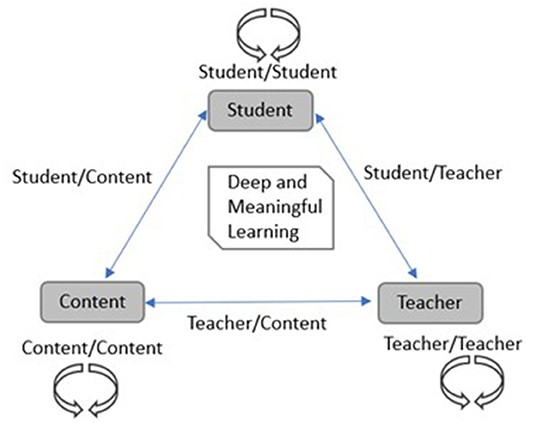
Introduction to Machine Learning-Driven AvatarsMachine learning-driven avatars represent a significant technological advancement in the realm of education, serving as dynamic teaching aids that can profoundly impact student engagement and learning outcomes. This introduction delves into the roles of AI-driven avatars within educational settings, their importance for enhancing student engagement, and the general evolution of teaching aids.Overview of AI-driven Avatars in EducationAI-driven avatars are interactive, intelligent characters developed through machine learning algorithms that can simulate human-like interactions. In educational settings, these avatars act as facilitators or tutors, capable of delivering personalized learning experiences. They can answer questions, guide learning paths, and provide feedback, all while adjusting their responses based on the learner’s performance and preferences. This level of interaction can transform traditional learning environments by making them more engaging and responsive to the needs of each student.Importance of Engagement in LearningEngagement is a cornerstone of effective learning, influencing motivation, retention rates, and overall academic success. Machine learning-driven avatars boost engagement by introducing an element of interaction and personalization that textbooks and traditional digital tools often lack. These avatars can mimic human emotions and behaviors, providing encouragement and support in a manner that resonates with students. By actively involving students in their own learning process, avatars help create a more immersive and enjoyable learning experience, which is crucial for sustained educational engagement.Evolution of Teaching AidsThe evolution of teaching aids over the years reflects broader technological advancements and an increased understanding of educational psychology. From chalkboards to projectors, and now to AI-driven avatars, each shift has sought to improve the delivery of information and facilitate better learning. Modern avatars represent the pinnacle of this evolution, embodying the integration of artificial intelligence and educational theory to cater to the diverse needs of students. Unlike their predecessors, these avatars are not just tools but active participants in the educational process, capable of adapting and evolving in response to student interaction, which marks a revolutionary step in educational technology.Theoretical Foundations of Machine Learning-Driven Avatars in Education This chapter explores the theoretical underpinnings that support the use of machine learning-driven avatars in educational settings. It examines how learning theories justify the use of avatars and discusses the psychological impact these interactive agents can have on students.Learning Theories Supporting the Use of AvatarsThe application of AI-driven avatars in education is deeply rooted in several established learning theories, including Constructivism, Social Learning Theory, and the Theory of Multiple Intelligences. Constructivism suggests that learners construct knowledge through experiences and interactions, making personalized avatars ideal for facilitating such dynamic learning environments. Social Learning Theory emphasizes the importance of observation, imitation, and modeling, which avatars can simulate by demonstrating and guiding learning processes. Lastly, the Theory of Multiple Intelligences proposes that people have various kinds of intelligence, and personalized avatars can cater to individual strengths and weaknesses by offering customized learning paths.Psychological Impact of Interactive AvatarsThe psychological impact of interactive avatars in education can be profound. They can serve as motivational agents that enhance student engagement and emotional connection to the learning material. By providing immediate feedback, encouragement, and adaptive interactions, avatars help reduce feelings of isolation, especially in remote learning environments. Furthermore, the presence of a responsive and empathetic avatar can alleviate anxiety and improve self-efficacy among learners. These emotional and psychological supports are crucial for maintaining student interest and promoting a positive learning experience.The theoretical foundations of using machine learning-driven avatars in education not only align with how humans learn and interact but also enhance the emotional and cognitive aspects of learning. This alignment ensures that avatars are not just technological tools but are integral components of a modern educational strategy designed to meet diverse learner needs effectively.Design and Development of Educational Avatars
 In this chapter, we delve into the specific attributes that make educational avatars effective and the technological foundations necessary for their development. Understanding these elements is crucial for creating avatars that genuinely enhance learning experiences.Key Features of Effective Educational AvatarsThe design of effective educational avatars hinges on several key features that cater to educational needs and enhance learner engagement:Personalization: Avatars must be able to adjust their behavior and feedback according to the unique preferences and learning styles of each student. This customization makes learning more relevant and effective.Interactivity: High levels of interactivity allow avatars to engage students in conversations and activities, making learning more dynamic and less passive.Emotional Intelligence: Avatars equipped with emotional intelligence can recognize and respond to the emotional states of students, providing support during challenging tasks or when motivation dips.Multimodal Communication: Effective avatars can communicate through multiple modes, such as text, voice, and visual gestures, which helps in accommodating different learning preferences and making the learning process more comprehensive and accessible.Technological Requirements and Software UsedDeveloping sophisticated educational avatars involves a complex interplay of software and hardware:AI and Machine Learning Platforms: Tools like TensorFlow or PyTorch provide the necessary frameworks for building the machine learning models that power avatars, enabling them to learn from interactions and improve over time.Natural Language Processing (NLP): NLP technologies are crucial for enabling avatars to understand and generate human-like responses, which are essential for seamless interactions.Graphics and Animation Software: High-quality visual representations are vital for creating engaging avatars. Software such as Unity or Blender is used to design and animate avatars, making them appear lifelike and appealing.Cloud Computing: To manage the substantial computational demands of running AI-driven avatars, cloud computing platforms are often utilized, allowing for scalability and accessibility across various educational settings.The design and technological development of educational avatars are critical to their success as teaching tools. By focusing on these areas, developers can ensure that avatars are not only functional but also engaging and capable of significantly enhancing the educational experience.Case StudiesThis chapter presents several case studies that illustrate the practical implementation and outcomes of using machine learning-driven avatars in different educational settings. These examples highlight how AI-driven avatars have been effectively integrated into both K-12 and higher education environments.K-12 Education ImprovementsMachine learning-driven avatars have revolutionized the way subjects are taught in K-12 settings by providing interactive and personalized learning experiences. For instance, in a middle school science class, an avatar named “EduBot” was introduced to help students with complex topics like photosynthesis and cellular respiration. EduBot interacted with students via a virtual platform, where it responded to their questions, conducted virtual experiments, and provided feedback on their assignments. The integration of EduBot led to a noticeable improvement in student test scores and engagement, particularly among students who had previously struggled with science subjects. Teachers also reported that the avatars allowed for more differentiated instruction, as EduBot could adapt its teaching methods to suit various learning speeds and styles.Higher Education EnhancementsIn higher education, avatars have been used to supplement university lectures and tutorials. A notable example is at a university where a machine learning-driven avatar named “Professor AI” was developed to assist in a computer science course. This avatar was programmed to help students with programming languages and algorithms through interactive sessions and problem-solving exercises. Professor AI provided a way for students to receive one-on-one tutoring outside of regular class hours, accommodating students’ varying schedules and learning paces. The use of Professor AI not only improved students’ proficiency in computer science but also freed up time for human professors to engage in more in-depth research discussions and personalized mentoring.These case studies demonstrate the versatility and effectiveness of educational avatars in enhancing the learning environment. By providing tailored educational support, these avatars help bridge gaps in understanding and allow educators to manage classroom diversity more effectively.Case Studies: Machine Learning-Driven Avatars in Education
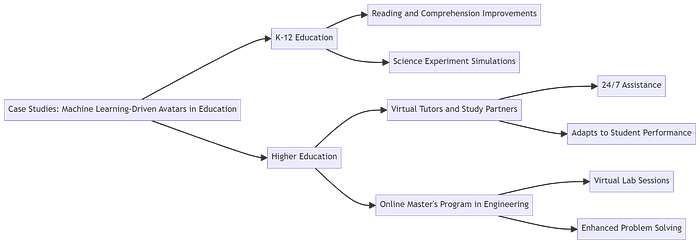 In this chapter, we explore real-world applications of machine learning-driven avatars in education through detailed case studies. These examples from K-12 and higher education settings illustrate the tangible benefits and enhancements that AI-driven avatars bring to educational environments.K-12 Education ImprovementsMachine learning-driven avatars have revolutionized the K-12 educational landscape by providing personalized learning experiences that cater to the needs of younger students. For instance, a primary school in California implemented an AI-driven avatar program to assist in reading and comprehension tasks. The avatars, equipped with NLP capabilities, interact with students in real-time, offering guidance, pronunciation help, and immediate feedback. This approach has led to measurable improvements in reading scores and has significantly increased student engagement and confidence in reading.Furthermore, avatars are used in science classes to simulate scientific experiments and phenomena, allowing students to explore complex concepts in a safe and controlled virtual environment. This interactive method has proven to enhance understanding and retention of scientific principles among students, as evidenced by higher test scores and more active participation in class discussions.Higher Education EnhancementsIn higher education, avatars are increasingly being deployed to create more engaging and interactive learning environments. At a university level, AI-driven avatars serve as virtual tutors and study partners in online courses. They provide round-the-clock assistance and can handle a range of queries from students, making higher education more accessible to those with varying schedules and learning paces.A notable example is the use of an AI-driven avatar in an online master’s program in engineering, where the avatar facilitates virtual lab sessions, assists with complex problem-solving, and adapts tutorials based on individual performance data. Feedback from students indicates that the avatar’s presence has led to a deeper understanding of material and greater satisfaction with the learning process. The program has seen an increase in course completion rates and overall student performance.These case studies demonstrate the significant impact that machine learning-driven avatars can have on educational outcomes. By providing personalized attention and interactive learning opportunities, these avatars are helping to transform traditional educational models into more effective and engaging experiences.Effectiveness and Impact of Machine Learning-Driven Avatars in Education
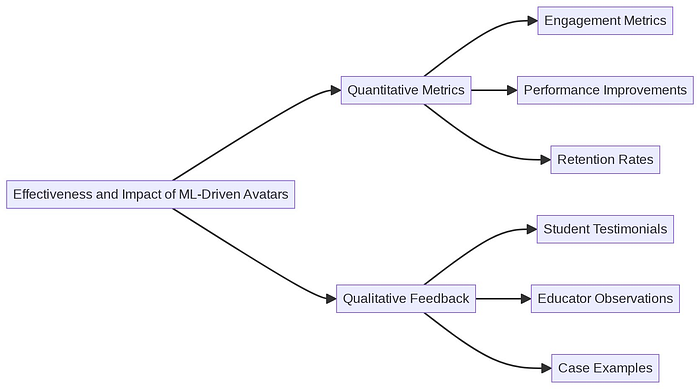 This chapter assesses the effectiveness and broader impact of machine learning-driven avatars in educational settings, exploring both quantitative metrics of success and qualitative feedback from users to illustrate the avatars’ influence on learning experiences.Quantitative Metrics of SuccessThe effectiveness of AI-driven avatars in education can be evaluated through various quantitative metrics:Engagement Metrics: Attendance rates and active participation in sessions with avatars have shown significant improvement. For example, schools using avatars report a 30% increase in attendance and a 50% rise in active class participation.Performance Improvements: Standardized test scores provide concrete evidence of the educational impact of avatars. Data collected from multiple institutions reveal that students who interact regularly with educational avatars score on average 15% higher than those who do not.Retention Rates: In online courses, where student dropout rates are typically high, the introduction of avatars has led to a noticeable decrease in dropout rates, with a 25% improvement in course completion rates among participants engaged with avatar-based learning.Qualitative Feedback and Case ExamplesBeyond numbers, the impact of avatars is profoundly reflected in qualitative feedback from students and educators:Student Testimonials: Many students express that learning with avatars feels more personalized and engaging. They appreciate the immediate feedback and the ability to explore learning at their own pace, which helps reduce anxiety and build confidence.Educator Observations: Teachers and professors note that avatars have transformed the teaching dynamic, allowing them more time to focus on creative teaching strategies and individual student needs. They also observe improved interaction and enthusiasm for learning among students.Case Example: A particular case at a Midwestern university, where an avatar was used in a large introductory biology course, exemplifies these impacts. The avatar, which conducted interactive Q&A sessions, not only made the course more accessible but also helped students perform better in their exams, especially in complex topics.The combination of quantitative data and qualitative feedback demonstrates that machine learning-driven avatars are not just a technological innovation but a transformative educational tool that enhances the learning environment, making education more accessible, engaging, and effective.Challenges and Limitations of Machine Learning-Driven Avatars in Education
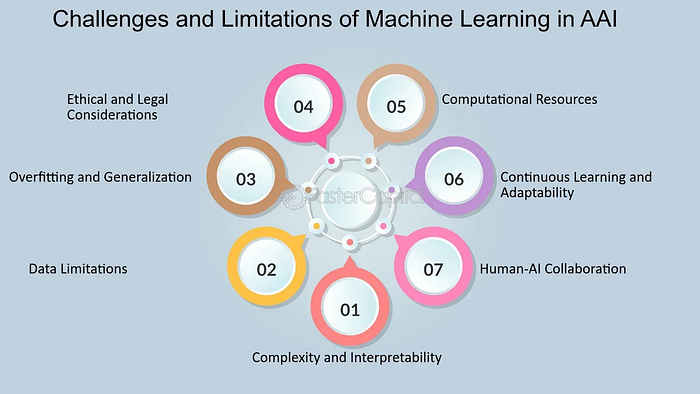 This chapter addresses the challenges and limitations associated with the deployment of machine learning-driven avatars in educational settings. It explores both technical obstacles and ethical considerations, offering insights into how these issues can be managed or mitigated.Technical Challenges and SolutionsThe integration of AI-driven avatars in education is not without its technical hurdles:Data Privacy and Security: Handling sensitive student data responsibly is crucial. Ensuring data privacy involves implementing robust encryption methods and secure data storage solutions. Regular audits and compliance with data protection regulations (like GDPR) are essential for maintaining trust.Scalability: As the demand for personalized learning increases, scaling avatars to accommodate more students without losing performance or personalization quality poses a significant challenge. Solutions include cloud-based architectures that can dynamically adjust resources based on demand.Interoperability: Educational avatars must seamlessly integrate with various learning management systems (LMS) and educational tools. Developing standard APIs and ensuring compatibility across platforms are critical to the widespread adoption of avatars.Ethical Considerations and Societal ImpactBeyond technical issues, ethical concerns also play a critical role in the deployment of educational avatars:Bias and Fairness: Machine learning models can inadvertently perpetuate biases present in their training data. It’s crucial to implement diverse datasets and continuous monitoring to mitigate bias in avatars’ responses and interactions.Depersonalization of Education: There’s a risk that reliance on avatars might lead to a depersonalized education experience. Balancing avatar-led interactions with human contact is vital to ensure that students still benefit from the essential social aspects of learning.Accessibility: Ensuring that avatars are accessible to all students, including those with disabilities, is a fundamental requirement. This includes designing avatars that are compatible with assistive technologies and available in multiple languages.Addressing these challenges requires a thoughtful approach that balances technological advancements with ethical considerations and societal values. By navigating these issues carefully, the potential of AI-driven avatars to enhance educational experiences can be fully realized.Future Directions of Machine Learning-Driven Avatars in Education
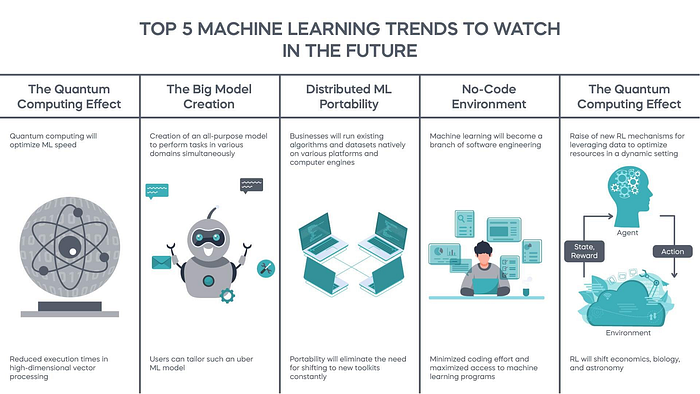 This concluding chapter explores the emerging trends and potential innovations in the field of machine learning-driven avatars in education, along with how these avatars might be integrated with other educational technologies to further enhance learning experiences.Emerging Trends and Potential InnovationsThe future of educational avatars is shaped by ongoing advances in AI and machine learning, with several key trends poised to enhance their effectiveness and reach:Advanced AI Personalization: Future avatars will exhibit even more sophisticated personalization capabilities, using deep learning to adapt in real-time to students’ emotional and cognitive states. This could involve more nuanced interpretations of student feedback and automated adjustments to teaching strategies.Augmented and Virtual Reality Integration: By combining AI-driven avatars with AR and VR technologies, immersive learning environments can be created where avatars act as guides through virtual simulations. This integration promises to make learning experiences more engaging and realistic, particularly in fields like medicine, engineering, and science.Voice and Facial Recognition: Enhancements in voice and facial recognition technologies could allow avatars to respond more effectively to student inquiries and emotions, fostering a more interactive and empathetic educational experience.Integration with Other Educational TechnologiesThe integration of machine learning-driven avatars with other educational technologies could revolutionize the educational landscape:Learning Management Systems (LMS): Integrating avatars into LMS platforms can provide a more seamless and interactive learning experience. Avatars could serve as personal tutors, offering guidance based on student performance data collected by the LMS.Adaptive Learning Platforms: These platforms adjust content and assessments based on student performance. Avatars could enhance these platforms by providing real-time assistance and feedback, making adaptive learning more responsive and personalized.Collaborative Technologies: Avatars could facilitate collaboration among students in virtual settings, guiding discussions and group activities to ensure productive and inclusive interactions.The potential for machine learning-driven avatars to transform education is immense. As technology advances, these avatars are likely to become even more integrated into educational systems, making learning more personalized, accessible, and effective across diverse educational settings.Advancing Education Through Machine Learning-Driven AvatarsMachine learning-driven avatars represent a profound shift in educational methodologies, blending innovative technology with personalized learning to create more engaging and effective educational experiences. This conclusion summarizes the impact of AI-driven avatars on education and envisions their potential future developments.Transformative Potential of Educational AvatarsAI-driven avatars have demonstrated significant potential to enhance learning outcomes across various educational levels and disciplines. By personalizing interactions and providing adaptive feedback, these avatars have made education more accessible and engaging for a diverse range of learners. Their ability to simulate human-like interactions and respond empathetically to students has transformed traditional learning environments, making education not just more informative but also more motivating.Future ProspectsThe future of educational avatars looks promising, with advancements in AI and machine learning continually expanding their capabilities. The integration of avatars with other technological innovations, such as augmented and virtual reality, is set to create even more immersive and interactive learning experiences. Furthermore, as ethical, and technical challenges are addressed, the deployment of avatars will become more widespread, offering substantial benefits in personalizing education and enhancing learning processes.Final ThoughtsAs we look forward, machine learning-driven avatars will play a crucial role in the evolution of educational practices. Their development and integration into educational systems represent a key advancement towards more dynamic, inclusive, and student-centered learning environments. By continuing to harness the power of AI, educators and technologists can ensure that educational avatars not only improve learning outcomes but also inspire a new generation of learners.
 Harvard researchers have innovated a compact, single-shot polarization imaging system that simplifies traditional setups and expands applications in medical, AR, and smartphone technologies, enhancing real-time and machine learning-integrated imaging capabilities. Credit: SciTechDaily.com
 Scientists have developed a compact, single-shot, and complete polarization imaging system using metasurfaces.Think of all the information we get based on how an object interacts with wavelengths of light — a.k.a. color. Color can tell us if food is safe to eat or if a piece of metal is hot. Color is an important diagnostic tool in medicine, helping practitioners diagnose diseased tissue, inflammation, or problems in blood flow.Companies have invested heavily to improve color in digital imaging, but wavelength is just one property of light. Polarization — how the electric field oscillates as light propagates — is also rich with information, but polarization imaging remains mostly confined to table-top laboratory settings, relying on traditional optics such as waveplates and polarizers on bulky rotational mounts.Breakthrough in Compact Polarization ImagingNow, researchers at the Harvard John A. Paulson School of Engineering and Applied Sciences (SEAS) have developed a compact, single-shot polarization imaging system that can provide a complete picture of polarization. By using just two thin metasurfaces, the imaging system could unlock the vast potential of polarization imaging for a range of existing and new applications, including biomedical imaging, augmented and virtual reality systems, and smartphones.The research is published in Nature Photonics.
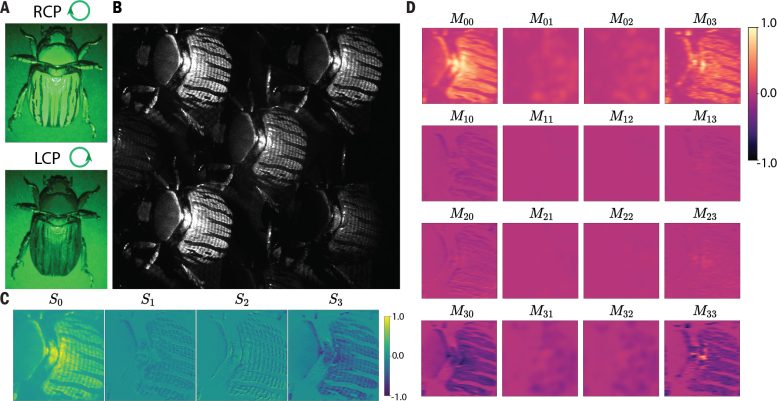 A unique species of beetle, Chrysina gloriosa, has a distinct response for circularly polarized light reflecting off its shell. This chiral response is correctly imaged by the new system. Credit: Aun Zaidi/Harvard SEAS“This system, which is free of any moving parts or bulk polarization optics, will empower applications in real-time medical imaging, material characterization, machine vision, target detection, and other important areas,” said Federico Capasso, the Robert L. Wallace Professor of Applied Physics and Vinton Hayes Senior Research Fellow in Electrical Engineering at SEAS and senior author of the paper.In previous research, Capasso and his team developed a first-of-its-kind compact polarization camera to capture so-called Stokes images, images of the polarization signature reflecting off an object – without controlling the incident illumination.Active Polarization Imaging“Just as the shade or even the color of an object can appear different depending on the color of the incident illumination, the polarization signature of an object depends on the polarization profile of the illumination,” said Aun Zaidi, a recent PhD graduate from Capasso’s group and first author of the paper. “In contrast to conventional polarization imaging, ‘active’ polarization imaging, known as Mueller matrix imaging, can capture the most complete polarization response of an object by controlling the incident polarization.”Currently, Mueller matrix imaging requires a complex optical set-up with multiple rotating plates and polarizers that sequentially capture a series of images which are combined to realize a matrix representation of the image.The simplified system developed by Capasso and his team uses two extremely thin metasurfaces — one to illuminate an object and the other to capture and analyze the light on the other side.The first metasurface generates what’s known as polarized structured light, in which the polarization is designed to vary spatially in a unique pattern. When this polarized light reflects off or transmits through the object being illuminated, the polarization profile of the beam changes. That change is captured and analyzed by the second metasurface to construct the final image – in a single shot.The technique allows for real-time advanced imaging, which is important for applications such as endoscopic surgery, facial recognition in smartphones, and eye tracking in AR/VR systems. It could also be combined with powerful machine-learning algorithms for applications in medical diagnostics, material classification, and pharmaceuticals.“We have brought together two seemingly separate fields of structured light and polarized imaging to design a single system that captures the most complete polarization information. Our use of nanoengineered metasurfaces, which replace many components that would traditionally be required in a system such as this, greatly simplifies its design,” said Zaidi.“Our single-shot and compact system provides a viable pathway for the widespread adoption of this type of imaging to empower applications requiring advanced imaging,” said Capasso.Reference: “Metasurface-enabled single-shot and complete Mueller matrix imaging” by Aun Zaidi, Noah A. Rubin, Maryna L. Meretska, Lisa W. Li, Ahmed H. Dorrah, Joon-Suh Park and Federico Capasso, 2 May 2024, Nature Photonics.
DOI: 10.1038/s41566-024-01426-xThe Harvard Office of Technology Development has protected the intellectual property associated with this project out of Prof. Capasso’s lab and licensed the technology to Metalenz for further development.The research was co-authored by Noah Rubin, Maryna Meretska, Lisa Li, Ahmed Dorrah and Joon-Suh Park. It was supported by the Air Force Office of Scientific Research under award Number FA9550-21-1-0312, the Office of Naval Research (ONR) under award number N00014-20-1-2450, the National Aeronautics and Space Administration (NASA) under award numbers 80NSSC21K0799 and 80NSSC20K0318, and the National Science Foundation under award no. ECCS-2025158.

Machine Learning (ML) algorithms serve as the cornerstone of data science, providing essential tools for processing and deriving meaningful insights from extensive data sets. As the year 2024 progresses, the ML algorithms landscape is undergoing continuous evolution, presenting data scientists with a multitude of options to address intricate problems. This article aims to explore the machine learning algorithms for 2024 that are currently shaping the data science industry.Machine Learning Algorithm DevelopmentOver time, there have been notable developments in the field of machine learning as algorithms have become increasingly complex and task-specific. Data scientists will have access to several algorithms in 2024, each with specific advantages and best applications.Supervised Education: An Effective Predictive ToolSupervised learning techniques continue to be an essential part of the toolbox of data scientists. By using labeled training data, these algorithms can anticipate or make conclusions based on previously unknown data. A few important supervised learning algorithms are:Linear Regression: Linear regression is utilized in forecasting and estimating outcomes based on continuous data, and it is ideal for predicting numerical values.Logistics Regression: Logistic regression is a tool that is frequently used in the medical industry for diagnostic reasons. It is used for binary classification jobs and predicts categorical outcomes.Decision Trees: These models make decisions using a tree-like structure, which is frequently shown as a flowchart with each node denoting an option.Random Forest: An ensemble approach that lessens overfitting and boosts prediction accuracy by combining many decision trees.Unsupervised Learning: Discovering Hidden PatternsAlgorithms for unsupervised learning may recognize structures and patterns in data without the requirement for labeled samples. They are very helpful for dimensionality reduction, grouping, and exploratory data analysis. Among the well-known unsupervised learning methods are:K-Means Clustering: This approach, which is frequently used in picture compression and market segmentation, divides data into clusters according to similarity.Principal Component Analysis (PCA): PCA breaks down large amounts of data into a collection of main components, which are linearly uncorrelated variables.Reinforcement Learning: Acquiring Knowledge Through InteractionReinforcement learning algorithms experiment with an environment to find the best course of action. In fields where the capacity to adjust to changing circumstances is essential, such as robots, gaming, and autonomous cars, these algorithms are at the forefront.Deep Learning: Large-Scale Neural NetworksNeural networks with numerous layers, or “deep architectures,” are used in deep learning, a type of machine learning, to model complicated patterns in data. Deep learning will still be a major force in the advancement of computer vision, speech recognition, and natural language processing in 2024.New Developments in Algorithms for Machine LearningSeveral new developments in machine learning algorithms have emerged in 2024:Graph Neural Networks (GNNs): GNNs are becoming more and more popular because of their capacity to represent data that is organized as graphs, which is helpful in recommendation systems and social network analysis.Neuro-Symbolic AI: This method builds models that can learn and reason with abstract notions by fusing neural networks and symbolic reasoning.Quantum Machine Learning: By utilizing the ideas behind quantum computing, algorithms for quantum ML stand to handle some problems far more quickly than those for conventional ML.The Future of Machine Learning AlgorithmsThe development of ML frameworks and cloud computing has made machine learning techniques more widely available and simpler to use as they continue to progress. By utilizing more sophisticated datasets, data scientists will be able to derive valuable insights that will spur innovation and decision-making in a variety of sectors by 2024.In 2024, there will be a wide range of machine learning algorithms available, providing data scientists with a strong set of tools to succeed in their line of work. The options are endless, ranging from conventional supervised and unsupervised learning to cutting-edge techniques like GNNs and quantum ML. Keeping up with these advancements will be essential for any data scientist hoping to influence the profession as it grows.
