Tuesday, January 21, 2025

Artificial Intelligence Predicts: Who Would Win, Predator or Alien?


AI researchers have started using advanced predictive algorithms to model battles between these formidable extraterrestrials. By feeding machine learning models with extensive data from films, comics, and literature, these simulations analyze the strengths, weaknesses, adaptability, and strategies of both creatures. Predators, known for their highly advanced technology and hunting prowess, are juxtaposed against Aliens, renowned for their sheer numbers, adaptability, and acidic defenses.

Preliminary simulations suggest that while Predators hold an edge in terms of technology and strategy, Aliens possess an overwhelming advantage in numbers and resilience. These AI-driven insights reveal that victory could hinge not only on individual combat capabilities but also on the environment and external conditions of the encounter. For example, scenarios set in densely populated areas favor the Predator’s stealth, whereas confined spaces amplify the Alien’s swarming tactics.

The implications of this research extend beyond fan speculation. Advanced AI simulations provide a novel platform for speculative fiction, offering a glimpse into how technology can redefine and enrich narrative experiences. As machine learning technology progresses, we might soon witness real-time, interactive simulations that allow users to alter variables and witness ever-evolving outcomes in the Predator versus Alien saga.
The Future of AI in Shaping Narrative Worlds

The intriguing application of artificial intelligence to simulate hypothetical battles between fictional extraterrestrials like Predators and Aliens marks a significant evolution in technology’s role in storytelling and entertainment. Beyond the entertaining fan debates, this approach has far-reaching implications for the environment, humanity, and the future of the global economy.

Impacts on the Environment:
The utilization of advanced AI models to simulate complex systems isn’t limited to science fiction; it also holds potential for real-world environmental applications. By drawing parallels, AI can be employed to predict ecological battles and interactions, such as invasive species versus native species. Understanding these dynamics helps in devising strategies to protect endangered ecosystems and species by simulating various conditions and outcomes to find optimal interventions.

Effects on Humanity:
Humanity’s interaction with AI in speculative fiction represents a broader trend of increasing human-computer collaboration. As AI becomes more sophisticated, it allows for new forms of engagement with narratives, encouraging active participation rather than passive consumption. This could foster a deeper connection to cultural stories and potentially serve as an educational tool, promoting critical thinking and adaptive learning.

Economic Connections:
The development of AI-driven speculative simulations could spur economic growth in several sectors. The entertainment industry stands to benefit significantly, offering audiences more immersive and customizable experiences. Beyond that, other industries such as gaming, education, and even military training could adopt similar AI technologies for simulations that prepare for real-world scenarios, allowing for cost-effective and safe training environments.

Implications for the Future of Humanity:
The blending of AI with speculative narratives showcases a future where machine learning not only supports practical human needs but also enriches cultural and imaginative endeavors. By predicting complex systems and outcomes, AI can guide humanity in addressing some of the world’s pressing challenges, from climate change to urban planning. Furthermore, as this technology becomes more accessible, it underscores the importance of ethical standards and governance in AI development. Ensuring these simulations remain beneficial aligns with a future where technology and humanity coexist harmoniously, paving the way for thoughtful progress and deepened storytelling potential.


Website: International Research Awards on Computer Vision #computervision #deeplearning #machinelearning #artificialintelligence #neuralnetworks,  #imageprocessing #objectdetection #imagerecognition #faceRecognition #augmentedreality #robotics #techtrends #3Dvision #professor #doctor #institute #sciencefather #researchawards #machinevision #visiontechnology #smartvision #patternrecognition #imageanalysis #semanticsegmentation #visualcomputing #datascience #techinnovation #university #lecture #biomedical

Visit Our Website : computer.scifat.com Nomination Link : computer-vision-conferences.scifat.com/award-nomination Registration Link : computer-vision-conferences.scifat.com/award-registration Member Link : computer-vision-conferences.scifat.com/conference-membership/? ecategory=Membership&rcategory=Member
Contact us : computer@scifat.com
Friday, January 17, 2025

Artificial intelligence algorithms used to tune particle accelerators


Accelerators — machines that speed up particles such as protons — are useful in nuclear and high-energy physics as well as materials science, dynamic imaging and even isotope production for cancer therapy. A Los Alamos National Laboratory-led project presents a machine learning algorithm that harnesses artificial intelligence capabilities to help tune accelerators, making continuous adjustments that keep the beam precise and useful for scientific discovery.

“The complexity and time variation of the machinery means that over extended usage, the characteristics of an accelerator’s particle beam change,” said Alexander Scheinker, research and development engineer at Los Alamos and the project’s lead. “Factors like vibrations and temperature changes can cause problems for accelerators, which have thousands of components, and even the best accelerator technicians can struggle to identify and address issues or return them to optimum parameters quickly. It is a high-dimensional optimization problem that must be repeated again and again as the systems drift with time. Turning these machines on after an outage or retuning between different experiments can take weeks.”


An accelerator that can be effectively tuned in real time can provide higher currents to experiments and is more likely to stay running, offering more beam time for science experiments, and is also more likely to ensure precise results. In a collaboration with Lawrence Berkeley National Laboratory, the approach developed by Scheinker couples adaptive feedback control algorithms, deep convolutional neural networks and physics-based models in one large feedback loop to make better, noninvasive predictions that enable autonomous control of compact accelerators.


Website: International Research Awards on Computer Vision #computervision #deeplearning #machinelearning #artificialintelligence #neuralnetworks,  #imageprocessing #objectdetection #imagerecognition #faceRecognition #augmentedreality #robotics #techtrends #3Dvision #professor #doctor #institute #sciencefather #researchawards #machinevision #visiontechnology #smartvision #patternrecognition #imageanalysis #semanticsegmentation #visualcomputing #datascience #techinnovation #university #lecture #biomedical

Visit Our Website : computer.scifat.com Nomination Link : computer-vision-conferences.scifat.com/award-nomination Registration Link : computer-vision-conferences.scifat.com/award-registration Member Link : computer-vision-conferences.scifat.com/conference-membership/? ecategory=Membership&rcategory=Member
Contact us : computer@scifat.com

Saturday, January 11, 2025

Computer vision startup Ubicept helps AI systems to see in the dark


Artificial intelligence startup Ubicept Inc. says it has developed a new kind of computer vision technology that’s able to process image data at the photon level to create machines that can “see” with unprecedented perception, clarity and precision.

The startup is showcasing its technology this week at the 2025 CES consumer electronics show in Las Vegas, where it’s demonstrating its superiority to existing computer visions in challenging scenarios such as autonomous vehicle navigation in the dark and robots operating in low-light conditions.

According to Ubicept, existing computer vision systems struggle to work properly in conditions where there is insufficient lighting available. The problem stems from the constraints of the cameras and image sensor hardware those systems rely on, which struggle to capture fast movement in the dark, resulting in blurry or noisy images.

Ubicept changes that by using a combination of proprietary software and Single-Photon Avalanche Diode or SPAD sensors, which are the same technology found in iPhone LiDAR systems. It says this combination can make existing image sensors far more powerful, enabling “crystal-clear imaging” in extreme low light conditions without any motion blur, and high-speed motion capture without light streaking.

In addition, the system can capture precise images in scenarios where there are bright and dark areas in the same environment, and ensure precise synchronization with lights such as LEDs and lasers to support the use of 3D applications.

Ubicept co-founder and Chief Executive Sebastian Bauer insisted that his company has developed the “optimal” imaging system. “By processing individual photons, we’re enabling machines to see with astounding clarity across all lighting conditions simultaneously, including pitch darkness, bright sunlight, fast motion, and 3D sensing,” he said.

The startup is making the technology available through its Flexible Light Acquisition and Representation Engine or FLARE Development Kit. It combines a one-megapixel, full-color SPAD sensor with the company’s proprietary sensor-agnostic processing software, and it can reportedly work with any kind of camera or image sensor.

In this way, Ubicept says its technology can enable any autonomous vehicle, robot, drone, machine or camera system to see with unrivaled precision in any environment.

Ubicept’s other co-founder, Chief Technology Officer Tristan Swedish, said the next wave of AI systems that have real-world applications will be hugely reliant on computer vision to view their surroundings, so those systems need to be much more reliable.

“Today’s cameras were designed for humans, and using standard image data for computer vision systems won’t get us there,” he said. “Ubicept’s technology bridges that gap, enabling computer vision systems to achieve ideal perception. Our mission is to create a scalable, software-defined camera system that powers the future of computer vision.”


Website: International Research Awards on Computer Vision #computervision #deeplearning #machinelearning #artificialintelligence #neuralnetworks,  #imageprocessing #objectdetection #imagerecognition #faceRecognition #augmentedreality #robotics #techtrends #3Dvision #professor #doctor #institute #sciencefather #researchawards #machinevision #visiontechnology #smartvision #patternrecognition #imageanalysis #semanticsegmentation #visualcomputing #datascience #techinnovation #university #lecture #biomedical

Visit Our Website : computer.scifat.com Nomination Link : computer-vision-conferences.scifat.com/award-nomination Registration Link : computer-vision-conferences.scifat.com/award-registration Member Link : computer-vision-conferences.scifat.com/conference-membership/? ecategory=Membership&rcategory=Member
Contact us : computer@scifat.com

Friday, January 10, 2025

The Development and Application of Artificial Intelligence: Risk Analysis of Deepfake Technology on Hong Kong Financial Institutions


As technology advances rapidly, artificial intelligence (AI) has become one of the most revolutionary technologies of the 21st century. In Hong Kong, an international financial center, the application of AI continues to deepen, bringing enormous opportunities to the financial industry. However, any technological progress comes with risks and challenges. Particularly in Hong Kong’s financial sector, the emergence of deepfake technology has introduced unprecedented security threats to financial institutions.

Development of Artificial Intelligence in Hong Kong

As Asia’s technological innovation hub, Hong Kong has been actively promoting the research and application of artificial intelligence. The Special Administrative Region (SAR) government clearly stated in the Hong Kong Smart City Blueprint2.0 that AI technology should be vigorously developed to enhance urban management and service levels. Collaborating with the industry, the government has established multiple innovation and technology funds to support AI-related research projects. Universities and research institutions in Hong Kong have also set up AI research centers to cultivate professional talent. The country supports and promotes Hong Kong’s development into an international innovation and technology center.


The Widespread Application of Artificial Intelligence in Hong Kong

In the financial sector, banks and insurance institutions in Hong Kong have widely adopted AI technology. Machine learning algorithms are used for risk assessment and market forecasting, improving the accuracy of investment decisions. Natural language processing technology is applied in intelligent customer service systems to provide customer support services and enhance customer satisfaction. Additionally, AI is utilized in anti-money laundering and fraud detection, strengthening the compliance capabilities of financial institutions.

In the medical field, AI-assisted diagnostic systems help doctors diagnose diseases faster and more accurately, achieving significant results, especially in cancer screening and chronic disease management. In education, intelligent teaching platforms offer students personalized learning experiences, allowing teachers to adjust teaching strategies based on data analysis. The transportation management department uses AI to optimize traffic signals, reduce congestion, and improve citizens’ travel efficiency. The Hong Kong government has also collaborated with the Hong Kong University of Science and Technology to develop a Hong Kong version of ChatGPT, conducting trials and applications within government departments.

The Rise and Risks of Deepfake Technology

However, the development of AI has also brought new risks, with deepfake technology being a prominent concern. Deepfake utilizes deep learning algorithms such as Generative Adversarial Networks (GANs) to generate highly realistic fake images, audio, and video. Criminals may exploit this technology to conduct illegal activities like fraud, defamation, and manipulating public opinion.

In Hong Kong, the risks associated with deepfake technology have garnered attention from all sectors of society. As an international financial center with frequent capital flows, Hong Kong’s financial institutions have become high-risk targets for deepfake attacks. Criminals might impersonate bank executives or important clients, instructing employees to carry out unauthorized fund transfers, leading to significant financial losses.

Furthermore, deepfake technology could be used to create false market information and manipulate stock prices. For instance, releasing a fabricated corporate merger announcement might trigger severe market fluctuations, causing losses to investors. Forged statements from prominent figures can also affect investor confidence, disrupting the stability of financial markets.

Challenges Faced by Hong Kong Financial Institutions

Hong Kong’s financial institutions are renowned for their efficiency and rigorous management, but traditional security measures may be insufficient against the challenges posed by deepfake technology. Firstly, the authenticity of deepfake content is difficult to discern, and employees might not detect anomalies promptly in urgent situations. Secondly, existing laws, regulations, and supervisory measures may not yet cover emerging technological risks, increasing the difficulty of risk management.

Additionally, Hong Kong’s financial institutions are closely connected with global markets. A security incident could cause a chain reaction internationally, with far-reaching impacts. The rapid dissemination of information also makes fake content easier to spread, increasing the complexity of risk control.

Strategies to Address Deepfake Risks

To effectively prevent the risks brought by deepfake technology, Hong Kong’s financial institutions need to implement measures on multiple fronts:

1. Technological Upgrades:

Introduce advanced deepfake detection tools and use AI technology to counter AI threats. Collaborate with local and international tech companies to develop security solutions suitable for the Hong Kong market.

2. Strengthen Employee Training:

Regularly conduct security awareness training to enhance employees’ understanding of deepfake technology. Establish emergency response plans to ensure employees can verify suspicious instructions according to standard procedures.

3. Improve Internal Processes:

Implement multi-factor verification mechanisms, especially in operations involving large fund transfers or sensitive information. Utilize biometric technology and two-factor authentication to enhance the reliability of identity verification.

4. Legal and Regulatory Support:

The Hong Kong government and financial regulatory agencies need to improve relevant laws and regulations, strengthening the crackdown on deepfake crimes. Establish industry standards to promote information sharing and collaborative prevention.

5. Public Education and Media Supervision:

Increase societal awareness of deepfake technology; the media should take responsibility to avoid spreading unverified information. Educational institutions and community organizations can conduct related promotional activities to enhance public prevention awareness.

Existing Measures in Hong Kong

Notably, Hong Kong has already begun taking action to address the challenges of deepfake technology. The Hong Kong Monetary Authority (HKMA) has issued guidelines on technology risk management, emphasizing attention to emerging technology risks. Several banks have started investing in AI security technology to strengthen internal risk control.

Simultaneously, the Hong Kong Police Force has intensified efforts to combat cybercrime. The Cyber Security and Technology Crime Bureau, a specialized unit within the police force, is responsible for handling criminal cases involving deepfake technology. These initiatives contribute to enhancing the security level of Hong Kong’s financial institutions.


Conclusion

The development of artificial intelligence has brought tremendous opportunities to Hong Kong but also introduces new risks and challenges. Deepfake technology poses a severe threat to the security of Hong Kong’s financial institutions, requiring the heightened attention of the entire society. Through technological innovation, enhanced training, improved laws and regulations, and increased public awareness, Hong Kong is equipped to meet this challenge and continue maintaining its leading position in the international financial market.


Website: International Research Awards on Computer Vision #computervision #deeplearning #machinelearning #artificialintelligence #neuralnetworks,  #imageprocessing #objectdetection #imagerecognition #faceRecognition #augmentedreality #robotics #techtrends #3Dvision #professor #doctor #institute #sciencefather #researchawards #machinevision #visiontechnology #smartvision #patternrecognition #imageanalysis #semanticsegmentation #visualcomputing #datascience #techinnovation #university #lecture #biomedical

Visit Our Website : computer.scifat.com Nomination Link : computer-vision-conferences.scifat.com/award-nomination Registration Link : computer-vision-conferences.scifat.com/award-registration Member Link : computer-vision-conferences.scifat.com/conference-membership/? ecategory=Membership&rcategory=Member
Contact us : computer@scifat.com

Wednesday, January 8, 2025

Data-driven innovations in AI/ML capabilities are forging NETCOM's future


The decision to implement Edge is inspired by rapid advances in AI capabilities, which continue to expand the potential use of cyber enterprise data. From emerging AI tools like large language models and deep learning neural networks to classical machine learning approaches such as K-means clustering and random forests, the use of cutting-edge data science techniques is enhancing decision-making, learning, and awareness across industry, academia, and defense.

As a leader in technology, data, and data science techniques, the NETCOM Data Science Directorate is launching an advanced data analytics environment to empower its employees and leverage recent technological advances.

Developed by the Office of the Secretary of Defense’s Chief Digital and Artificial Intelligence Office, Edge is a secure, turnkey platform that integrates popular open-source AI/ML development tools into a single workspace. Rebranded as NETCOM Edge on the DODIN-A, it is strategically hosted on the Army Endpoint Security Solution platform, allowing the application of advanced data science algorithms and ML models to near real-time data. NETCOM data scientists use the platform to deploy ML algorithms that enhance network operations and security in direct support of NETCOM G-2, the Global Cyber Center and the 7th Theater Support Command.

“Today, we stand on the brink of a transformative era in data analytics within the Army. The launch of NETCOM Edge empowers our teams with unparalleled access to advanced AI/ML tools, enabling them to make informed, timely decisions that will enhance our operational effectiveness and security posture,” said NETCOM Commanding General Maj. Gen. Denise McPhail. “This initiative underscores our commitment to leveraging open-source cutting-edge technology to protect our networks and serve our Nation more effectively.”

The NETCOM Data Science Directorate serves as primary staff to the NETCOM commanding general. The directorate consists of three divisions and three Data Science Centers. The DSD’s 34 nationally dispersed data scientists, computer scientists and operations research analysts provide integrated, advanced analytic capabilities to enable objective decision-making. Initial use cases on Edge include detecting DODIN-A threats and threat indicators, such as network beacons, as well as guiding incident response.

“Having the latest tools and data residing in a unified, advanced analytics environment will allow us to rapidly deliver insights to network operators, policymakers and leaders across all theaters of NETCOM operation,” said Lt. Col. Klingensmith of NETCOM Data Science Center, Pittsburgh.

Initial users of NETCOM Edge will include the DSD and NETCOM G-2. The G-2 leads the intelligence and security enterprise by supporting NETCOM’s role to design, engineer, build, configure, secure, operate, and sustain the Army’s portion of the DODIN-A. The DSD’s partnership with the G-2 includes the application of machine learning to incident data, enabling rapid prioritization of response and informed decisions on policy.

“One of the benefits of this environment is the ability to scale access to NETCOM’s global partners,” Col. Landin stated. The expansion and scaling of the user base at full operational capability will include subordinate NETCOM unit analytical cells and DSD strategic partners, including Carnegie Mellon University’s Software Engineering Institute, the Massachusetts Institute of Technology’s Lincoln Laboratories, the West Point Army Cyber Institute and the Naval Postgraduate School.

Dr. Alan Whitehurst, the DSD’s lead computer scientist, heads all technical engagements on the path to FOC and SIPR instantiation. This collaboration includes a series of meetings across key organizations: OSD-CDAO-SEED Innovations, AESS-ECS, NETCOM Cyber Security Directorate, and the DSD.

“We expect Edge to achieve full operational capability, including SIPRNet and an expanded user base, in January 2025,” Dr. Whitehurst stated.

The rollout of NETCOM Edge represents the culmination of a long-term effort led by Col. Landin to survey AI/ML platforms across industry, academia and government. Edge was a clear frontrunner based on critical criteria including applicability, sustainability, implementation and cost. Onboarding this capability will keep NETCOM at the forefront of AI and data-enabled capabilities as the Army moves toward a Unified Network Operations-capable force of the future.

As a two-star operational command, the United States Army Network Enterprise Technology Command (NETCOM) operates globally within a framework of constant competition, crisis, and conflict. Key to our mission, NETCOM provides centralized IT services, including cybersecurity that is globally aligned and theater-focused. We have a critical role in establishing a Unified Network for the U.S. Army founded on Zero Trust principles. Our efforts are organized into three primary areas: People, Unified Network Operations, and Continuous Transformation, all aimed at maintaining and securing the Army’s section of the Department of Defense Information Network. The NETCOM workforce consists of 14,000 Soldiers, Department of the Army Civilians, Host Nation and Contract Employees, serving in over 30 countries around the globe.


Website: International Research Awards on Computer Vision #computervision #deeplearning #machinelearning #artificialintelligence #neuralnetworks,  #imageprocessing #objectdetection #imagerecognition #faceRecognition #augmentedreality #robotics #techtrends #3Dvision #professor #doctor #institute #sciencefather #researchawards #machinevision #visiontechnology #smartvision #patternrecognition #imageanalysis #semanticsegmentation #visualcomputing #datascience #techinnovation #university #lecture #biomedical

Visit Our Website : computer.scifat.com Nomination Link : computer-vision-conferences.scifat.com/award-nomination Registration Link : computer-vision-conferences.scifat.com/award-registration Member Link : computer-vision-conferences.scifat.com/conference-membership/? ecategory=Membership&rcategory=Member
Contact us : computer@scifat.com

Tuesday, January 7, 2025

AI For Quantum Error Correction: A Comprehensive Guide To Using Artificial Intelligence To Improve Quantum Error Correction


Insider Brief

Traditional quantum error correction (QEC) methods are limited by high resource demands and inefficiency in handling complex error patterns, but researchers suggest that AI tools like machine learning (ML) could improve QEC.
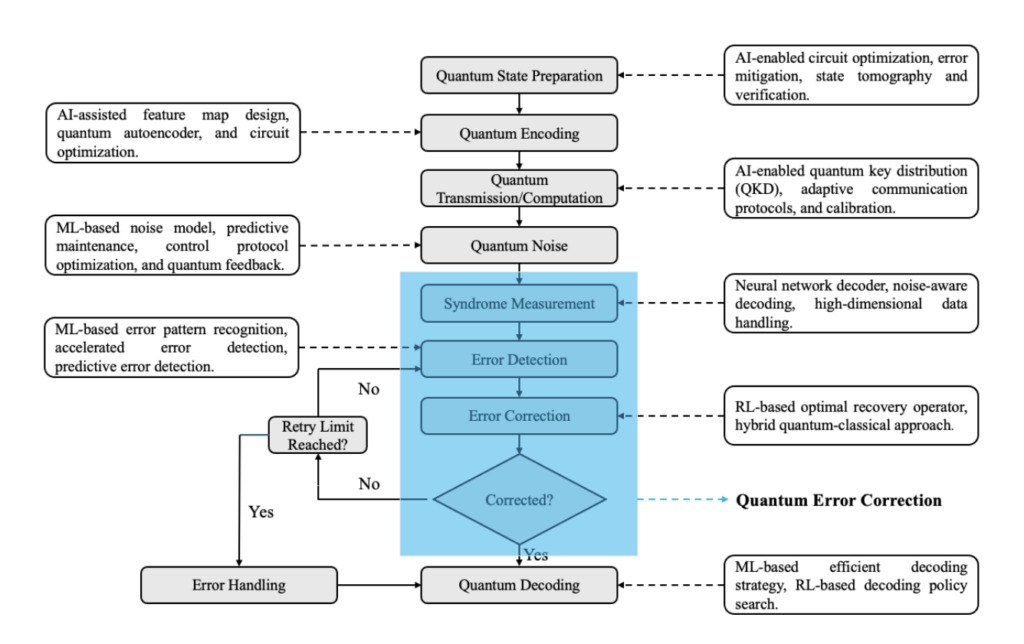
A study highlights AI’s potential to enhance QEC through advanced ML techniques, including convolutional neural networks (CNNs) for decoding, reinforcement learning (RL) for real-time adaptability, and generative models for capturing complex noise dynamics.
While AI offers promising solutions for quantum error correction, the study underscores challenges such as data scarcity, scalability, and integration with quantum hardware, emphasizing the need for interdisciplinary collaboration to realize AI’s full potential in advancing quantum computing.

Most discussion on artificial intelligence (AI) and quantum are focused on using quantum computing to boost AI. However, the conversation should go both ways because AI can also assist quantum computing.

In fact, AI tools like machine learning (ML) can be used to improve the efficiency and scalability of quantum error correction (QEC), a critical component for making quantum computers more practical. That’s the conclusion of a recent preprint study uploaded to arXiv by researchers Zihao Wang of the University of Pennsylvania and Hao Tang of Peking University.

Quantum computing has potential to revolutionize computational capabilities, by harnessing the principles of quantum mechanics to address problems conventionally intractable for classical computers [2], [3]. Its applications span various domains, including cryptography, optimization and simulation of physical quantum systems,” The team writes. “However, practical implementation of quantum computing faces significant challenges, primarily due to the vulnerability of quantum systems to errors caused by decoherence and quantum noise.”

The team offered a comprehensive review of the opportunity to use AI tools to improve quantum error correction and — by extension — quantum computing, itself.

THE CHALLENGE OF ERRORS IN QUANTUM SYSTEMS

Quantum computing, which promises unprecedented computational power, faces a key challenge: the susceptibility of quantum systems to errors. These errors stem from phenomena such as decoherence, noise, and gate imperfections. Without correction mechanisms, quantum computations quickly become unreliable.

The team writes that traditional QEC methods, such as Shor’s code and surface codes, encode logical qubits across multiple physical qubits to detect and correct errors. However, these methods face significant limitations, including high resource requirements, complex decoding processes, and limited adaptability to real-world quantum noise. For example, surface codes, widely regarded as a scalable QEC solution, often demand thousands of physical qubits to encode a single logical qubit.


AI’S ROLE IN ADDRESSING QEC LIMITATIONS

The study examines how AI tools can address these limitations by leveraging ML algorithms to decode errors more efficiently, adapt to dynamic environments, and model complex noise patterns. Specifically, supervised learning, unsupervised learning, semi-supervised learning and reinforcement learning paradigms are highlighted as pivotal for advancing QEC.

Some of the ways AI can help is by improving decoding efficiency, enhancing robustness and adaptability, and facilitating complex error modeling:

1. IMPROVING DECODING EFFICIENCY

Conventional decoding algorithms, such as minimum-weight perfect matching, are computationally intensive and scale poorly as quantum systems grow. According to the study, AI models such as convolutional neural networks (CNNs) can drastically reduce decoding times by recognizing error patterns in lattice-based codes like surface codes. These ML models, trained on simulated datasets, demonstrate the ability to identify and correct errors faster than traditional methods while requiring fewer computational resources.

2. ENHANCING ROBUSTNESS AND ADAPTABILITY

Quantum systems are inherently dynamic, with error rates and types fluctuating due to environmental changes and hardware imperfections. Reinforcement learning (RL) techniques, which allow models to adapt to real-time feedback, have shown promise in tailoring error correction strategies to specific system conditions. For example, RL-based decoders can adjust to varying noise levels and detect error correlations that conventional methods might miss.

Moreover, supervised ML models like recurrent neural networks (RNNs) excel in handling time-dependent error patterns, such as non-Markovian noise, which cannot be addressed by static error models. These adaptive capabilities are critical for real-world applications of QEC, particularly in noisy intermediate-scale quantum (NISQ) devices.

3. FACILITATING COMPLEX ERROR MODELING

Modeling quantum errors—especially non-Pauli errors and non-Markovian noise—is another area where AI excels. The researchers highlight the use of generative models like variational autoencoders (VAEs) and RNNs to capture complex error dynamics. These models not only improve the accuracy of error prediction but also enable proactive maintenance by identifying trends that signal system degradation. This predictive capability is vital for stabilizing quantum computations over time.

CASE STUDIES AND APPLICATIONS

The study references multiple recent efforts to integrate AI into QEC workflows. For instance, Google Quantum AI demonstrated the use of neural networks for decoding surface codes, achieving faster and more accurate error correction than traditional algorithms. Similarly, IBM’s research applied ML techniques to identify and mitigate unique error patterns in their superconducting quantum processors.

Another example is the AlphaQubit model, a recurrent neural network designed to decode surface codes under realistic noise conditions. The study notes that such AI-enabled approaches consistently outperform traditional decoders in terms of both speed and error correction fidelity.

CHALLENGES AND FUTURE DIRECTIONS

While AI holds promise for advancing QEC, the study identifies several hurdles that need to be addressed:Data Scarcity: Quantum error datasets are often limited, hindering the training of ML models. Techniques such as data augmentation and synthetic dataset generation are proposed as potential solutions.
Scalability: ML models must be optimized to handle the increasing number of qubits in next-generation quantum systems without excessive computational overhead.
Integration with Quantum Hardware: Seamless integration of AI-driven QEC into existing quantum computing platforms remains a challenge, requiring further research into hardware-software co-design.


Website: International Research Awards on Computer Vision #computervision #deeplearning #machinelearning #artificialintelligence #neuralnetworks,  #imageprocessing #objectdetection #imagerecognition #faceRecognition #augmentedreality #robotics #techtrends #3Dvision #professor #doctor #institute #sciencefather #researchawards #machinevision #visiontechnology #smartvision #patternrecognition #imageanalysis #semanticsegmentation #visualcomputing #datascience #techinnovation #university #lecture #biomedical

Visit Our Website : computer.scifat.com Nomination Link : computer-vision-conferences.scifat.com/award-nomination Registration Link : computer-vision-conferences.scifat.com/award-registration Member Link : computer-vision-conferences.scifat.com/conference-membership/? ecategory=Membership&rcategory=Member
Contact us : computer@scifat.com

Monday, January 6, 2025

How Artificial Intelligence Will Affect Asia’s Economies


Asia-Pacific’s economies are likely to experience labor market shifts because of artificial intelligence, with advanced economies being affected more. About half of all jobs in the region’s advanced economies are exposed to AI, compared to only about a quarter in emerging market and developing economies.

However, as we show in our latest Asia-Pacific Regional Economic Outlook, there are also more jobs in the region’s advanced economies that can be complemented by AI, meaning that the technology will likely enhance productivity rather than replace these roles altogether.

The concentration of such jobs in Asia’s advanced economies could worsen inequality between countries over time. While about 40 percent of jobs in Singapore are rated as highly complementary to AI, the share is just 3 percent in Laos.

AI could also increase inequality within countries. Most workers at risk of displacement in the Asia-Pacific region work in service, sales, and clerical support roles. Meanwhile, workers who are more likely to benefit from AI typically work in managerial, professional, and technician roles that already tend to be among the better paid professions.


As the Chart of the Week shows, we also find that women are more likely to be at risk of disruption from AI because they are more often in service, sales, and clerical roles. Men, by contrast, are more represented in occupations that are unlikely to be impacted by AI at this stage, like farm workers, machine operators, and low-skill elementary workers.


Website: International Research Awards on Computer Vision #computervision #deeplearning #machinelearning #artificialintelligence #neuralnetworks,  #imageprocessing #objectdetection #imagerecognition #faceRecognition #augmentedreality #robotics #techtrends #3Dvision #professor #doctor #institute #sciencefather #researchawards #machinevision #visiontechnology #smartvision #patternrecognition #imageanalysis #semanticsegmentation #visualcomputing #datascience #techinnovation #university #lecture #biomedical

Visit Our Website : computer.scifat.com Nomination Link : computer-vision-conferences.scifat.com/award-nomination Registration Link : computer-vision-conferences.scifat.com/award-registration Member Link : computer-vision-conferences.scifat.com/conference-membership/? ecategory=Membership&rcategory=Member
Contact us : computer@scifat.com

Friday, January 3, 2025

Artificial Intelligence in Biology: From Neural Networks to AlphaFold


With the 2018 release of AlphaFold, an AI deep learning model, scientists were finally able to predict the 3D structure of proteins—a decades-old challenge in biology. Trained on 100,000 known protein sequences and structures, the model can not only accurately predict protein structures with near experimental level accuracy but can also be used to design de novo proteins for a variety of applications in therapeutics and beyond. Inspired by the success of AlphaFold, scientists are now using deep learning models to create spatiotemporal maps of cells, analyze images of cells to detect changes in morphology that indicate disease, and estimate the efficacy of new drugs in halting disease progression to minimize losses in the drug discovery pipeline. Experts like Maddison Masaeli, an engineer scientist and chief executive officer at Deepcell, are happy about the rapid adoption of AI in biology but caution that researchers need significant expertise to harness AI for biological applications.

De Novo Proteins Tackle 21st Century Problems


Harnessing the power of AI models, scientists are now able to design bespoke proteins with specific biological functions, allowing them to solve problems that cannot be addressed by the proteins found in nature. Traditional protein engineering is based on making incremental changes and observing their effects, but machine learning models can both design better proteins and significantly speed up the process. Protein design specialist David Baker and his team at the University of Washington used several different AI models to design stable luciferase enzymes that can bind to synthetic luciferin to glow, with applications in the deep imaging of animal tissue. While this type of protein design has room for improvement and isn’t yet fully automated, it could be used in the future to create a variety of proteins for therapeutic and other purposes.


AI Discovers New Antibiotic for Drug-Resistant Bacteria

The design of de novo proteins using AI could be a major boon in antibiotic development. With the incidence of antimicrobial resistance increasing worldwide and a dearth of new antibiotics being discovered, researchers at McMaster University have turned to AI to design novel antibiotics that can be easily synthesized. Led by biochemist Jon Stokes, the team developed a generative AI model called SyntheMol to design small molecules that possess antibacterial activity against Acinetobacter baumannii, a drug-resistant pathogen considered by the World Health Organization as a major threat to global health. Although they haven’t been tested in human subjects yet, several of the molecules inhibited the growth of the target bacteria as well as other drug-resistant microbes in vitro.

 
Artificial Neural Networks Learn Like Human Brains

Previously met with skepticism, AI won scientists a Nobel Prize for Chemistry in 2024 after they used it to solve the protein folding and design problem, and it has now been adopted by biologists across the globe. AI models like artificial neural networks and language models help scientists solve a variety of problems, from predicting the 3D structure of proteins to designing novel antibiotics from scratch. Researchers press on with the refinement of AI models, addressing their limitations and demonstrating widespread applications in biology.


AI Discovers New Antibiotic for Drug-Resistant Bacteria

The design of de novo proteins using AI could be a major boon in antibiotic development. With the incidence of antimicrobial resistance increasing worldwide and a dearth of new antibiotics being discovered, researchers at McMaster University have turned to AI to design novel antibiotics that can be easily synthesized. Led by biochemist Jon Stokes, the team developed a generative AI model called SyntheMol to design small molecules that possess antibacterial activity against Acinetobacter baumannii, a drug-resistant pathogen considered by the World Health Organization as a major threat to global health. Although they haven’t been tested in human subjects yet, several of the molecules inhibited the growth of the target bacteria as well as other drug-resistant microbes in vitro.


Inspired by the human brain, artificial neural networks (ANNs) are a type of machine learning model containing multiple layers of interconnected nodes (or neurons) that can process data. Each node in the network performs a mathematical equation using weighted input data and determines whether the output will be passed forward to the next layer of nodes based on a threshold value. Scientists train the ANN using datasets that have known values or features, then allow it to assess its predicted outputs against the true answer for each sample so it can improve its accuracy over time. The ANN can then be used to predict outcomes from new datasets. Despite some key limitations, ANNs can identify patterns in complex data that humans might not be capable of and perform menial tasks to free up time for researchers.

Large Language Models Help Us Understand the Brain

Researchers have now developed a language model—the type of deep learning model responsible for ChatGPT—that can determine a person’s thoughts from MRI images of their brain. Alexander Huth, a researcher at the University of Texas at Austin, created the technique with the goal of allowing people who are unable to speak to communicate, but it has also revealed insights about the function of the human brain. Huth’s model showed that all parts of the brain use meaning-related information even if MRI scans show that only the prefrontal cortex is active. While the model isn’t generalizable across different subjects, meaning it can’t read minds, experts advise caution as these models become more accurate in the future.

Predicting Gene Expression Using Artificial Intelligence

While ChatGPT is used to predict the next words in a sentence, scientists have now created similar deep learning models that can predict gene expression in individual cells. Created by computational biologist Bo Wang and his team at the University of Toronto, the single-cell generative pretrained transformer (scGPT) can analyze single-cell RNA sequencing data more effectively than several of the most popular current methods. The model was also able to more accurately predict the effects of genetic perturbation than a standard model. Originally trained on bone marrow and immune cells, a new iteration of scGPT has now been adapted for the analysis of a variety of other cell types and could be used to answer important biological questions in the near future.


Website: International Research Awards on Computer Vision #computervision #deeplearning #machinelearning #artificialintelligence #neuralnetworks,  #imageprocessing #objectdetection #imagerecognition #faceRecognition #augmentedreality #robotics #techtrends #3Dvision #professor #doctor #institute #sciencefather #researchawards #machinevision #visiontechnology #smartvision #patternrecognition #imageanalysis #semanticsegmentation #visualcomputing #datascience #techinnovation #university #lecture #biomedical

Visit Our Website : computer.scifat.com Nomination Link : computer-vision-conferences.scifat.com/award-nomination Registration Link : computer-vision-conferences.scifat.com/award-registration Member Link : computer-vision-conferences.scifat.com/conference-membership/? ecategory=Membership&rcategory=Member
Contact us : computer@scifat.com

Machine learning reveals how metabolite profiles predict aging and health


Background

Biological aging, distinct from chronological age, reflects molecular and cellular damage influencing health and disease susceptibility. Chronological age alone cannot capture the variability in aging-related physiological states among individuals. However, recent advances in omics technologies, particularly metabolomics, have offered insights into biological aging through molecular profiling.

Metabolites, or small molecules from metabolic pathways, can provide assessments of physiological health and are linked to aging-related outcomes, such as chronic diseases and mortality. Earlier studies have correlated metabolomic data with aging but have been constrained by limited sample sizes and markers.

Recent efforts to derive "aging clocks" using machine learning from omics data have demonstrated significant predictive power for health outcomes. However, there continue to be challenges in optimizing these models for accuracy and interpretability, especially using metabolomics.
The current study

The present study utilized nuclear magnetic resonance (NMR) spectroscopy to analyze plasma metabolite data from the U.K. Biobank, involving 225,212 participants between the ages of 37 and 73 years. The exclusion criteria included pregnancy, data inconsistencies, and extreme metabolite values. The dataset encompassed 168 metabolites representing lipid profiles, amino acids, and glycolysis products.

The researchers applied 17 machine learning algorithms, including linear regression, tree-based models, and ensemble techniques, to the dataset to develop metabolomic aging clocks. They also used a rigorous nested cross-validation approach to ensure robust model evaluation.

Some of the main preprocessing steps included handling outlier metabolite values and correcting age-prediction biases inherent to the models. The predictive models aimed to estimate chronological age using metabolite profiles, and the differences between predicted and actual ages were defined as the "MileAge delta." Statistical corrections were extensively applied to remove systematic biases and enhance prediction accuracy, particularly for younger and older age ranges.

The models were evaluated for predictive accuracy using metrics such as mean absolute error (MAE), root mean square error (RMSE), and correlation coefficients. For example, the Cubist regression model achieved an MAE of 5.31 years, outperforming other models like multivariate adaptive regression splines (MAE = 6.36 years). Further analysis adjusted the predictions to remove systematic biases and improve their alignment with chronological age.


Results

The findings indicated that metabolomic aging clocks developed from plasma metabolite profiles could effectively differentiate biological aging from chronological aging. Of the various models tested in the study, the Cubist rule-based regression model provided the strongest predictive associations with health markers and mortality and outperformed the other algorithms in accuracy and robustness.

Additionally, positive MileAge delta values, which indicated accelerated aging, were linked to frailty, shorter telomeres, higher morbidity, and increased mortality risk. Specifically, a 1-year increase in MileAge delta corresponded to a 4% rise in all-cause mortality risk, with hazard ratios (HR) exceeding 1.5 in extreme cases.

Moreover, the study showed that individuals with accelerated aging were more likely to report poorer self-rated health and experience chronic illnesses. Associations with frailty and telomere attrition were particularly pronounced, with some differences being equivalent to an 18-year disparity in frailty index scores. Interestingly, women exhibited slightly higher MileAge deltas than men across most models.

The study also confirmed the non-linear nature of metabolite-age relationships and emphasized the utility of statistical corrections in enhancing prediction accuracy. Additionally, comparing existing aging markers showed that metabolomic aging clocks captured unique health-relevant signals and often outperformed the simpler predictors. However, the results highlighted that decelerated aging (negative MileAge deltas) did not consistently translate into better health outcomes, underscoring the complexity of biological aging metrics.


Conclusions

Overall, the study demonstrated the utility of metabolomic aging clocks in predicting biological aging and associated health outcomes. By benchmarking multiple machine learning algorithms, the findings also showed the superior performance of the Cubist rule-based model in linking metabolite-derived ages to health markers and mortality.

The results suggested that metabolomic aging clocks hold potential for proactive health management and risk stratification and emphasized the need for further validation across diverse populations and longitudinal data for broader clinical application. This study sets a new benchmark for algorithm development, illustrating how metabolomic profiles can offer actionable insights into aging and health.


Website: International Research Awards on Computer Vision #computervision #deeplearning #machinelearning #artificialintelligence #neuralnetworks,  #imageprocessing #objectdetection #imagerecognition #faceRecognition #augmentedreality #robotics #techtrends #3Dvision #professor #doctor #institute #sciencefather #researchawards #machinevision #visiontechnology #smartvision #patternrecognition #imageanalysis #semanticsegmentation #visualcomputing #datascience #techinnovation #university #lecture #biomedical

Visit Our Website : computer.scifat.com Nomination Link : computer-vision-conferences.scifat.com/award-nomination Registration Link : computer-vision-conferences.scifat.com/award-registration Member Link : computer-vision-conferences.scifat.com/conference-membership/? ecategory=Membership&rcategory=Member
Contact us : computer@scifat.com