Saturday, October 19, 2024

The next phase of AI: Unlocking explainability with causal intelligence


Artificial intelligence is at a pivotal point in its evolution, moving into a new era that goes beyond simple pattern recognition to reasoning, and causal AI is at the forefront of this evolution.

Causal AI offers insights not just into what is happening, but why. This leap in decision-making intelligence has the potential to redefine the marketplace as businesses use these tools to enable smarter, more responsive processes. This next phase of AI evolution will shape the future of the AI ecosystem. Causal AI, unlike traditional models that rely on statistical patterns, is designed to provide explanations and reasoning, according to Scott Hebner, principal analyst at theCUBE Research.

“A lot of people talk about generative AI … but as a leader, you also have to be thinking ahead, particularly with AI, which is moving at an even faster pace than previous technological transformations,” Hebner said. “It’s important to take a futuristic view … so I’m doing a series of five papers about the advent of causal AI.”

Hebner spoke with theCUBE Research’s Principal Analyst Rob Strechay, during an AnalystANGLE segment on theCUBE, SiliconANGLE Media’s livestreaming studio. They discussed how causal AI will enable a more structured approach, integrating large and small language models to build a more cohesive, responsive AI and machine learning ecosystem.
Understanding cause and effect

As organizations push the boundaries of AI, they are realizing that today’s models — particularly large language models — are effective at identifying patterns and making predictions but fall short in explaining the reasoning behind those predictions. LLMs operate on statistical probabilities, which are useful, but can be limiting in dynamic, ever-changing environments.

“Today’s predictive models and generative AI models that are embodied in the LLMs are pattern recognition machines. They operate on statistical probabilities … in a static world,” Hebner said. “What causal AI will tell you is how those statistical probabilities change when the world around you changes.”

Causal AI begins with agentic AI, which brings together AI agents in an ecosystem of AI large language models and domain-specific small language models to understand cause-and-effect relationships, a critical factor in helping humans problem-solve and make better decisions, as discussed in the article “The Causal AI Marketplace,” authored by Hebner.

Organizations are constantly in flux, and for AI to truly understand how the business operates, it needs to be able to understand cause and effect, according to Hebner. Why? Because in business everything is a cause and everything is an effect — and AI needs to keep up with that reality.

“Causal AI is all about helping people understand how the business operates. Then from there, it supports a dynamic world of change,” Hebner said. “It’s going to allow those statistical models, probabilities that traditional AI and machine learning operates upon, to adapt.”

The ability to simulate and test what-if scenarios based on the model is another benefit of causal AI. It offers businesses the flexibility to prescriptively model best-case outcomes impacting scenarios around profitability, customer retention and revenue.

“Today’s models are pretty good at predicting what you should do [and] forecast, and they generate the what, but they can’t tell you how it did it. And it certainly can’t tell you why this is the best answer,” Hebner said. “Causal AI is going to start to incrementally allow that explainability to be infused into these models, not only descriptively and predictively, but … prescriptively.”
The role of specialized AI models and agentive AI

While LLMs provide a general-purpose framework, small language models are designed for targeted tasks, allowing businesses to optimize AI for specific needs. These models ensure high data protection and specialized application.

“You need small language models that are specialized, secure and sovereign, that understand each of the domains within a business,” Hebner said.

He envisions a network of SLMs and LLMs where AI agents collaborate and contribute specific expertise. “The whole thing is going to come together in an architectural approach, and that’s going to represent the future,” he added.

This architectural approach will allow AI systems to interact with each other more effectively. LLMs will provide general knowledge, while SLMs focus on specific domains, creating a seamless flow of information, Hebner explained.

“We’re moving toward an ecosystem where AI agents teach each other, learn from each other and become smarter and smarter,” he added. “It’s going to be an architectural approach where agents work collaboratively, and that’s going to be key to the future.”


The case for causal AI

Causal AI isn’t just a concept on the horizon — it’s already gaining traction in industries that require a deeper level of decision intelligence. A recent Databricks Inc. and Dataiku Inc. survey of 400 AI professionals shows that over half of them are already using or experimenting with causal AI, which is expected to be one of the most adopted AI technologies in the coming year, according to Hebner.

“The number one technology that’s not being used today, but they plan to use over the next year, is causal AI,” Hebner said. “[Customers] want to build higher [return on investment] use cases, which require … reasoning, decision intelligence problem-solving and explainability.”

As the demand for more explainable and adaptable AI grows, causal AI will likely play an increasingly critical role in how businesses leverage artificial intelligence for better decision-making. The future of AI, according to Hebner, will be shaped by its ability to understand cause and effect. This shift could redefine how companies approach problem-solving and decision-making in an increasingly dynamic marketplace.


Website: International Research Awards on Computer Vision #computervision #deeplearning #machinelearning #artificialintelligence #neuralnetworks,  #imageprocessing #objectdetection #imagerecognition #faceRecognition #augmentedreality #robotics #techtrends #3Dvision #professor #doctor #institute #sciencefather #researchawards #machinevision #visiontechnology #smartvision #patternrecognition #imageanalysis #semanticsegmentation #visualcomputing #datascience #techinnovation #university #lecture #biomedical

Visit Our Website : computer.scifat.com Nomination Link : computer-vision-conferences.scifat.com/award-nomination Registration Link : computer-vision-conferences.scifat.com/award-registration Member Link : computer-vision-conferences.scifat.com/conference-membership/? ecategory=Membership&rcategory=Member
Contact us : computer@scifat.com

Thursday, October 17, 2024

Transforming Computer Vision with AI and Generative AI


While conventional computer vision techniques were driven by manual feature extraction and classical algorithms to interpret images and videos, modern computer vision has been influenced by end-to-end deep learning models and generative AI (GenAI). This means greater possibilities for use cases like autonomous driving, object identification, and workplace safety.

By 2032, the global computer vision market size is projected to grow more than eight times from USD 20.31 billion to a whopping USD 175.72 billion.[1] The fast-evolving landscape of AI and computer vision is resulting in remarkably diverse applications across industries, such as camera-equipped patrol robots for the Singapore Police Force[2] and Abu Dhabi’s first multimodal Intelligent Transportation Central Platform, implemented as part of the capital’s urban transportation strategies.

AI-generative computer vision is an emerging field that focuses on creating or enhancing visual content through artificial intelligence, often employing techniques like deep learning, generative adversarial networks (GANs), and neural networks. It aims to generate new images, videos, or 3D models from scratch or based on input data, transforming the way visuals are designed, synthesized, and manipulated.

Key Aspects of AI-Generative Computer Vision:Generative Adversarial Networks (GANs): GANs are at the core of generative models, where two neural networks—the generator and the discriminator—work together to create realistic images by learning patterns in the data.

Image and Video Synthesis: AI models can create highly realistic images or even videos, often indistinguishable from real-world footage. This includes tasks like generating faces, scenes, or environments.

3D Model Generation: AI can assist in generating 3D models from 2D images or minimal input data, useful for applications like virtual reality, gaming, and architecture.

Image Inpainting and Super-Resolution: AI can fill in missing parts of images (inpainting) or enhance the resolution of low-quality images.

Style Transfer and Augmentation: AI can blend styles between different artworks or photos, allowing artists and designers to create unique visuals.

Applications:Entertainment and Media: AI-generated characters, animations, and special effects are used in movies, games, and virtual environments.

Healthcare: AI-generated medical images, like synthetic MRI scans, support training and diagnostic assistance.

Autonomous Vehicles: Generative models create simulated environments for training self-driving cars.
Design and Art: AI enhances creativity, enabling the design of new artworks, graphics, and fashion.


Website: International Research Awards on Computer Vision #computervision #deeplearning #machinelearning #artificialintelligence #neuralnetworks,  #imageprocessing #objectdetection #imagerecognition #faceRecognition #augmentedreality #robotics #techtrends #3Dvision #professor #doctor #institute #sciencefather #researchawards #machinevision #visiontechnology #smartvision #patternrecognition #imageanalysis #semanticsegmentation #visualcomputing #datascience #techinnovation #university #lecture #biomedical

Visit Our Website : computer.scifat.com Nomination Link : computer-vision-conferences.scifat.com/award-nomination Registration Link : computer-vision-conferences.scifat.com/award-registration Member Link : computer-vision-conferences.scifat.com/conference-membership/? ecategory=Membership&rcategory=Member
Contact us : computer@scifat.com

Wednesday, October 16, 2024

Moving Beyond Data Collection to Data Orchestration


IoT connectivity and analytics are moving beyond data collection to data orchestration. Learn how real-time insights, edge analytics, and integrated data streams help optimize performance, reduce downtime, and drive smarter decisions, making data orchestration essential for industrial efficiency.

You could be forgiven for labeling IoT connectivity and analytics as tools primarily designed for data collection. These technologies do gather vast amounts of information from machines, sensors, and systems, but viewing them solely through the lens of collection limits their true potential. When companies fall into the trap of amassing data without a clear strategy for transforming it into actionable insights, it creates a pretty significant missed opportunity.

See also: How Industrial Connectivity and IoT Enable Manufacturing Digital Transformation

Without a coordinated approach, the data becomes noise. It overwhelms teams and leaves crucial insights buried in the clutter. This is where the shift from merely collecting data to orchestrating data comes into play. In a data orchestration model, IoT connectivity and analytics work together to synchronize operations. As a result, data isn’t just collected but dynamically analyzed and acted upon in real time.

By transitioning to a data orchestration approach, organizations move beyond passive data gathering and start seeing their data for what it really is—a chance to operate in a dynamic, holistic way with real-time guidance. This is where the world is heading, and this is the best opportunity to make a positive impact on operations.


Website: International Research Awards on Computer Vision #computervision #deeplearning #machinelearning #artificialintelligence #neuralnetworks,  #imageprocessing #objectdetection #imagerecognition #faceRecognition #augmentedreality #robotics #techtrends #3Dvision #professor #doctor #institute #sciencefather #researchawards #machinevision #visiontechnology #smartvision #patternrecognition #imageanalysis #semanticsegmentation #visualcomputing #datascience #techinnovation #university #lecture #biomedical

Visit Our Website : computer.scifat.com Nomination Link : computer-vision-conferences.scifat.com/award-nomination Registration Link : computer-vision-conferences.scifat.com/award-registration Member Link : computer-vision-conferences.scifat.com/conference-membership/? ecategory=Membership&rcategory=Member
Contact us : computer@scifat.com

Tuesday, October 15, 2024

How Artificial Intelligence Is Decoding the Skies of Distant Worlds


Breakthrough in Exoplanet Atmosphere Analysis

Scientists from LMU, the ORIGINS Excellence Cluster, the Max Planck Institute for Extraterrestrial Physics (MPE), and the ORIGINS Data Science Lab (ODSL) have achieved a significant breakthrough in analyzing exoplanet atmospheres. By employing physics-informed neural networks (PINNs), they have enhanced the modeling of complex light scattering within these atmospheres, achieving greater precision than ever before. This innovative approach offers new insights into the role of clouds and could dramatically enhance our knowledge of distant worlds.

When distant exoplanets pass in front of their star, they block a small portion of the starlight, while an even smaller portion penetrates the planetary atmosphere. This interaction leads to variations in the light spectrum, which mirror the properties of the atmosphere such as chemical composition, temperature, and cloud cover.

To be able to analyze these measured spectra, however, scientists require models that are capable of calculating millions of synthetic spectra in a short time. Only by subsequently comparing the calculated spectra with the measured ones do we obtain information about the atmospheric composition of the observed exoplanets. And what is more, the highly detailed new observations coming from the James Webb Space Telescope (JWST) necessitate equally detailed and complex atmospheric models.
Enhanced Modeling With Physics-Informed Neural Networks

A key aspect of exoplanet research is the light scattering in the atmosphere, particularly the scattering off clouds. Previous models were unable to satisfactorily capture this scattering, which led to inaccuracies in the spectral analysis. Physics-informed neural networks offer a decisive advantage here, as they are capable of efficiently solving complex equations. In the just-published study, the researchers trained two such networks. The first model, which was developed without taking light scattering into account, demonstrated impressive accuracy with relative errors of mostly under one percent. Meanwhile, the second model incorporated approximations of so-called Rayleigh scattering – the same effect that makes the sky seem blue on Earth. Although these approximations require further improvement, the neural network was able to solve the complex equation, which represents an important advance.


Advantages of Interdisciplinary Collaboration

These new findings were possible thanks to a unique interdisciplinary collaboration between physicists from LMU Munich, the ORIGINS Excellence Cluster, the Max Planck Institute for Extraterrestrial Physics (MPE), and the ORIGINS Data Science Lab (ODSL), which specializes in the development of new AI-based methods in physics.

“This synergy not only advances exoplanet research, but also opens up new horizons for the development of AI-based methods in physics,” explains lead author of the study David Dahlbüdding from LMU. “We want to further expand our interdisciplinary collaboration in the future to simulate the scattering of light off clouds with greater precision and thus make full use of the potential of neural networks.”


Website: International Research Awards on Computer Vision #computervision #deeplearning #machinelearning #artificialintelligence #neuralnetworks,  #imageprocessing #objectdetection #imagerecognition #faceRecognition #augmentedreality #robotics #techtrends #3Dvision #professor #doctor #institute #sciencefather #researchawards #machinevision #visiontechnology #smartvision #patternrecognition #imageanalysis #semanticsegmentation #visualcomputing #datascience #techinnovation #university #lecture #biomedical

Visit Our Website : computer.scifat.com Nomination Link : computer-vision-conferences.scifat.com/award-nomination Registration Link : computer-vision-conferences.scifat.com/award-registration Member Link : computer-vision-conferences.scifat.com/conference-membership/? ecategory=Membership&rcategory=Member
Contact us : computer@scifat.com

Sunday, October 13, 2024

NSF, NIH and FDA support research in digital twin technology for biomedical applications


The U.S. National Science Foundation, in collaboration with the National Institutes of Health (NIH) and the Food and Drug Administration (FDA), has awarded over $6 million in research funding across seven projects to explore the development of digital twins, dynamic virtual representations of physical objects or processes, for use in healthcare and biomedical research.

The awards are the first cohort of projects supported by the Foundations for Digital Twins as Catalyzers of Biomedical Technological Innovation program (FDT-BioTech), a partnership between NSF, NIH and FDA. The program was created to foster advances in mathematics, statistics, computational sciences and engineering required to develop responsive digital twin models that incorporate the abilities of artificial intelligence.

"Digital twins have the potential to remove common medical risks involved in patient monitoring and treatment, providing a framework for optimal decision-making," says Yulia Gel, program director in the NSF Division of Mathematical Sciences, which leads the FDT-BioTech program. "Real-world use of these complex models could streamline clinical trials for safer development of drugs and medical devices."

The awarded research projects cover various topics, including the development of mathematical models for virtual clinical trials of cardiovascular medical devices, statistical tools for analyzing the ethical use of AI, digital twin-based studies of neurodegenerative diseases and AI-informed decision-making related to glucose metabolism in people with Type 1 diabetes. The awardees include one institution in an area supported by the NSF Established Program to Stimulate Competitive Research program, which aims to build research capacity in states that have historically received lower levels of funding.


Website: International Research Awards on Computer Vision #computervision #deeplearning #machinelearning #artificialintelligence #neuralnetworks,  #imageprocessing #objectdetection #imagerecognition #faceRecognition #augmentedreality #robotics #techtrends #3Dvision #professor #doctor #institute #sciencefather #researchawards #machinevision #visiontechnology #smartvision #patternrecognition #imageanalysis #semanticsegmentation #visualcomputing #datascience #techinnovation #university #lecture #biomedical

Visit Our Website : computer.scifat.com Nomination Link : computer-vision-conferences.scifat.com/award-nomination Registration Link : computer-vision-conferences.scifat.com/award-registration Member Link : computer-vision-conferences.scifat.com/conference-membership/? ecategory=Membership&rcategory=Member
Contact us : computer@scifat.com

Saturday, October 12, 2024

Machine Learning Could Improve Extreme Weather Warnings


Meteorologists commonly use adjoint models to determine how sensitive a forecast is to inaccuracies in initial conditions. These models help determine how small changes in temperature or atmospheric water vapor, for example, can affect the accuracy of conditions forecast for a few days later. Understanding the relationship between the initial conditions and the amount of error in the forecast allows scientists to make changes until they find the set of initial conditions that produces the most accurate forecast.

However, running adjoint models requires significant financial and computing resources, and the models can measure these sensitivities only up to 5 days in advance. Vonich and Hakim tested whether a deep learning approach could provide an easier and more accurate way to determine the optimal set of initial conditions for a 10-day forecast.

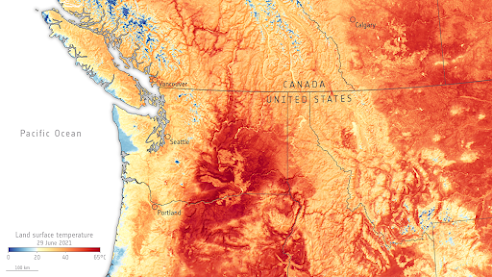
To test their approach, they created forecasts of the June 2021 Pacific Northwest heat wave using two different models: the GraphCast model, developed by Google DeepMind, and the Pangu-Weather model, developed by Huawei Cloud. They compared the results to see whether the models behaved similarly, then compared the forecasts to what actually happened during the heat wave. (To avoid influencing the results, data from the heat wave were not included in the dataset used to train the forecasting models.)

The team found that using the deep learning method to identify optimal initial conditions led to a roughly 94% reduction in 10-day forecast errors in the GraphCast model. The approach resulted in a similar reduction in errors when used with the Pangu-Weather model. The team noted that the new approach improved forecasting as far as 23 days in advance.


Website: International Research Awards on Computer Vision #computervision #deeplearning #machinelearning #artificialintelligence #neuralnetworks,  #imageprocessing #objectdetection #imagerecognition #faceRecognition #augmentedreality #robotics #techtrends #3Dvision #professor #doctor #institute #sciencefather #researchawards #machinevision #visiontechnology #smartvision #patternrecognition #imageanalysis #semanticsegmentation #visualcomputing #datascience #techinnovation #university #lecture #biomedical

Visit Our Website : computer.scifat.com Nomination Link : computer-vision-conferences.scifat.com/award-nomination Registration Link : computer-vision-conferences.scifat.com/award-registration Member Link : computer-vision-conferences.scifat.com/conference-membership/? ecategory=Membership&rcategory=Member
Contact us : computer@scifat.com

Thursday, October 10, 2024

Honeywell and Qualcomm to develop new artificial intelligence (AI)-enabled solutions


Honeywell and Qualcomm Technologies, Inc. have announced an expanded collaboration to develop new artificial intelligence (AI)-enabled solutions for the energy sector. The design and development of these solutions with Qualcomm Technologies supports Honeywell's alignment of its portfolio to three compelling megatrends, including automation.

Through the collaboration, Honeywell intends to incorporate Qualcomm Technologies' connectivity and AI capabilities into its existing AI-powered applications, such as the Honeywell Field Process Knowledge System (PKS). By integrating these capabilities, Honeywell's Field PKS will better be able to help provide connectivity to remote corners of plant and manufacturing facilities and enable greater data capture and analytics at the edge.

Qualcomm Technologies' portfolio of low power AI-enabled processors with native wireless connectivity, software, and computer vision combined with Honeywell's extensive portfolio of sensing technologies will enable the development of a family of industrial sensors used for monitoring process parameters, asset parameters or environmental conditions. These new capabilities will help deliver more information to field and service technicians, enabling faster delivery of answers that can result in time savings, greater accuracy, and interactive results.

"We are committed to developing on-device generative AI solutions that will propel the expansion of the connected intelligent edge to help drive digital transformation," said Nakul Duggal, Group General Manager, automotive, industrial and embedded IoT, and cloud computing, Qualcomm Technologies, Inc. "This collaboration with Honeywell enhances how industries and businesses interact with their environments through intelligent and responsive technology. Our recent acquisition of Sequans' 4G IoT technology adds to Qualcomm Technologies' broad portfolio, further strengthening our technology offerings for Industrial IoT applications."

"The combination of Qualcomm Technologies' industry-leading on-device AI processors with Honeywell's AI- enabled technology will enable field workers to work smarter, help make assets more efficient and improve the overall performance of the process industry," said Pramesh Maheshwari, President of Honeywell Process Solutions. "With the introduction of AI-enabled solutions such as Honeywell's Field PKS, Multi-Modal Intelligent Agent and sensor technologies, we are advancing what's possible for the process industry with mobile field technicians and autonomous operations."


Website: International Research Awards on Computer Vision #computervision #deeplearning #machinelearning #artificialintelligence #neuralnetworks,  #imageprocessing #objectdetection #imagerecognition #faceRecognition #augmentedreality #robotics #techtrends #3Dvision #professor #doctor #institute #sciencefather #researchawards #machinevision #visiontechnology #smartvision #patternrecognition #imageanalysis #semanticsegmentation #visualcomputing #datascience #techinnovation #university #lecture #biomedical

Visit Our Website : computer.scifat.com Nomination Link : computer-vision-conferences.scifat.com/award-nomination Registration Link : computer-vision-conferences.scifat.com/award-registration Member Link : computer-vision-conferences.scifat.com/conference-membership/? ecategory=Membership&rcategory=Member
Contact us : computer@scifat.com

Wednesday, October 9, 2024

The Next Breakthrough In Artificial Intelligence: How Quantum AI Will Reshape Our World


In the ever-evolving landscape of technology, a new frontier is emerging that promises to reshape our world in ways we can scarcely imagine. This frontier is Quantum AI, the powerful fusion of quantum computing and artificial intelligence. It's a field that's generating immense excitement and speculation across industries, from finance to healthcare, and it's not hard to see why. Quantum AI has the potential to solve complex problems at speeds that would make even our most advanced classical computers look like abacuses in comparison.

Demystifying Quantum AI: The Power Of Qubits And AI

But what exactly is Quantum AI, and why should you care? At its core, Quantum AI leverages the principles of quantum mechanics to process information in ways that classical computers simply can't. While traditional computers use bits that can be either 0 or 1, quantum computers use quantum bits or qubits, which can exist in multiple states simultaneously thanks to a phenomenon called superposition. This allows quantum computers to perform certain calculations exponentially faster than classical computers.


Now, imagine combining this mind-boggling computational power with the pattern recognition and learning capabilities of artificial intelligence. That's Quantum AI in a nutshell. It's like giving a genius a superpower – the ability to analyze vast amounts of data, recognize complex patterns, and make predictions with a level of accuracy and speed that was previously thought impossible.

What's particularly exciting is that this technology is becoming increasingly accessible. Tech giants like Microsoft, Amazon, Google, and IBM are now offering Quantum computing as a service. This means that businesses and researchers can tap into the power of quantum computing without having to build and maintain their own quantum hardware. It's a game-changer that democratizes access to this revolutionary technology, allowing organizations of all sizes to experiment with and potentially benefit from Quantum AI capabilities.


Website: International Research Awards on Computer Vision #computervision #deeplearning #machinelearning #artificialintelligence #neuralnetworks,  #imageprocessing #objectdetection #imagerecognition #faceRecognition #augmentedreality #robotics #techtrends #3Dvision #professor #doctor #institute #sciencefather #researchawards #machinevision #visiontechnology #smartvision #patternrecognition #imageanalysis #semanticsegmentation #visualcomputing #datascience #techinnovation #university #lecture #biomedical

Visit Our Website : computer.scifat.com Nomination Link : computer-vision-conferences.scifat.com/award-nomination Registration Link : computer-vision-conferences.scifat.com/award-registration Member Link : computer-vision-conferences.scifat.com/conference-membership/? ecategory=Membership&rcategory=Member
Contact us : computer@scifat.com

Saturday, October 5, 2024

Hardware for the Demands of AI-Powered Machine Vision


Automation is progressing rapidly with Industry 4.0 initiatives aiming to improve quality, efficiency and productivity across various industries, including manufacturing, food and beverage, logistics, healthcare and more. For machine vision systems, that means enhanced data from industrial Internet of Things (IIoT) sensors and innovative high-resolution camera technology that can capture a wide range of information to help overcome issues related to real-world complexities. However, the most significant Industry 4.0 technology is artificial intelligence (AI), pushing the capabilities of machine vision systems to supercharge speed, efficiency and accuracy.

Machine vision systems empowered by edge AI can quickly and easily analyze images in real-time to recognize subtle nuances and patterns, compare patterns across an entire data set of images and retain information from each analysis to learn and improve accuracy over time continuously.


With this in mind, integrating new technologies into existing manufacturing and assembly lines comes with challenges. System integrators must choose the right hardware that can support a wide range of complex components, diverse connectivity options and the need to support current and future AI-powered systems with the processing power to analyze large quantities of data.

To meet these demands, advanced AI machine vision capabilities require industrial computers with a variety of characteristics.

High Processing power. Edge computers should have the flexibility to support a wide range of CPU and GPU requirements to meet a diverse range of future workloads. To help future-proof, systems should support the latest CPUs, such as twelfth, 12th, 13th and14th generation Intel Core processors. The latest DDR memory with high bandwidth is needed to support faster transfer of stored data for real-time analysis

Comprehensive I/O support. A wide variety of interfaces for supporting the latest devices is a key feature to look for in a machine vision edge computer. Key features include chipsets with digital interfaces for high-speed industrial cameras and I/O support for audio systems, KVM devices, serial communications (RS232/422/485), displays and external platforms.

Secure high-throughput networking. Every edge computer should feature secure, high-bandwidth connections to both internal and external networks via multi-gigabit Ethernet LAN ports. They should support 5G wireless connectivity for the increasing number of industrial sensors and devices used in remote monitoring, mobile robots, autonomous vehicles, asset tracking, AR, VR and digital twins.

Intelligent PoE device management. Edge computers should ensure safe power supply to components through DC input power while providing intelligent power management, including managing and monitoring power consumption per port for remote power distribution technologies like USB and Power over Ethernet (PoE) for connected devices, including cameras, lights and sensors.

Scalability. As AI technology evolves, edge computers should offer flexible expansion options and optional modules with additional I/O ports. This allows for easily scaling systems to accommodate current and future machine vision technologies, extending the system’s lifespan.

Industry compliance and durability. Edge computers deployed near assembly lines must be robust and designed to withstand the harsh realities of industrial and manufacturing environments, including exposure to shock, vibration, extreme temperatures, humidity, electromagnetic interference, dust and debris. For added assurance, any industrial edge hardware should comply with the latest performance and safety standards applicable to electronic equipment intended for use in industrial environments. This includes wide-operating temperature ranges, IEC/EN 61000-6-2 and 61000-6-4 EMC certifications and IEC 60068-2-27 and 60068-2-64 certifications for shock and vibration resistance.


Customization options

Since each machine vision application and environment has unique requirements, off-the-shelf systems may not always meet specific needs. System integrators should consider edge computers backed by design and integration services to meet precise project specifications. These services can customize solutions to unique requirements, allowing the flexibility for add-on peripherals such as encoder cards with real-time trigger I/O to support cameras in targeted machine vision applications.

To fulfill these demands, Axiomtek recommends an industrial-certified computing system targeted toward AI-powered machine vision applications. The ideal standardized system for machine vision applications should be scalable and modular, allowing for a wide range of system configurations and expandable to meet the requirements of various scenarios. The ability to support AI accelerators allows these systems to effectively handle computational demands for real-time decision-making in applications that require fast and accurate processing at the edge.


Website: International Research Awards on Computer Vision #computervision #deeplearning #machinelearning #artificialintelligence #neuralnetworks,  #imageprocessing #objectdetection #imagerecognition #faceRecognition #augmentedreality #robotics #techtrends #3Dvision #professor #doctor #institute #sciencefather #researchawards #machinevision #visiontechnology #smartvision #patternrecognition #imageanalysis #semanticsegmentation #visualcomputing #datascience #techinnovation #university #lecture #biomedical

Visit Our Website : computer.scifat.com Nomination Link : computer-vision-conferences.scifat.com/award-nomination Registration Link : computer-vision-conferences.scifat.com/award-registration Member Link : computer-vision-conferences.scifat.com/conference-membership/? ecategory=Membership&rcategory=Member
Contact us : computer@scifat.com

Thursday, October 3, 2024

Camera System Mimics Human Eye for Enhanced Robotic Vision


University of Maryland computer scientists have developed an innovative camera system that could revolutionize how robots perceive and interact with their environment. This technology, inspired by the human eye's involuntary movements, aims to improve the clarity and stability of robotic vision.


The research team, led by PhD student Botao He, detailed their findings in a paper published in the journal Science Robotics. Their invention, the Artificial Microsaccade-Enhanced Event Camera (AMI-EV), addresses a critical challenge in robotic vision and autonomous systems.
The Problem with Current Event Cameras

Event cameras, a relatively new technology in the field of robotics, excel at tracking moving objects compared to traditional cameras. However, they face significant limitations when capturing clear, blur-free images in high-motion scenarios.

This shortcoming poses a substantial problem for robots, self-driving cars, and other technologies that rely on accurate and timely visual information to navigate and respond to their environment. The ability to maintain focus on moving objects and capture precise visual data is crucial for these systems to function safely and effectively.
Inspiration from Human Biology

To tackle this challenge, the research team turned to nature for inspiration, specifically the human eye. They focused on microsaccades, which are tiny, involuntary eye movements that occur when a person attempts to focus their vision.

These minute but continuous movements allow the human eye to maintain focus on an object and accurately perceive its visual textures, such as color, depth, and shadowing, over time. By mimicking this biological process, the team aimed to create a camera system that could achieve similar stability and clarity in robotic vision.


UMIACS Computer Vision Laboratory
The Artificial Microsaccade-Enhanced Event Camera (AMI-EV)

The AMI-EV's core innovation lies in its ability to replicate microsaccades mechanically. The team incorporated a rotating prism inside the camera to redirect light beams captured by the lens. This continuous rotational movement simulates the natural movements of the human eye, enabling the camera to stabilize the textures of recorded objects in a manner similar to human vision.

To complement the hardware innovation, the team developed specialized software to compensate for the prism's movement within the AMI-EV. This software consolidates the shifting light patterns into stable images, effectively mimicking the brain's ability to process and interpret visual information from the eye's constant micro-movements.

This combination of hardware and software advancements allows the AMI-EV to capture clear, accurate images even in scenarios involving significant motion, addressing a key limitation of current event camera technology.


Potential Applications

The AMI-EV's innovative approach to image capture opens up a wide range of potential applications across various fields:Robotics and Autonomous Vehicles: The camera's ability to capture clear, motion-stable images could significantly enhance the perception and decision-making capabilities of robots and self-driving cars. This improved vision could lead to safer and more efficient autonomous systems, capable of better identifying and responding to their environment in real-time.
Virtual and Augmented Reality: In the realm of immersive technologies, the AMI-EV's low latency and superior performance in extreme lighting conditions make it ideal for virtual and augmented reality applications. The camera could enable more seamless and realistic experiences by rapidly computing head and body movements, reducing motion sickness and improving overall user experience.
Security and Surveillance: The camera's advanced capabilities in motion detection and image stabilization could revolutionize security and surveillance systems. Higher frame rates and clearer images in various lighting conditions could lead to more accurate threat detection and improved overall security monitoring.
Astronomy and Space Imaging: The AMI-EV's ability to capture rapid motion with unprecedented clarity could prove invaluable in astronomical observations. This technology could help astronomers capture more detailed images of celestial bodies and events, potentially leading to new discoveries in space exploration.
Performance and Advantages

One of the most impressive features of the AMI-EV is its ability to capture motion at tens of thousands of frames per second. This far surpasses the capabilities of most commercially available cameras, which typically capture between 30 to 1,000 frames per second.

The AMI-EV's performance not only exceeds that of typical commercial cameras in terms of frame rate but also in its ability to maintain image clarity during rapid motion. This could lead to smoother and more realistic depictions of movement in various applications.

Unlike traditional cameras, the AMI-EV demonstrates superior performance in challenging lighting scenarios. This advantage makes it particularly useful in applications where lighting conditions are variable or unpredictable, such as in outdoor autonomous vehicles or space imaging.


Website: International Research Awards on Computer Vision #computervision #deeplearning #machinelearning #artificialintelligence #neuralnetworks,  #imageprocessing #objectdetection #imagerecognition #faceRecognition #augmentedreality #robotics #techtrends #3Dvision #professor #doctor #institute #sciencefather #researchawards #machinevision #visiontechnology #smartvision #patternrecognition #imageanalysis #semanticsegmentation #visualcomputing #datascience #techinnovation #university #lecture #biomedical

Visit Our Website : computer.scifat.com Nomination Link : computer-vision-conferences.scifat.com/award-nomination Registration Link : computer-vision-conferences.scifat.com/award-registration Member Link : computer-vision-conferences.scifat.com/conference-membership/? ecategory=Membership&rcategory=Member
Contact us : computer@scifat.com

Get Connected Here:
==================
Social Media Link