Thursday, July 11, 2024

War, Artificial Intelligence, and the Future of Conflict


Artificial intelligence (AI) is now influencing every area of human life. The past decade has seen a drastic increase in the use of AI, including facial recognition software, self-driving vehicles, search engines, and translation software. These accepted uses of AI in modern society have also coincided with an increased presence of AI in modern warfare. The escalating weaponization of AI parallels the nuclear arms race of the Cold War, with nuclear weapons being replaced with automated weapons systems. However, the international community, the United Nations, and international law have been struggling to adapt to and regulate the use of automated weapons, which are rapidly changing the landscape of modern warfare.


The international community started to take notice of AI and its influence on modern warfare in 2012, with a series of documents outlining the use of automated weapons systems. These documents included policy directives by the U.S. Department of Defense (DoD) on autonomy in weapons systems and a report from Human Rights Watch and the Harvard Law School’s International Human Rights Clinic (2012 HRW-IHRC report) calling for an outright ban on automated weapons.

The development and use of weapons that can undertake autonomous functions during conflict is becoming the focus of states and tech companies. In 2017, an open letter from the Future Life Institute to the United Nations (UN) signed by 126 CEOs and founders of artificial intelligence and robotics companies “implored” states to prevent an arms race for autonomous weapons systems (AWS). However, no international legal regulatory framework exists to address these concerns around the use of AI, particularly in the context of conflict. The only legal framework for AI that does exist, established by Article 26 of the International Covenant on Civil and Political Rights, only relates AI use to the right to privacy.


What is an Automated Weapon?

There are competing definitions of what constitutes AWS, although the UK Ministry of Defence (MoD) and the U.S. Department of Defense (DoD) have developed the two main definitions. In 2011, the UK MoD defined AWS as “systems capable of understanding higher level intent and direction, namely of achieving the same level of situational understanding as a human and able to take appropriate action to bring about the desired state.” Comparably, the U.S. DoD in 2023 proposed a different approach and defined “AWS as being capable of once activated, to select and engage targets without further intervention from a human operator.” The 2012 HRW-IHRC report advanced a similar definition for the international community, defining AWS as “fully autonomous weapons that could select and engage targets without human intervention.” The NATO Joint Air Power Competence Centre (JAPCC) also extends the notion of automation to “consciousness and self-determination.” Examples of automated weapons include defensive systems like the Israeli Iron Dome and the German MANTIS as well as active protective vehicles like the Swedish LEDS-150. A new definition would also need to include automated weapons used in non-conflict situations, like the South Korean Super aEgis II, which is used as a peacetime surveillance device along the South and North Korean border.

However, the real problem lies in future-proofing definitions of AWS. Definitions must not only include systems not already accounted for, such as the Super aEgis II, but also anticipate AWS that may emerge in the future. In particular, the international community must agree on a definition that can encompass AI human cognitive inputting algorithms, which have humanlike decision-making capabilities.

Despite this need, the international community has yet to agree on regulations of AWS. The UN Convention on Conventional Weapons (CCW) has a special Amended Protocol (1986) governed by the Group of Governmental Experts (GGE), who meet annually to discuss the implementation of the Protocols of the CCW and related weapons issues. The latest GGE meeting, held in May 2023, ended without any substantial progress on AWS, as the GGE did not agree on any regulatory safeguards. Their draft report also failed to advance a legal framework. However, the report did introduce prohibitions centered on the need for human control of AWS as well as regulations centered around the development of AWS. Fifty-two states issued a joint statement of support for the draft report, but they also stated that the draft was a minimum standard and emphasized the need for a much more robust and ambitious legal framework. In its May 2023 meeting, the GGE resolved to organize longer discussions on emerging lethal AWS technologies in March and August 2024. While more meaningful developments may occur in the latest GGE discussions, a legal framework to regulate the development and deployment of AWS has yet to emerge.


The Race for Killer Robots

Russian President Vladimir Putin has stated that the nation that leads in AI “will become the ruler of the world.” The advancement of AI in modern warfare will forever alter the relationships between great powers like the United States, China, and Russia as well as the private technology industry. For this reason, China has committed 150 billion dollars to become the world leader in AI technology, compared to Russian spending of 181 million dollars from 2021 to 2023 and U.S. spending of 4.6 billion dollars. In 2019, Jane’s stated that more than 80,000 surveillance drones and almost 2,000 attack drones will be purchased around the world in the next decade. The UK operates missile-bearing drones and plans to spend 415 million pounds on Protector drones by 2024. Saudi Arabia also cannot be underestimated as a newer entrant in the drone marketplace, having invested 69 billion dollars in 2023—23 percent of its national budget—on defense. Additionally, Saudi Arabia plans to create a 40 billion dollar fund to invest in AI, which would make it the world’s largest AI investor.

With spending on drone and AI development increasing so rapidly, advancements in technology might eventually enable drones to make decisions instantaneously without human input during conflict. This may potentially eliminate peaceful negotiation in conflict, as drones’ reactions will consist purely of retaliatory violence. Drone technology has already advanced from its use by NATO to identify hidden Serbian strategic positions during the Kosovo War in 1999 to its use by the United States in the immediate aftermath of the September 11 terrorist attacks. After an ISR drone successfully located Osama Bin Laden, the U.S. military increasingly used and outfitted drones with lethal payloads, carrying out 14,000 drone strikes in Afghanistan alone from 2010 to 2020.

The United States, the United Kingdom, and Israel remain the largest users of drones, and their arsenals continue to grow. The United States and the United Kingdom have used weaponized drones for over a decade, including the Predator and the Reaper, both made by the California-based company General Atomics. According to Drone Wars, in four years of conflict in Syria from 2014 to 2018, the United Kingdom used Reaper drones more than 2,400 times during strategic missions, the equivalent of two per day. The Pentagon estimates that by 2035, remotely piloted aircraft will make up 70 percent of the U.S. Air Force. Meanwhile, Israel has been developing its own weaponized drones, and it has deployed drones in Gaza to conduct surveillance, deliver explosives, and more.

Furthermore, drone technology is spreading rapidly to militaries around the world. Nearly every NATO member state now has the capability to use drones in conflict. In the last five years, both Turkey and Pakistan have also created drone manufacturing programs. China currently supplies several states with its Wing Loong and CH-series drones, including the UAE, Egypt, Saudi Arabia, Nigeria, and Iraq. Even non-state actors are using drones. Hezbollah has used Iranian-built reconnaissance drones to violate Israeli airspace, while Hamas has been using drones against Israel since October 2023.

AI use in warfare is also spreading rapidly. Reports suggest that Ukraine has equipped its long-range drones with AI that can autonomously identify terrain and military targets, using them to launch successful attacks against Russian refineries. Israel has also used the “Lavender” AI system in the conflict in Gaza to identify 37,000 Hamas targets. Accordingly, the current conflict between Israel and Hamas has been dubbed the first“AI war.” However, no evidence indicates that an AWS, a system without significant human control, has been used in conflict yet.

As anxieties grow over the emergence of so-called “killer robots,” AI use in warfare raises increasingly salient ethical and legal questions. In particular, drones may not be able to distinguish the difference between combatants and civilians. Thankfully, many AI technologies are still in development. The “killer robots” analogy refers to unmanned aircraft that can operate autonomously; however, most current AI only functions well in a narrow, predetermined set of circumstances, with input by human operators.

Nonetheless, the increasing integration of AI into drones and other AWS creates very real dangers of conflict being decided without meaningful human control. The use of violence during conflict may be determined by the instincts of machines incapable of navigating the moral ambiguities of war and making ethical decisions. It is impossible to predict how the law will keep up with or even stop such technological advances, but the current legal framework certainly lacks clarity and foresight.


Conclusion

It is uncertain whether the ethical or moral questions surrounding conflict driven by algorithms and machines without human intervention can ever be answered. The use of automated drones, which are not weapons themselves but rather platforms to deliver weapons, is not specifically regulated under international law. Although the use of drones is governed by the same principles of all weapons under international law—namely, the rules of distinction, proportionality, and prohibition of indiscriminate attacks—the absence of any specific laws makes regulation exceedingly difficult. The international community must establish an international legal framework that ensures humans always retain meaningful control over AWS and that systems do not select military targets during conflict autonomously.

The GGE’s latest report, published in 2023, emphasizes that legal measures must exist to restrict the use of “weapon systems based on emerging technologies in the area of lethal autonomous weapons systems that, once activated, are able to identify, select, track, and apply force to targets, without further human intervention.” As an unprecedented innovation in the weaponry of war, AWS requires a new international legal framework that is robust and flexible enough to keep pace with the breakneck pace of technological progress. The GGE, therefore, must continue to push the UN to adopt a new international legal framework that restricts the development and use of AWS in modern warfare.


Visit Our Website: computer-vision-conferences.scifat.com


Twitter: twitter.com/Shulagna_sarkar


Pinterest: in.pinterest.com/computerconference22


Instagram: www.instagram.com/saisha.leo


Tumbler: www.tumblr.com/blog/shulagnasarkar22


YouTube: https://www.youtube.com/channel/UCUytaCzHX00QdGbrFvHv8zA

Wednesday, July 10, 2024

The role of big data analytics in healthcare decision making


The healthcare landscape has been undergoing a significant transformation over the last few years, owing to the data playing a central role in reshaping the dynamics of healthcare delivery and services. In fact, recent stats showcase that the CAGR of data for the healthcare sector is poised to reach 36% by 2025, highlighting the data-rich environment of healthcare. If harnessed effectively, this wealth of data offers staggering potential for revolutionising healthcare technology and improving decision-making.


At this stage, the interference of Big Data analytics acts as a paradigm force in healthcare. With the potential to empower healthcare providers to leverage cutting-edge technologies, it is actively facilitating advancements in both – patient treatment and healthcare management. At the same time, analysing this vast amount of data with accuracy, helps healthcare professionals extract crucial insights, empowering them to make informed decisions, reshape patient care, and optimise operational efficiency.


Risk Stratification

For all healthcare providers ensuring the timely care of all at-risk patients is more than fundamental. However, the inability to identify at-risk patients hampers hospitals from offering timely interventions. Nevertheless, big data analytics enables risk stratification by identifying high-risk individuals in need of intensive monitoring or intervention. This risk stratification improves population health management efforts by targeting resources at the point of need, leading to better outcomes for at-risk populations.
Final Thoughts

As the strategic integration between big data analytics and healthcare continues to evolve further, the healthcare landscape can expect even more sophisticated use of big data in the delivery of patient care. Becoming pivotal for a data-driven and patient-centric future in healthcare, big data catalyzes improved decision-making. This recognition has marked a spur of investments in healthcare analytics solutions, taking a significant leap forward in building an improved healthcare ecosystem.


Visit Our Website: computer-vision-conferences.scifat.com


Twitter: twitter.com/Shulagna_sarkar


Pinterest: in.pinterest.com/computerconference22


Instagram: www.instagram.com/saisha.leo


Tumbler: www.tumblr.com/blog/shulagnasarkar22


YouTube: https://www.youtube.com/channel/UCUytaCzHX00QdGbrFvHv8zA

Tuesday, July 9, 2024

Demystifying computer vision: The basis of visual intelligence


In recent years, the IT sector has rapidly advanced with the introduction of cutting-edge technological innovations. These advancements have driven the development of new AI applications, including conversational AI, generative AI, and visual AI. Among these, visual AI, also known as computer vision technology, has emerged as one of the most widely utilised applications of AI.


What is Computer Vision?

Computer Vision is a field of artificial intelligence (AI) that enables machines to interpret and understand the visual world. It involves the use of algorithms and models to process images and videos, allowing computers to recognise objects, faces, and even complex scenes. These systems equip machines with the ability to not only see but also process and respond to visual inputs in a meaningful and actionable manner. As technology advances, the importance of computer vision continues to grow, making it a cornerstone of modern visual intelligence. According to a report by Statista, the market size is expected to show an annual growth rate (CAGR 2024-2030) of 10.45%, resulting in a market volume of US$1.67bn by 2030.

Challenges in Computer Vision

Despite its introduction in 1960, computer vision still faces several challenges which include dealing with varying image quality, lighting conditions, and angles. These challenges can significantly affect the accuracy of recognition systems. The data required for training deep learning models also poses a challenge.

Ethical concerns, such as privacy issues and potential biases in AI algorithms, add another layer of complexity as reported by a report NITI Aayog in its report, ‘National Strategy for Artificial Intelligence #AIForAll’. Ensuring that computer vision systems are fair and unbiased requires careful consideration and rigorous testing.

Opportunities and Applications of Computer Vision

As an outcome of a resurgence of computer vision in 2010, numerous industries have begun implementing the technology to automate tasks, enhance accuracy, and reduce processing time. Several sectors have adopted this technology, including:

The integration of computer vision technology across sectors is reshaping mobility. In roadways and infrastructure, it is deployed for red light violation ticketing, accident alerts, smart parking, and license plate toll collection. Meanwhile, in aviation, it aids in both in-air and on-ground operations. On-ground, Visual AI cameras assist passengers with disabilities, detecting illegal objects, and enhancing efficiency during the boarding process and security check-in. For example, Adani Airport is utilising Visual AI technology to assist passengers with disabilities. The Visual AI cameras detect these passengers, enabling ground staff to provide necessary assistance.

When it comes to safety and security, facial recognition and anomaly detection systems fortify security in public and private areas, diminishing risks and fostering safety. Banking and finance sectors utilise computer vision to refine KYC processes, elevating customer financial security through transaction streamlining. This entails identity verification during transactions, ensuring heightened safety and efficiency.

In retail, it enhances inventory management, optimises store layouts, and provides deep customer insights via video analytics. Apart from the retail sector, the technology plays an instrumental role in the healthcare sector as well. It aids in early disease detection, particularly cancer, by analysing medical imaging such as X-rays and MRIs. This technology’s precision and efficiency transform operations and decision-making, promising improved customer experiences in retail and enhanced patient care in healthcare.

These advancements signify a broader trend of leveraging technology to optimise safety, accessibility, and operations within critical sectors, promising a more connected and efficient future for the country.

Roadmap for Computer Vision

The future of computer vision is shaped by trends like edge computing, which reduces latency by processing data closer to the source, and AI advancements that enhance system capabilities with improved algorithms. The potential impact of computer vision technology spans various industries – in healthcare, it promises faster, more accurate diagnoses; in banking, it could streamline transactions for greater security; and in retail, it might revolutionise shopping with smart shelves and personalised recommendations.

The same report by NITI Aayog highlights that the adoption of AI globally is still in its nascent stages, but growing rapidly. However, as computer vision becomes more integrated into daily life, we can expect more sophisticated human-machine interfaces, increased accessibility, and new opportunities for innovation across sectors.

Conclusion

From revolutionising retail and healthcare to unlocking myriad possibilities yet unexplored, its impact is profound. As we harness its foundational principles and explore its vast applications, the horizon of a visually intelligent world beckons. Amidst challenges and opportunities, the journey toward this future is imminent. As we navigate the challenges and embrace the opportunities, the promise of a visually intelligent world is closer than ever.


Visit Our Website: computer-vision-conferences.scifat.com


Twitter: twitter.com/Shulagna_sarkar


Pinterest: in.pinterest.com/computerconference22


Instagram: www.instagram.com/saisha.leo


Tumbler: www.tumblr.com/blog/shulagnasarkar22


YouTube: https://www.youtube.com/channel/UCUytaCzHX00QdGbrFvHv8zA

Sunday, July 7, 2024

Extending AI innovation to the edge


With AI at the epicenter of innovation today, bringing AI into Industry 4.0 has become a powerful solution to existing challenges that have plagued businesses. From plant automation and predictive maintenance in manufacturing to delivering hyper-personalized shopping experiences in retail, edge AI offers a range of possibilities and encourages innovation across industries.


For one, edge AI brings speed and agility to the table: being able to analyze and act on data—at the source and in real-time—is a game changer for many. Removing the process of sending packets of data back to the data center for processing lowers latency. This, in turn, enables more efficient operations, quicker decision-making, and improved responsiveness. It is therefore unsurprising that 89% of industry leaders already have or will have a strategy around AI edge in the next two years.
Overcoming the complexities of genAI in edge computing

AI deployment poses as many complexities as there are benefits. Whether it is limitations around computational resources, network connectivity, scalability, and integration, successful edge AI implementation requires deep industry collaboration and expertise.

To help brands extract more value from data at the edge, Dell Technologies developed a range of edge solutions to streamline operations and generate insights where and when needed. In partnership with Microsoft, NVIDIA, and ServiceNow, Dell Technologies introduced Dell NativeEdge, an edge operations software platform that is made to simplify edge operations in a secure environment. As a full-stack virtualized solution at the edge, Dell NativeEdge streamlines the development, deployment, and scaling of AI applications.
Simplifying AI application deployment at the edge

Dell NativeEdge centralized edge management across locations to automate and streamline operations at scale, offering a flexible deployment environment with an open design. Its multicloud connectivity capabilities and zero-trust security let enterprises securely power any edge application from wherever they are. This offers a great level of flexibility while keeping data at the source.

More recently, Dell Technologies released Dell NativeEdge 2.0, with enhancements to its existing NativeEdge capabilities. These enhancements include blueprints that simplify and accelerate the orchestration of independent software vendor (ISV) licensing and AI applications. With the ability to run across hybrid environments, edge applications can be managed and deployed beyond the Dell Technologies infrastructure, giving organizations more flexibility and choice.

Blueprints play a critical role as they help define application settings, network configurations, and custom workflows and scripts required for their edge solution in a single file. With this, enterprises can then deploy that solution blueprint using a single command across various edge devices without needing to be physically present at those locations.
Building on strong partnerships for future-forward solutions

Dell NativeEdge is the first edge orchestration platform that automates the delivery of NVIDIA AI Enterprise, an end-to-end software platform that develops and deploys production-grade applications. Now, NVIDIA AI Enterprise customers can quickly deliver their NVIDIA AI frameworks including NVIDIA NIM, to deliver powerful gen AI use cases across their edge applications.

When combined, both Dell NativeEdge and NVIDIA AI Enterprise will revolutionize edge AI technology and transform field level operations. As enterprises scale their edge environments quickly and securely, they can better optimize investments to improve overall efficiency.


Visit Our Website: computer-vision-conferences.scifat.com


Twitter: twitter.com/Shulagna_sarkar


Pinterest: in.pinterest.com/computerconference22


Instagram: www.instagram.com/saisha.leo


Tumbler: www.tumblr.com/blog/shulagnasarkar22


YouTube: https://www.youtube.com/channel/UCUytaCzHX00QdGbrFvHv8zA

Friday, July 5, 2024

Role of Medical Image Annotation in Enhancing Healthcare


Summary:


Medical Data Annotation helps healthcare providers in making accurate diagnoses by enhancing the accuracy of diagnostic tools. It also ensures that customized treatment plans are created to cater to individual patients.

Medical images provide the necessary hints for diagnosing health issues. These images are in turn used by computers for deciphering visual clues via medical image annotation. Medical image annotation involves labeling medical images for training machine learning algorithms for medical image analysis. The datasets are then used for training the model to identify a variety of conditions or diseases within images which it will encounter upon its deployment in a healthcare setting.

Medical image annotation is executed with a great deal of accuracy to derive best patient results. It requires a vast number of annotated images for the model to learn typical and atypical presentations of diseases. Medical image annotation creates a lasting impact, from assisting in complex procedures to identification of ailments.

• It is a key tool in today’s medical environment for training artificial intelligence (AI) to recognizing these elements.
• It is also used in health settings where human movement is tracked for diagnosing health conditions.
• It requires humans to assign particular labels for highlighting important elements in medical images like scans and x-rays.


Medical image annotation has two striking features: accuracy and usefulness. It involves conversion of static images into dynamic instruments for enhancing healthcare. The addition of information to medical imaging enables medical practitioners and technology to be connected with important data.

Role of Artificial Intelligence in Healthcare

The successful integration of AI into healthcare enables accurate tagging and structuring of medical data. It also ensures AI algorithms are able to analyze and interpret information efficiently.

Medical image annotation boosts AI algorithms ability to make sense of complex medical data. It enables healthcare providers to harness the power of AI for improved patient outcomes. The proper structuring and annotation of data ensures AI models are able to uncover valuable insights, support clinical decision-making, and transform the healthcare landscape.

The collaboration between data labeling companies and AI development firms symbolizes a transformational change in medical diagnostics and decision-making. The careful categorization and annotation of healthcare data by data labeling companies ensure that AI models are able to access high-quality and well-organized datasets. This enables AI algorithms to learn and analyze large quantities of healthcare information, empowering them to make precise predictions and recommendations. Hence, by integrating AI into healthcare, the quality of patient care can be revolutionized.

Now, let’s take a look at the benefits and challenges of Medical Image Annotation.

Medical Image Annotation: Key Benefits

1. Detecting diseases early: This aids with timely intervention and improved patient outcomes. It helps in developing algorithms that can identify hints indicating a variety of medical conditions.
2. Robotic surgery: Medical image annotation and AI work in tandem to enhance surgical precision and patients’ safety. It also helps in comprehending complex human body parts and structures.
3. Personal medicine: Creation of customized treatment plans as per the requirements of individual patients.
4. Augmented clinical decision-making: Offers healthcare professionals with data-driven insights for accurate diagnosis and treatment.
5. Hastened drug discovery and development: Hastens the research and development process for bringing new treatments to market in an efficient manner.


Medical Image Annotation: Key Challenges

The complicated and variable nature of medical data, like medical images and texts, presents major challenges in the medical data labeling process. The broad variety of anomalies and variables in medical data present complexities in accurately labeling data, requiring trained and seasoned annotators.

Moreover, high-quality and consistent annotations are crucial for effective machine learning algorithms. Hence, strict guidelines and quality control measures must be put in place to ensure the accuracy and consistency of medical data labeling.

Automated medical image annotation techniques, like computer-aided detection and natural language processing, are being used to overcome the issues outlined above. These techniques can greatly hasten the labeling process and enhance the accuracy of the annotations, making medical image annotation much more efficient and effective.


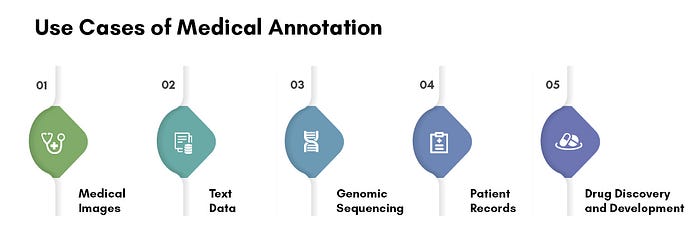
1. Medical Images: The annotation of X-rays, CT scans, MRIs, histopathology slides, and other medical images assists in identifying regions of interest or labeling anatomical structures.
2. Text Data: This covers medical reports, clinical notes, and research articles for training AI in natural language processing tasks like sentiment analysis or disease classification.
3. Genomic Sequencing: The annotation of genomic data assists in identifying genes, regulatory elements, and genetic variations for supporting research in personal medicine and genetic diseases.
4. Patient Records: The annotation of electronic health records offers insights into the patient’s demographics, including medical history, prescriptions, and treatment plans, which help in personalized care.
5. Drug Discovery and Development: This involves obtaining data from chemical databases, research papers, and clinical trials for training AI to predict drug interations, toxicity, and possible candidates for drug development.


Conclusion
Hence, medical image annotation is a key component in the development of machine learning algorithms in the healthcare industry. It allows for effective use of medical data and paves the way for optimized medical care. So, despite the aforementioned challenges, the significance of medical image annotation cannot be ignored, as it’s a critical area to be focused on by those working in the field of medical technology.


Visit Our Website: computer-vision-conferences.scifat.com


Twitter: twitter.com/Shulagna_sarkar


Pinterest: in.pinterest.com/computerconference22


Instagram: www.instagram.com/saisha.leo


Tumbler: www.tumblr.com/blog/shulagnasarkar22


YouTube: https://www.youtube.com/channel/UCUytaCzHX00QdGbrFvHv8zA

Wednesday, July 3, 2024

Understanding breast cancer and imaging: when to consider an MRI, mammogram or ultrasound


Breast cancer is a major health concern worldwide, affecting millions of women each year. Early detection and accurate diagnosis are crucial for effective treatment and improving survival rates.

“Breast cancer is the most common cancer among women globally, with more than 2 million new cases diagnosed in 2020,” said Dr. Valentina Hoyos, Baylor Medicine oncologist. “It develops in the cells of the breasts and can spread to other parts of the body if not detected early. Common symptoms include a lump in the breast, changes in breast shape, dimpling of the skin and nipple discharge. Regular screening is essential for early detection and improved outcomes.”
The importance of screening

Screening for breast cancer is vital as it can detect the disease before symptoms appear. Early detection through screening can lead to less aggressive treatments and better outcomes.

“Screening is a powerful tool in the fight against breast cancer. Early detection not only saves lives but also allows for more personalized and less invasive treatment options. For example, early stage cancers may only require a lumpectomy (removal of the tumor) rather than a mastectomy (removal of the entire breast),” said Dr. Pabel Miah, Baylor Medicine breast cancer surgeon.

For more information or to make an appointment at the Lester and Sue Smith Breast Center, call (832) 957-6500.
Imaging modalities: mammograms, MRIs and ultrasounds

Imaging plays a pivotal role in the detection and management of breast cancer. Mammograms, MRIs and ultrasounds often are used in screening and diagnosing breast cancer.
Mammograms

Mammograms are the most commonly used imaging modality for breast cancer screening. They use low-dose X-rays to create detailed images of the breast tissue.

Mammograms are effective for early detection, widely available and relatively inexpensive, but they may not detect all cancers, particularly in women with dense breast tissue. That is where an MRI may be needed.
Magnetic resonance imaging (MRI)

“Breast MRI uses strong magnets and radio waves to create detailed images of the breast,” said Kellen Carril, Baylor Medicine radiologist in the Breast Care Center and the Dan L Duncan Comprehensive Cancer Center. “It is more sensitive than mammograms and can detect cancers that mammograms might miss.”

MRI is typically recommended for women at high risk of breast cancer, such as those with a BRCA1 or BRCA2 gene mutation or a strong family history of breast or ovarian cancer. It also can be used to assess the extent of cancer after a diagnosis and to monitor the response to treatment.

“MRIs provide a more detailed look, especially for high-risk patients, but they are not necessary for everyone,” Hoyos said. “It’s about finding the right balance based on individual risk.”
Ultrasound

Breast ultrasound uses sound waves to create images of the inside of the breast. It’s often used as a supplementary tool to mammograms and MRIs.

“Ultrasound is recommended for women with dense breast tissue, where mammograms may be less effective,” Carril said. “It’s also used to further investigate abnormalities found on a mammogram or physical exam.”
Which imaging option is best?

Choosing the right imaging method depends on various factors, including age, breast density, personal and family history and overall risk of breast cancer. “Regular mammograms are the cornerstone of breast cancer screening for most women,” Miah said. “However, those with higher risk factors should discuss the possibility of additional imaging with their healthcare provider.”Average risk women: Annual mammograms starting at age 40.
High-risk women: Annual mammograms and MRIs starting at age 30 or as recommended by your healthcare provider.
Women with dense breasts: Supplement mammograms with ultrasound or MRI.


“Regular screenings and being aware of your personal risk factors are essential steps toward early detection and effective treatment,” Miah said. “By staying proactive with your screenings, you can ensure the best possible outcomes and take control of your breast health.”


Visit Our Website: computer-vision-conferences.scifat.com


Twitter: twitter.com/Shulagna_sarkar


Pinterest: in.pinterest.com/computerconference22


Instagram: www.instagram.com/saisha.leo


Tumbler: www.tumblr.com/blog/shulagnasarkar22


YouTube: https://www.youtube.com/channel/UCUytaCzHX00QdGbrFvHv8zA
Machine learning with echo improves heart tumor diagnosis


Machine learning can help improve echocardiography interpretation of heart tumors, according to research published on July 1 in Informatics in Medicine Unlocked.

A team led by Seyed-Ali Sadegh-Zadeh, PhD, from Staffordshire University in England found that its machine-learning model achieved high performance in diagnosing heart tumors, including a near-perfect area under the curve (AUC) score.

"These findings advocate for the potential of machine learning in revolutionizing cardiac tumor diagnostics, offering pathways to more accurate, noninvasive, and patient-centric diagnostic processes," the Sadegh-Zadeh team wrote.

While rare, cardiac tumors present unique challenges for clinicians due to symptoms mimicking other conditions. Localization and characterization of these tumors require advanced imaging.

Echocardiography is the primary imaging modality for this area, but its ability to differentiate between tumor types and determine malignancy is limited. The researchers highlighted that machine learning techniques could lead to improved diagnostic performance.

Sadegh-Zadeh and colleagues integrated data from echocardiography images and pathology with advanced machine-learning techniques to improve the diagnostic accuracy of cardiac tumors. They used support vector machines, random forest, and gradient boosting machines that were optimized for limited datasets in specialized medical fields.

The study included clinical data from 399 patients and evaluated the performance of the models against traditional diagnostic metrics. The researchers reported that the random forest model was superior to the other models in accurate diagnosis.
Performance of machine-learning models in diagnosing heart tumorsMeasure Support vector machines Gradient boosting machines Random forest
Accuracy 71.25% 96.25% 96.25%
Precision (benign tumors) 78% 99% 99%
Precision (malignant tumors) 50% 88% 88%
Recall (benign) 43% 95% 95%
Recall (malignant) 43% 99% 99%
F1 score (benign) 80.34 97.3% 97.3%
F1 score (malignant) 46.51 93.88% 93.88%
AUC 0.72 0.98 0.99
The team also identified the following key clinical predictors: age, echo malignancy, and echo position. This underscores the value of integrating diverse data types, they noted.

The random forest model was included in clinical validation and achieved a diagnostic accuracy of 94% in a real-world setting.

The study authors highlighted that the results show machine learning's capabilities in improving diagnostic precision in assessing heart tumors. They added that the study "also sets a foundation for future explorations" into broader applications for the technology across various domains of medical diagnostics. It emphasizes the need for expanded datasets and external validation, the authors noted.


Visit Our Website: computer-vision-conferences.scifat.com


Twitter: twitter.com/Shulagna_sarkar


Pinterest: in.pinterest.com/computerconference22


Instagram: www.instagram.com/saisha.leo


Tumbler: www.tumblr.com/blog/shulagnasarkar22


YouTube: https://www.youtube.com/channel/UCUytaCzHX00QdGbrFvHv8zA


Tuesday, July 2, 2024

Small Business Hosting Services Market 2024 Segment Analysis | Liquid Web, GreenGeeks, DigitalOcean


Venturing into the intricate realm of market trends, the Small Business Hosting Services Market Insights research study navigates through marketing networks, industry dynamics, and current as well as anticipated demand scenarios. Providing a panoramic view, the global analysis of Small Business Hosting Services Market Insights not only scrutinizes present industry landscapes but also forecasts future trajectories while outlining innovative strategies for industry growth. Within the purview of Small Business Hosting Services Market Insights, critical elements such as production volumes, major players, growth rates, and pivotal geographic regions receive meticulous examination.


Furthermore, the investigation into Small Business Hosting Services Market Insights delves into the market’s value chain structure by encompassing classifications, definitions, and implementation strategies. It elaborates on various planning methodologies and approaches crucial for market stakeholders. Additionally, comprehensive statistics on sales, expenditures, import-export dynamics, profit margins, and demand-supply estimations are furnished in the report. Technological dynamics and key growth strategies are meticulously scrutinized both regionally and globally to underpin a holistic industry analysis.

In alignment with this comprehensive approach, the essay on Small Business Hosting Services Market Insights meticulously analyzes pricing strategies and manufacturing techniques while offering insightful evaluations of raw material procurement alongside downstream and upstream demand dynamics.


Small Business Hosting Services market Segmentation by Application:

Startup Enterprises
E-business Enterprises
Professional Service Provider
Others


Moreover, this research rigorously explores major trends by conducting SWOT analyses and financial assessments of key global competitors within the focal subject of Small Business Hosting Services Market Insights. By providing a comprehensive panorama of the market landscape to refine sales strategies for organizations through a deep understanding of competitor expansion tactics amid competitive environments.

Segmenting markets into significant zones allows projections supported by PESTEL analyses alongside overarching market trends forecasted over the study period. Serving as an indispensable resource furnishing reliable data on crucial industry trends empowers market players in formulating distinctive sales strategies.

Further scrutiny into the landscape of Small Business Hosting Services Market Insights identifies trends influencing customer growth while addressing key market dynamics investment prospects along with challenges encountered by leading vendors. Emerging growth patterns coupled with developmental trends shed light on implications for current and future industry trajectories.


Visit Our Website: computer-vision-conferences.scifat.com


Twitter: twitter.com/Shulagna_sarkar


Pinterest: in.pinterest.com/computerconference22


Instagram: www.instagram.com/saisha.leo


Tumbler: www.tumblr.com/blog/shulagnasarkar22


YouTube: https://www.youtube.com/channel/UCUytaCzHX00QdGbrFvHv8zA

Monday, July 1, 2024

An Analog Network of Resistors Promises "Machine Learning Without a Processor," Researchers Say


Researchers from the University of Pennsylvania have come up with an interesting approach to machine learning that could help to address the field's ever-growing power demands: taking the processor out of the picture and working directly on an analog network of resistors.

"Standard deep learning algorithms require differentiating large non-linear networks, a process that is slow and power-hungry," the researchers explain. "Electronic learning metamaterials offer potentially fast, efficient, and fault-tolerant hardware for analog machine learning, but existing implementations are linear, severely limiting their capabilities. These systems differ significantly from artificial neural networks as well as the brain, so the feasibility and utility of incorporating non-linear elements have not been explored."

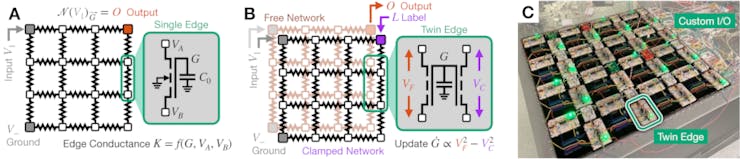
A network of resistors, with no traditional processor in sight, has shown potential for non-linear machine learning tasks. (📷: Dillavou et al)


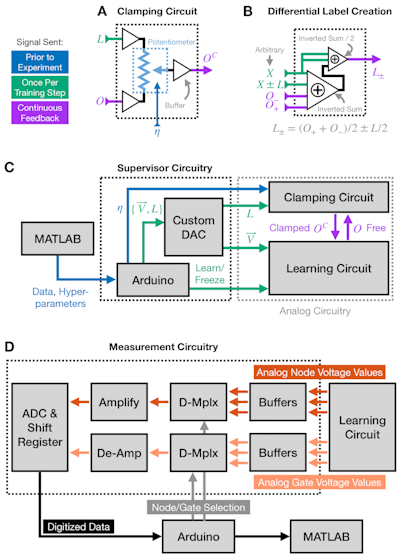
Until now, that is. In the team's research, a non-linear learning metamaterial is introduced — an analog electronic network of resistive elements based on transistors. It's not a traditional digital processor, and can't do the tasks a traditional processor can do — but it is tailored specifically to machine learning workloads, and proved able to perform computations that can't be handled in a linear system without the involvement of a processor beyond an Arduino Due to make measurements and connect to MATLAB.

"Each resistor is simple and kind of meaningless on its own," physicist Sam Dillavou, first author on the work, explains in an interview with MIT Technology Review. "But when you put them in a network, you can train them to do a variety of things."

The team has already demonstrated the same core technology being used in an image classification network. and in its latest work extends the concept to non-linear regression and exclusive OR (XOR) operations. Better still, it shows the potential to outperform the traditional approach of throwing the problems at digital processors: "We find our non-linear learning metamaterial reduces modes of training error in order (mean, slope, curvature)," the team claims, "similar to spectral bias in artificial neural networks."

The network itself has no external memory or traditional processor, but is supervised and measured by an Arduino Due. (📷: Dillavou et al)


"The circuitry is robust to damage," the researchers continue, "retrainable in seconds, and performs learned tasks in microseconds while dissipating only picojoules of energy across each transistor. This suggests enormous potential for fast, low-power computing in edge systems like sensors, robotic controllers, and medical devices, as well as manufacturability at scale for performing and studying emergent learning."


Visit Our Website: computer-vision-conferences.scifat.com


Twitter: twitter.com/Shulagna_sarkar


Pinterest: in.pinterest.com/computerconference22


Instagram: www.instagram.com/saisha.leo


Tumbler: www.tumblr.com/blog/shulagnasarkar22


YouTube: https://www.youtube.com/channel/UCUytaCzHX00QdGbrFvHv8zA